A Big Fish Expeditions Trip Report
by Jennifer Idol
Whale sharks and Atlantic manta rays in Isla Mujeres
Oh my goodness, this year.
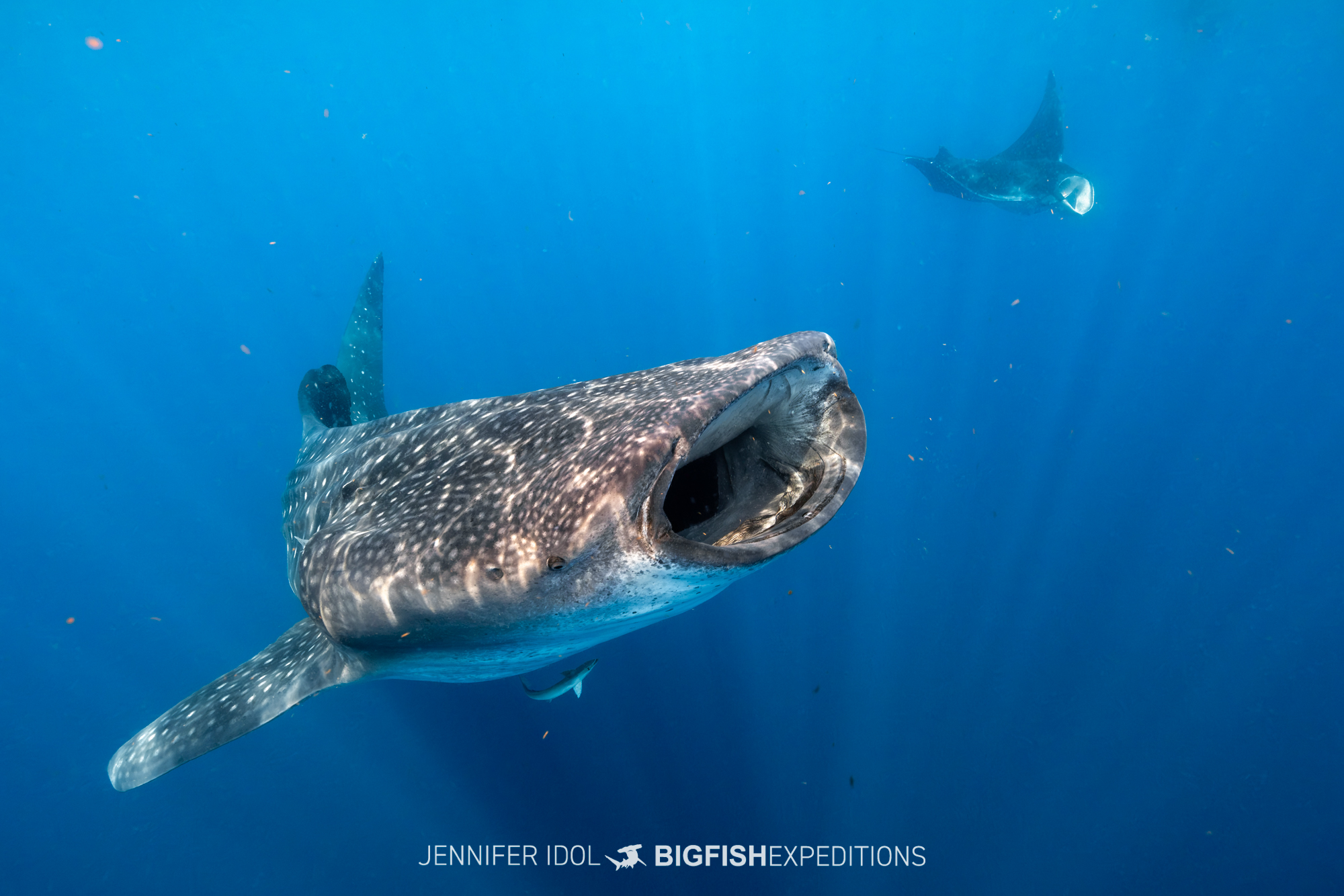
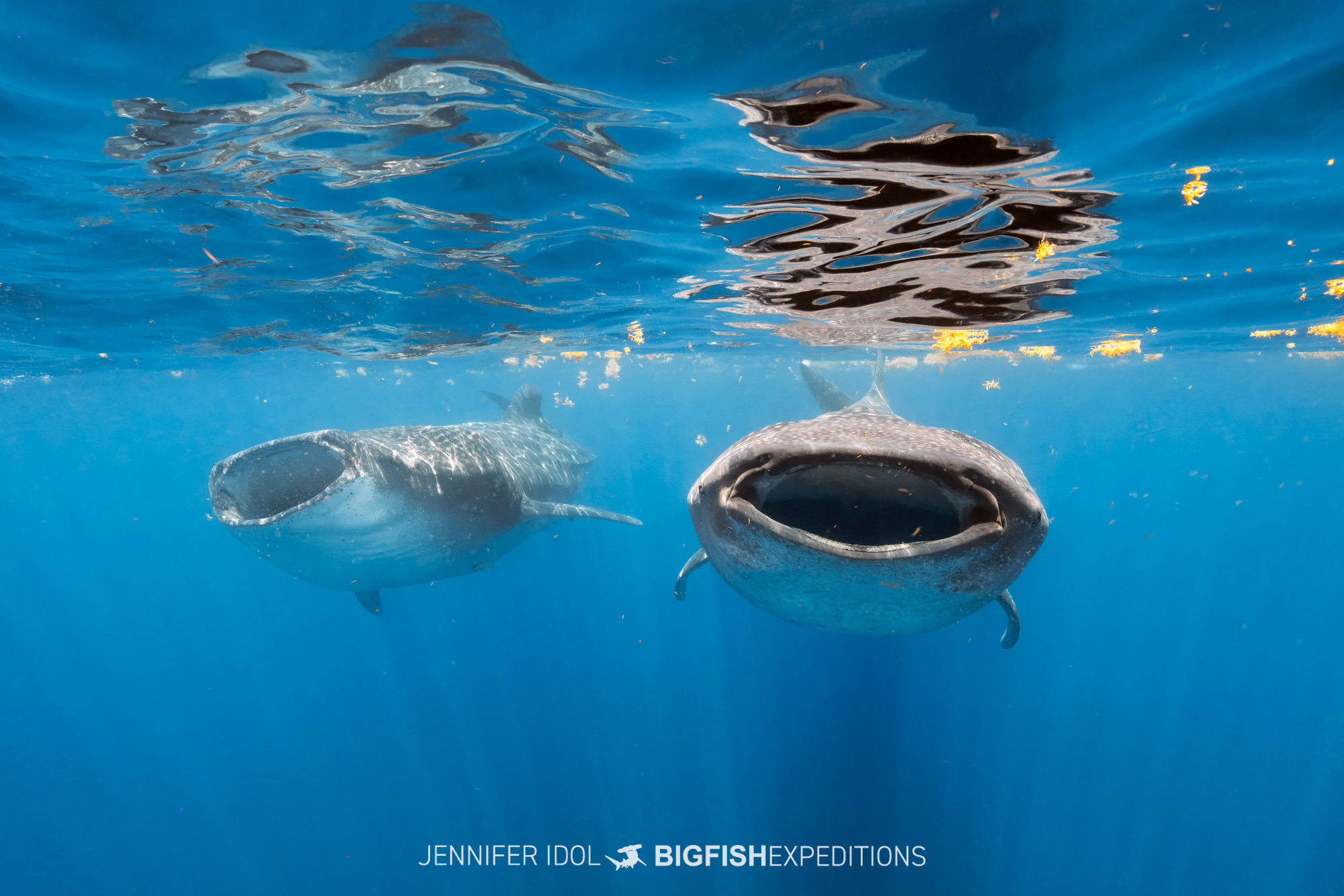
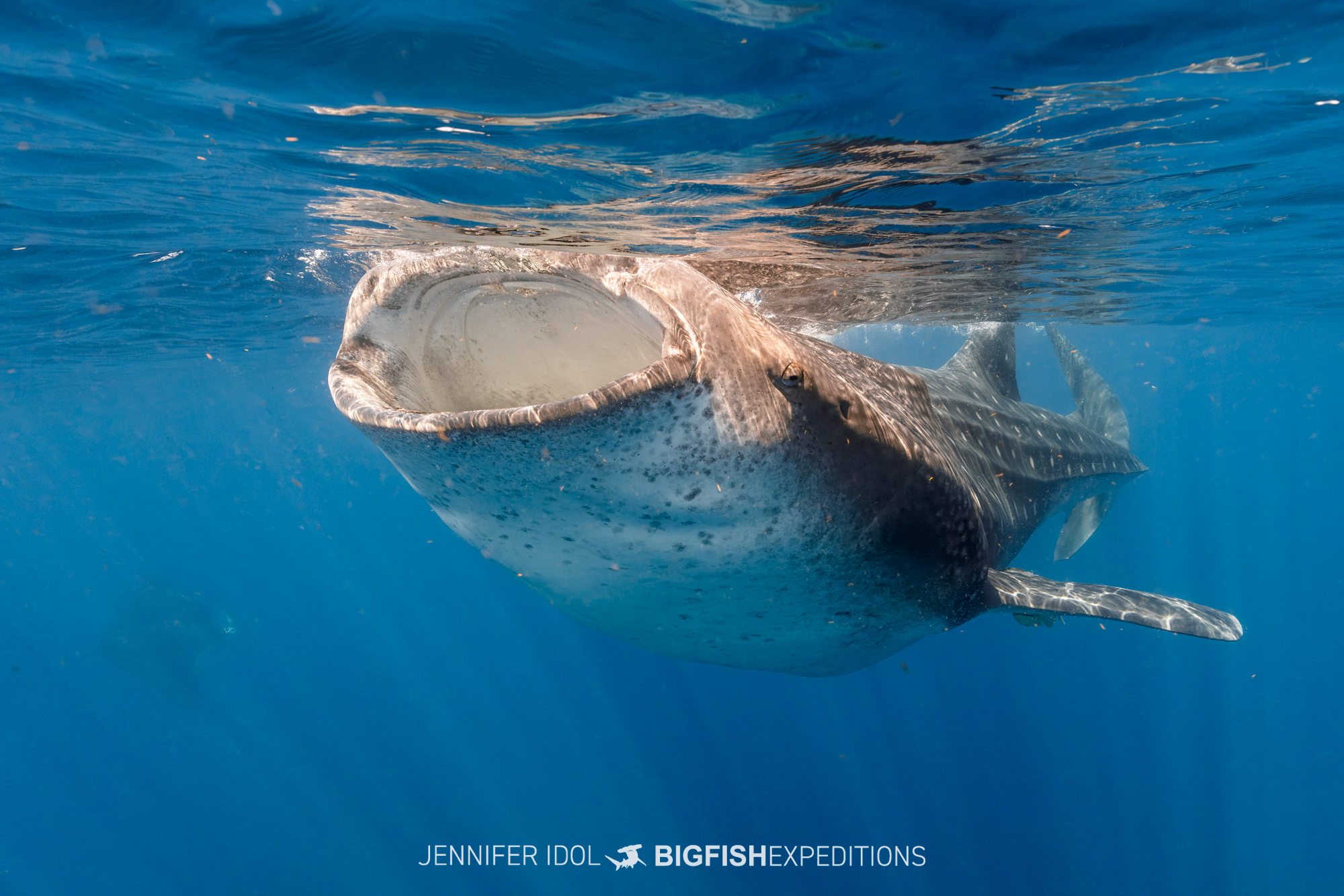
Just look at that water. The color was extraordinary, the sea was filled with life, and whale sharks seemed to be everywhere. Every time we looked across the surface, another fin appeared.
We had four full days on the water. The first day was great. The second was even better. Then the day after that was better still, followed by a final day that somehow surpassed everything that had come before it.
We kept thinking the trip had reached its peak. The ocean kept proving us wrong.
Whale sharks everywhere
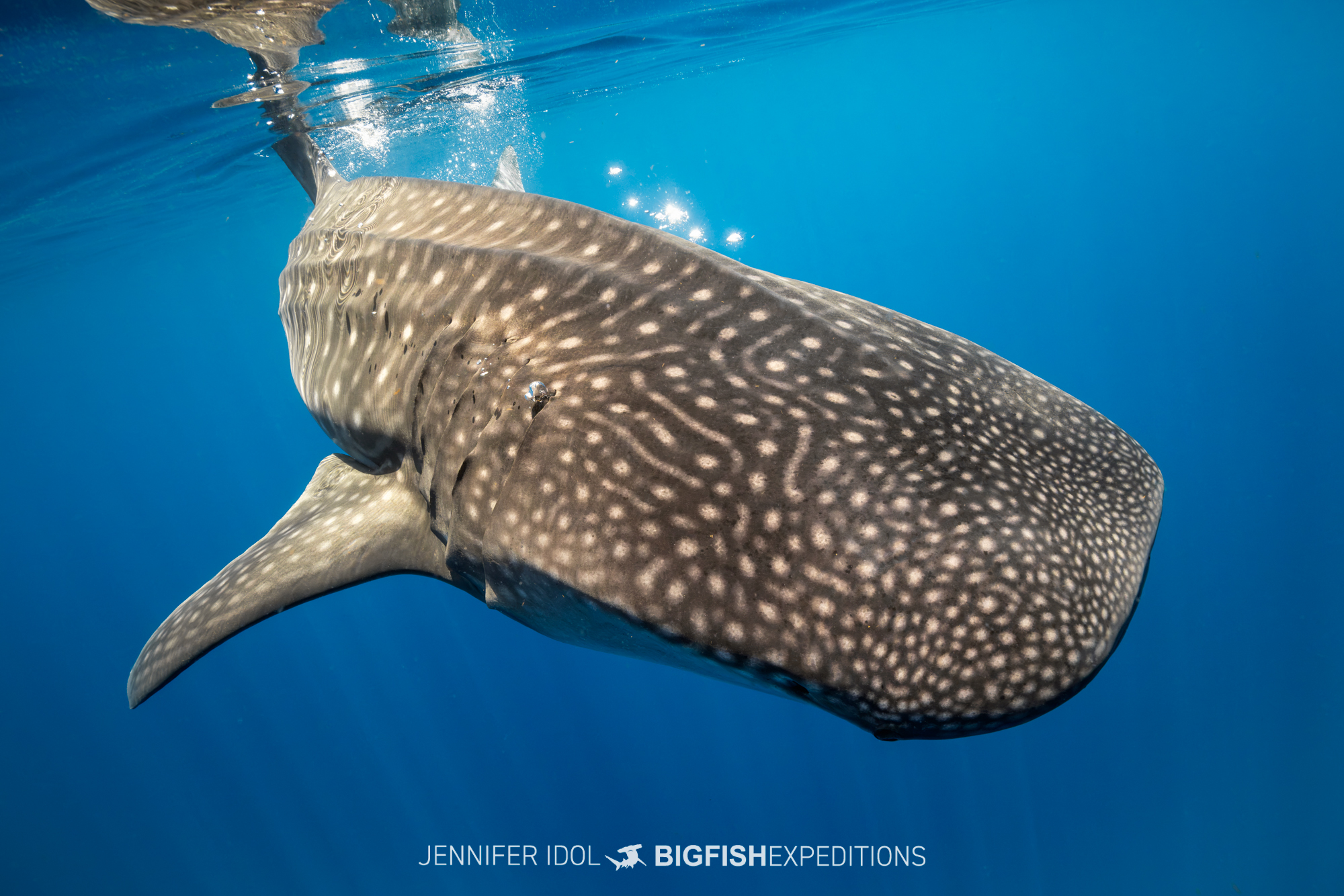
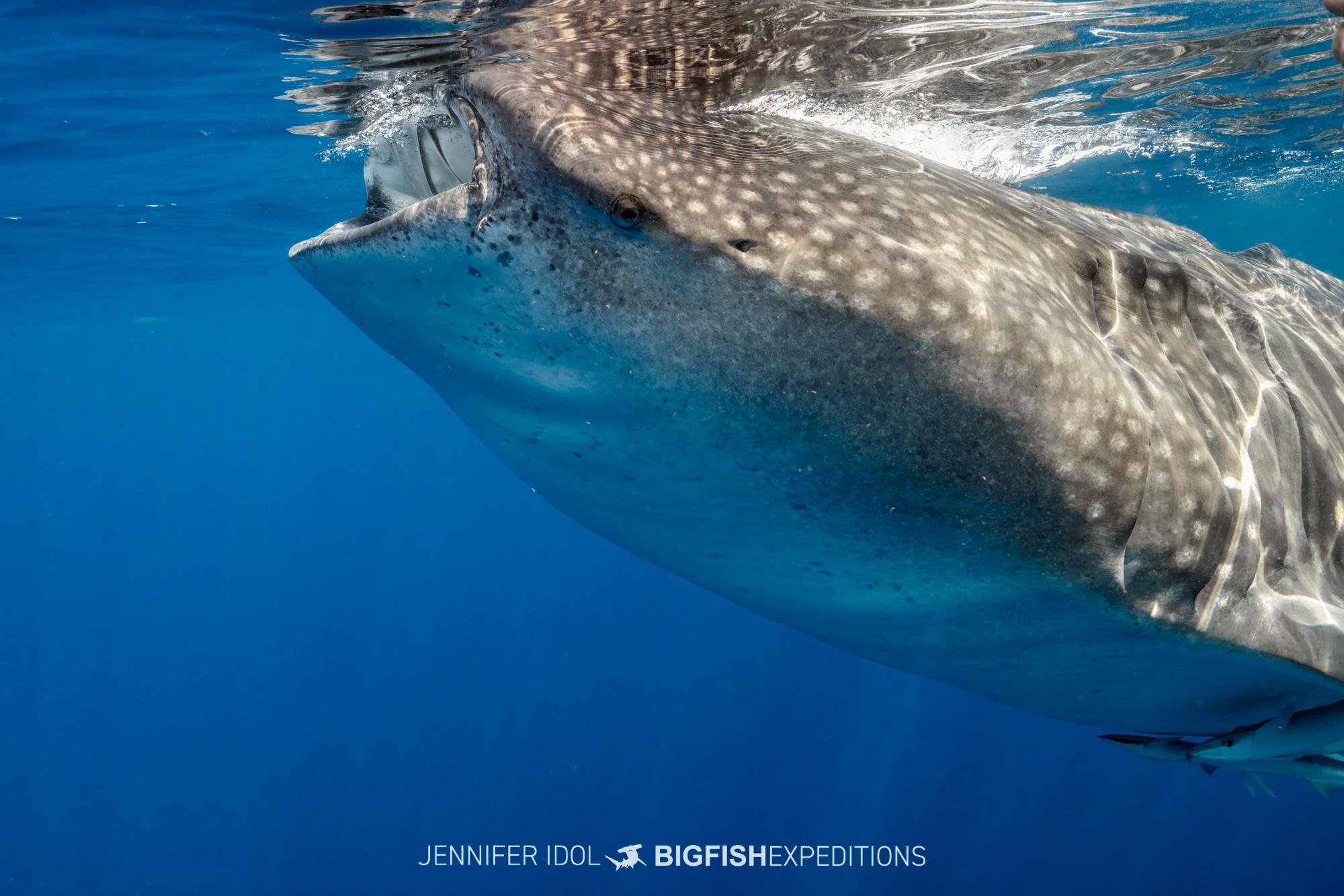
From our first day on the water, we were surrounded by whale sharks.
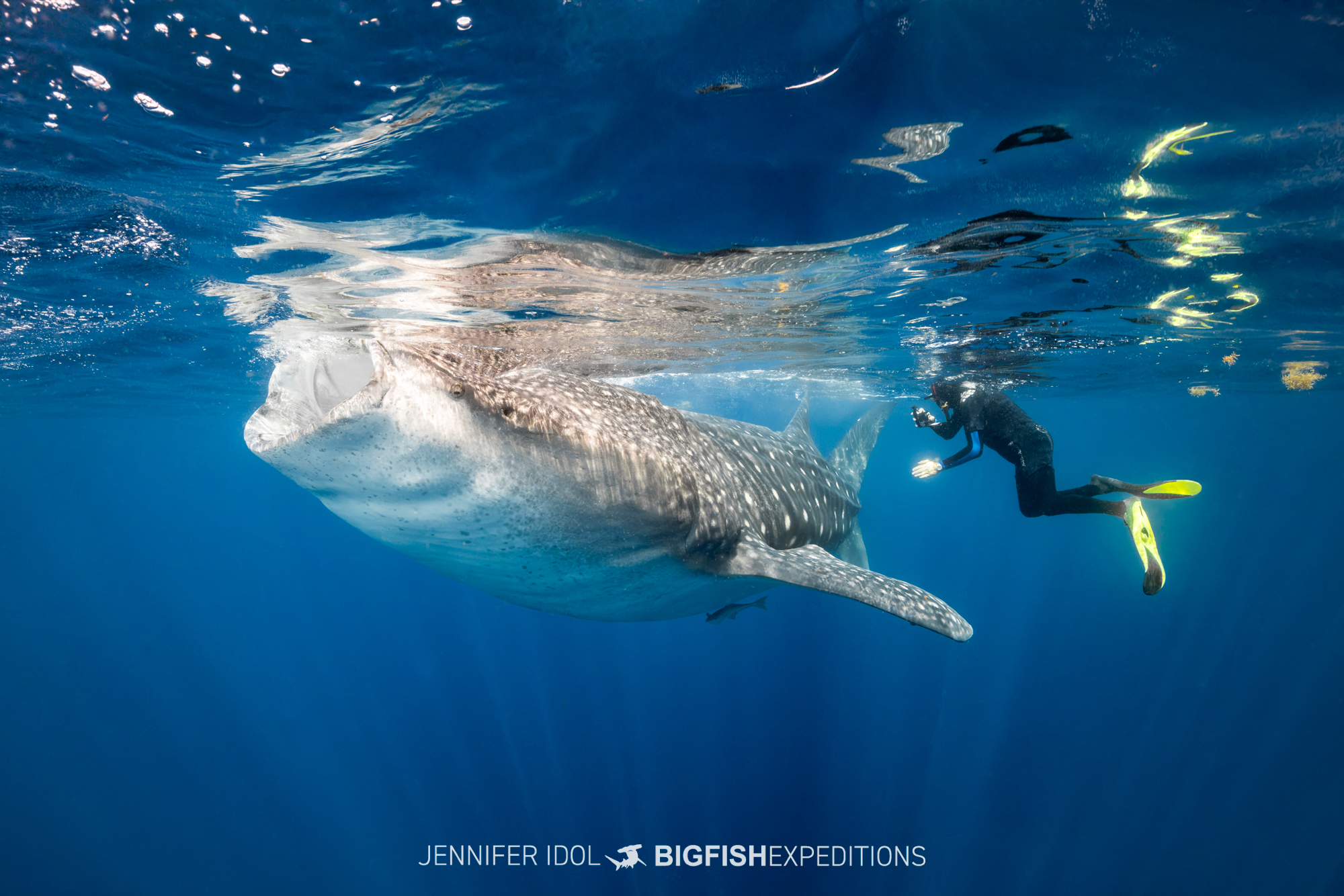
For our guests, the first swim alongside the largest fish in the world was already everything they had traveled to Isla Mujeres to experience. A whale shark would emerge from the blue, its spotted body moving steadily through the water, and our guests would slip in to swim beside it.
Then another shark would appear. And another.
The water was beautifully blue, the visibility was wonderful, and everyone had time for repeated encounters. It was the kind of first day that could have carried an entire expedition, but it turned out to be only the beginning.
What brings them here
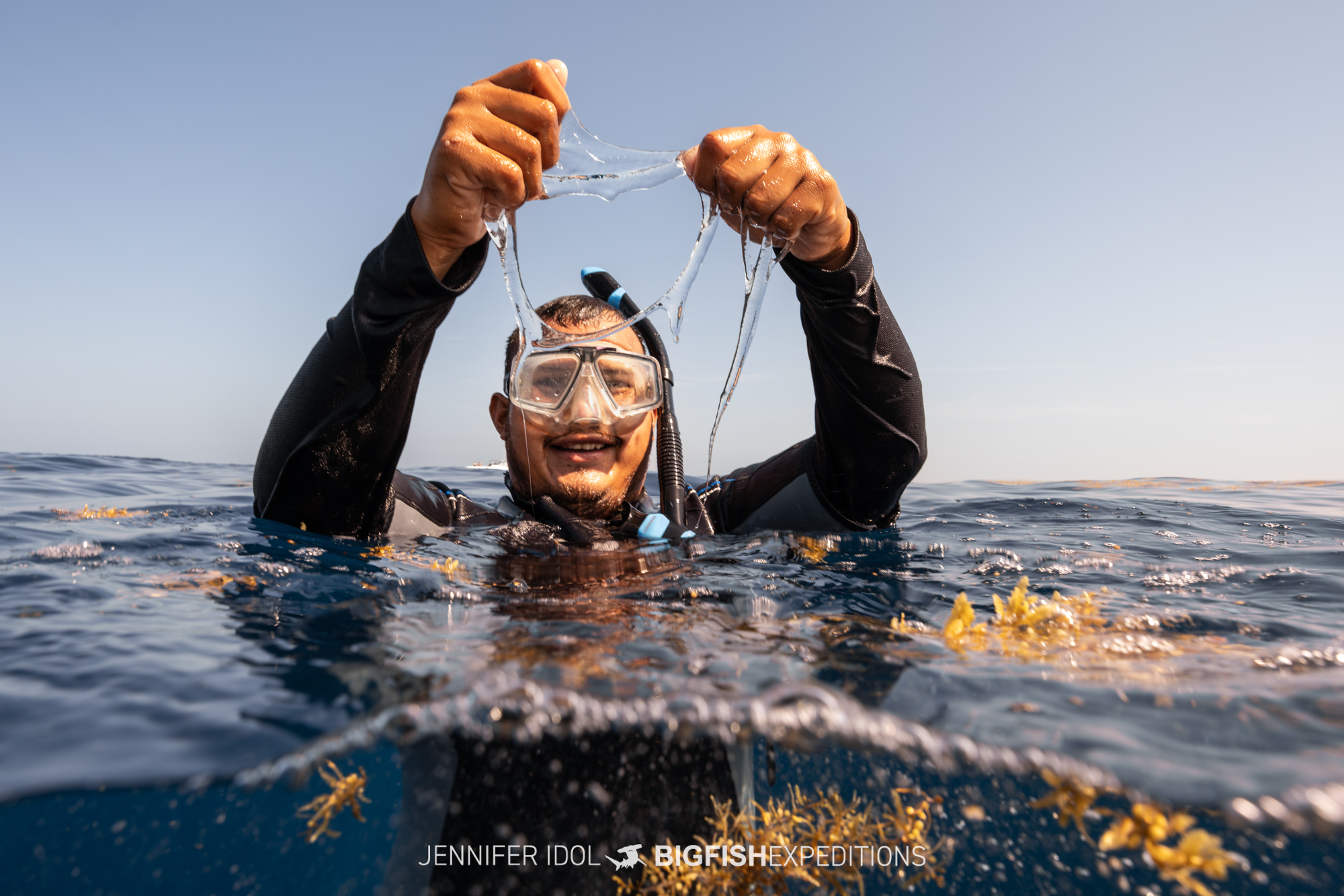
There was so much food in the water that our guide could lift a sample in his hand and show us what the whale sharks were eating.
The tiny fish eggs were almost impossible to comprehend as individuals, yet together they formed an enormous seasonal food source. Research in this offshore feeding area, known as the Afuera, has identified dense concentrations of little tunny eggs as the primary food drawing whale sharks to these waters.
Seeing the food itself helped reveal the scale of what was happening around us. The blue water was full of it, and everywhere we looked, whale sharks were feeding.
These enormous animals had gathered for something almost too small for us to see.
Then came the mantas
As if the whale sharks were not enough, the mantas began to arrive.
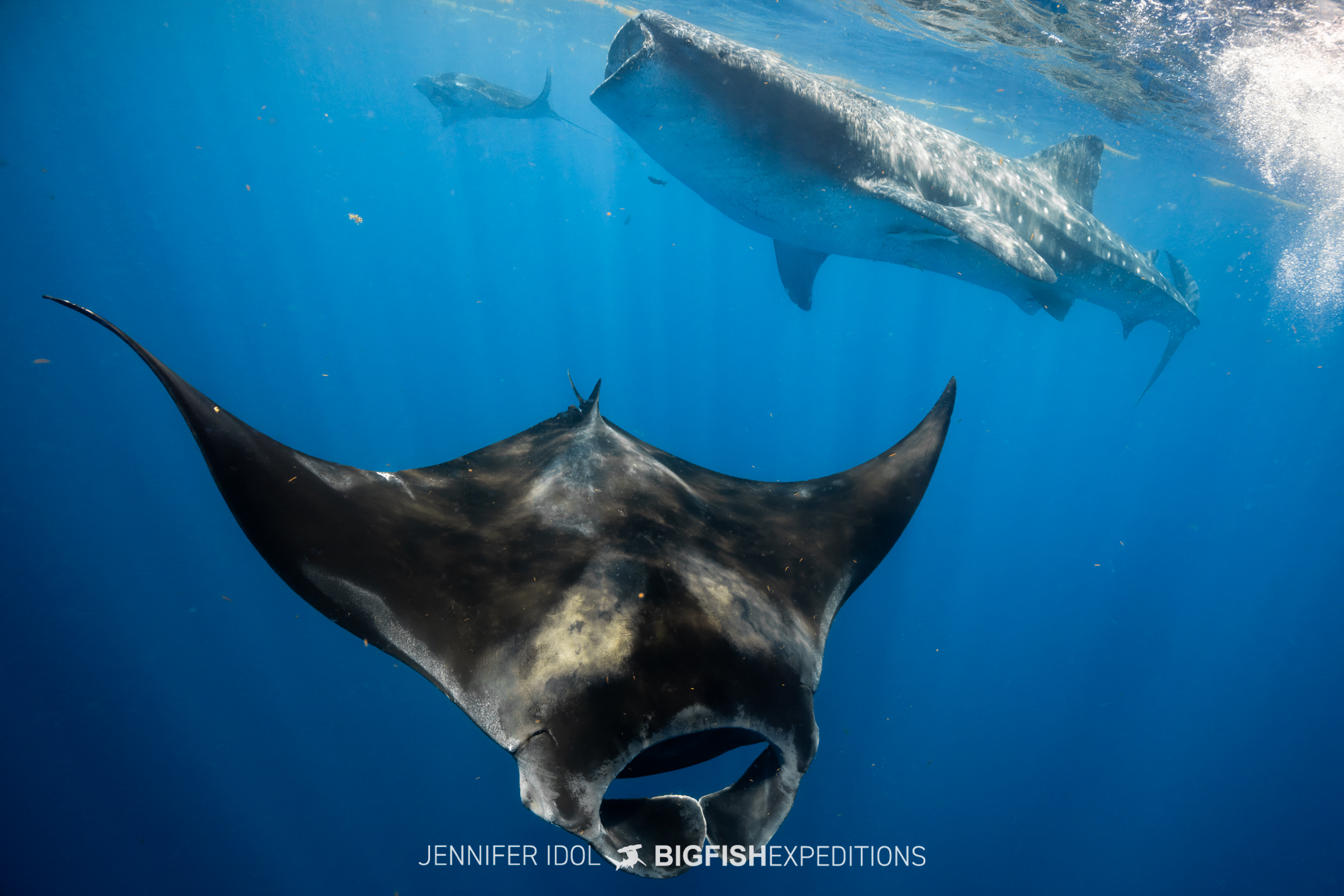
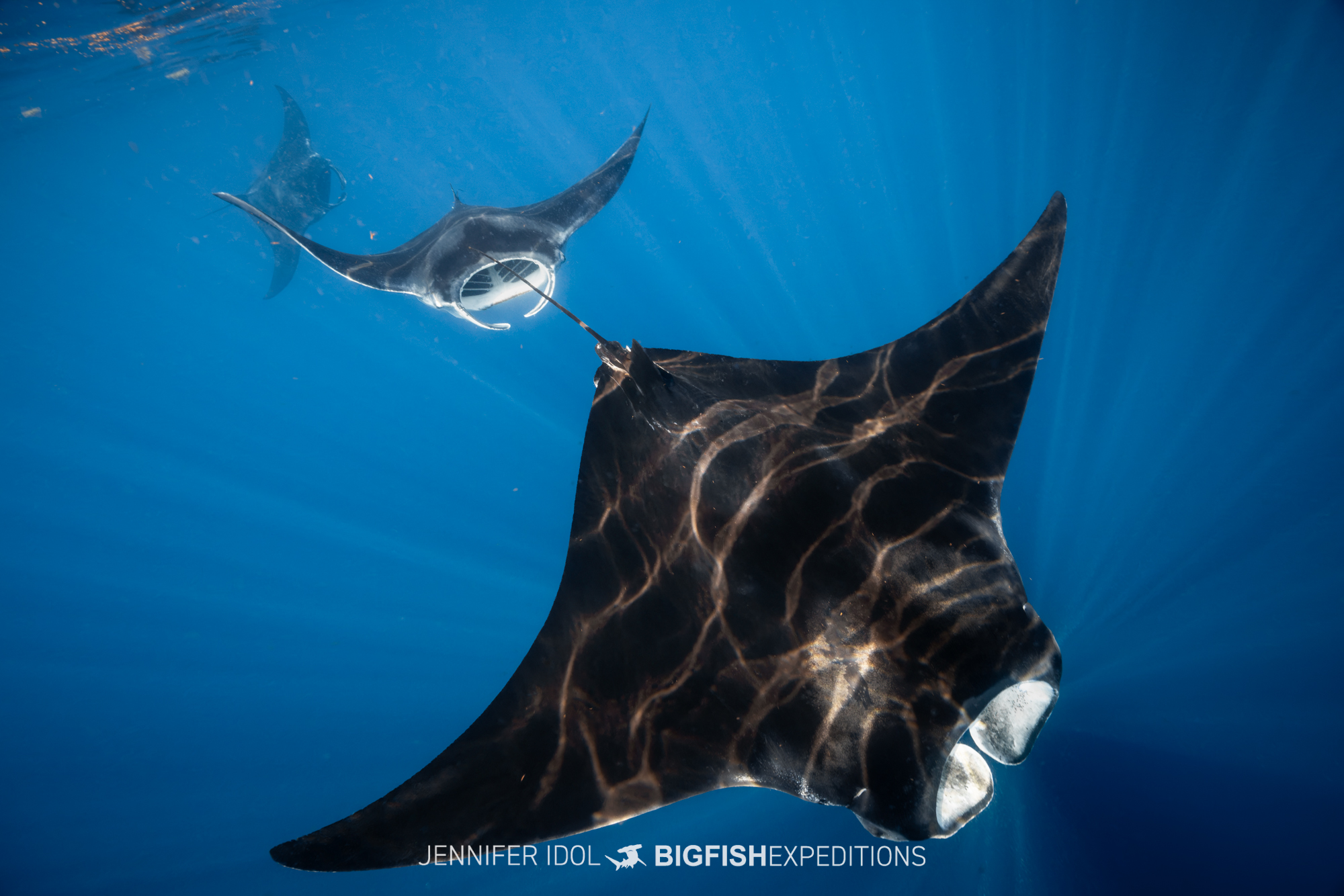
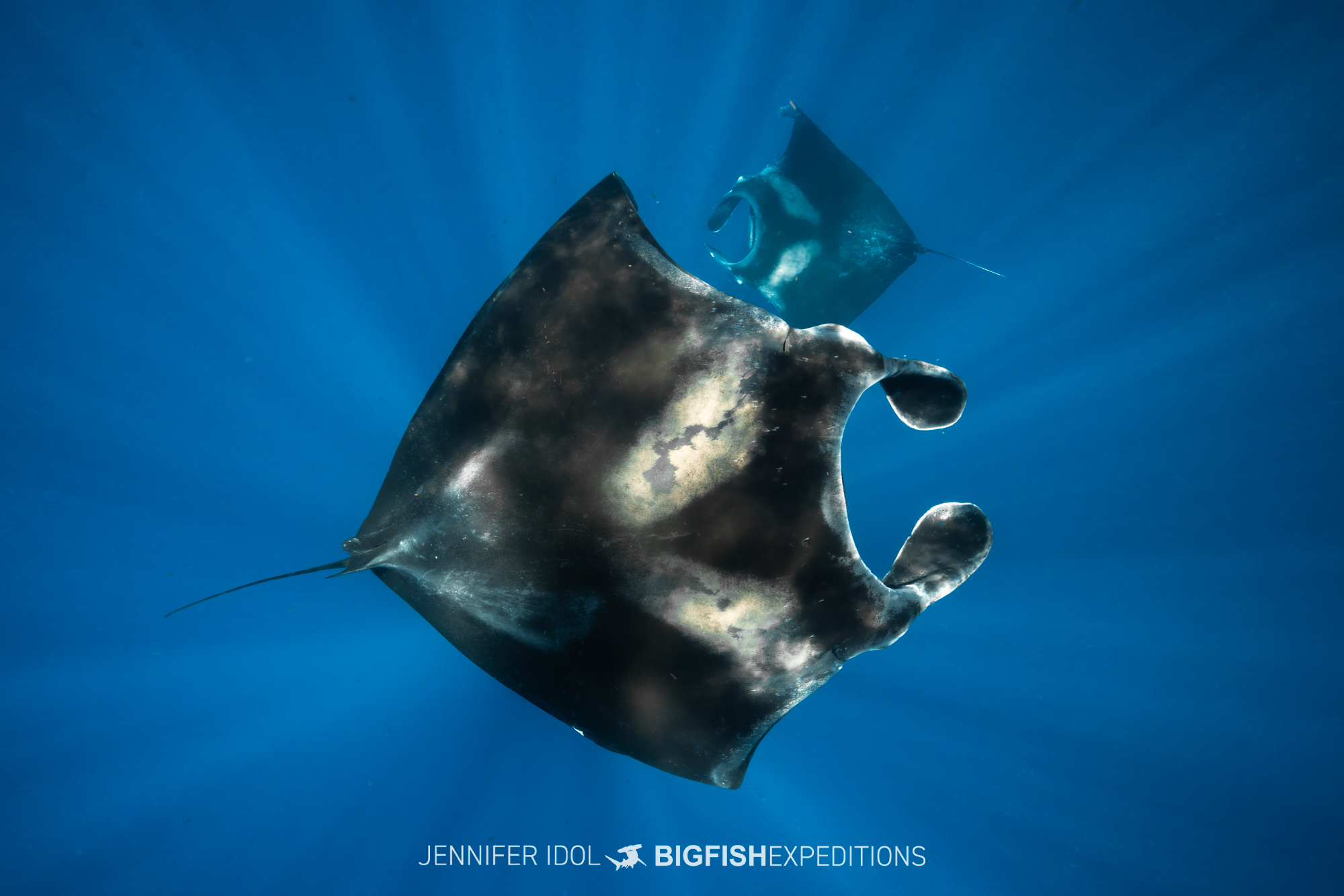
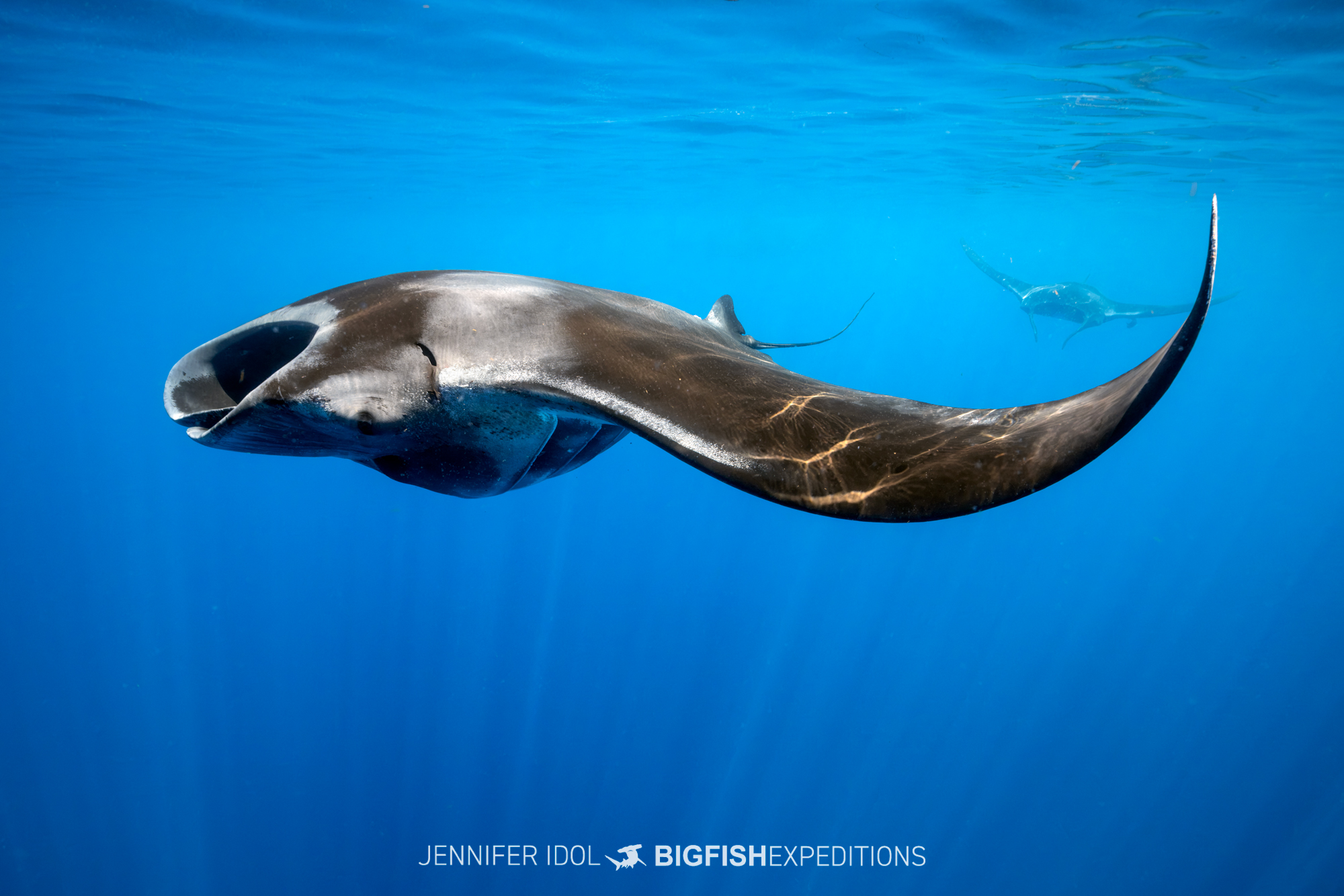
They swept through the water with their fins outstretched, directing food into their open mouths. Some passed beneath us. Others turned gracefully through the feeding zone before circling back for another mouthful.
We now know these animals by a newly established name. The mantas found in these Atlantic waters are Atlantic manta rays, Mobula yarae, formally described as a distinct species in 2025.
Knowing that made the encounter feel even more remarkable. We were watching one of the ocean’s most iconic animals while our scientific understanding of it was still unfolding.
Every day was better
Wildlife expeditions do not usually unfold in a neat progression. A spectacular first day may be followed by a quiet one, and the ocean never promises to repeat itself.
This time, it did more than repeat itself.
The first day was great. The second day brought more activity. On the third day, the concentration of animals and food increased again. By the fourth, it felt as though everything had come together at once.
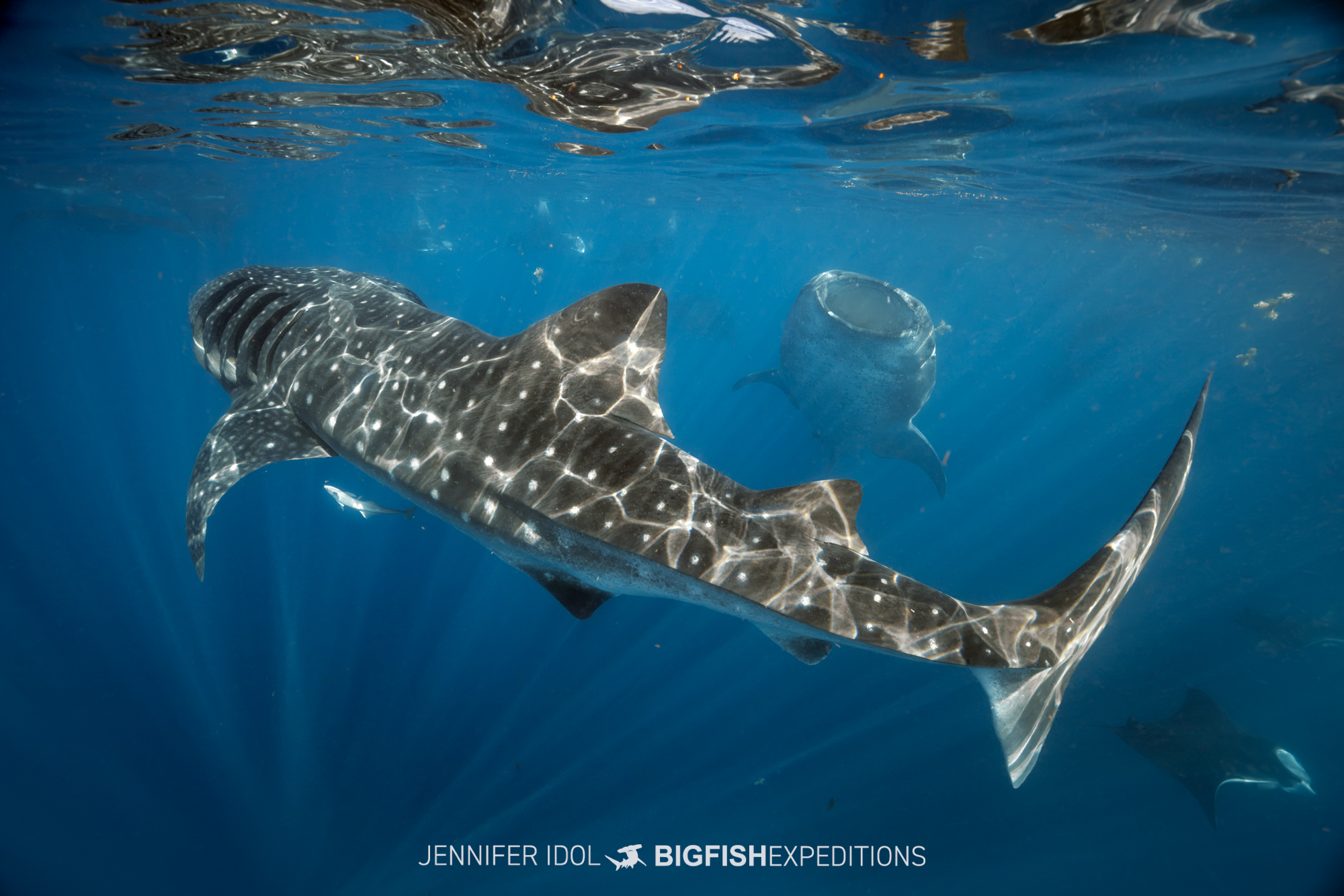
Whale sharks crossed in front of us and beneath us. Mantas appeared among them. Guests would finish one encounter, return to the boat, and immediately see another opportunity developing nearby.
This year was completely over the top.
Whale sharks and mantas together
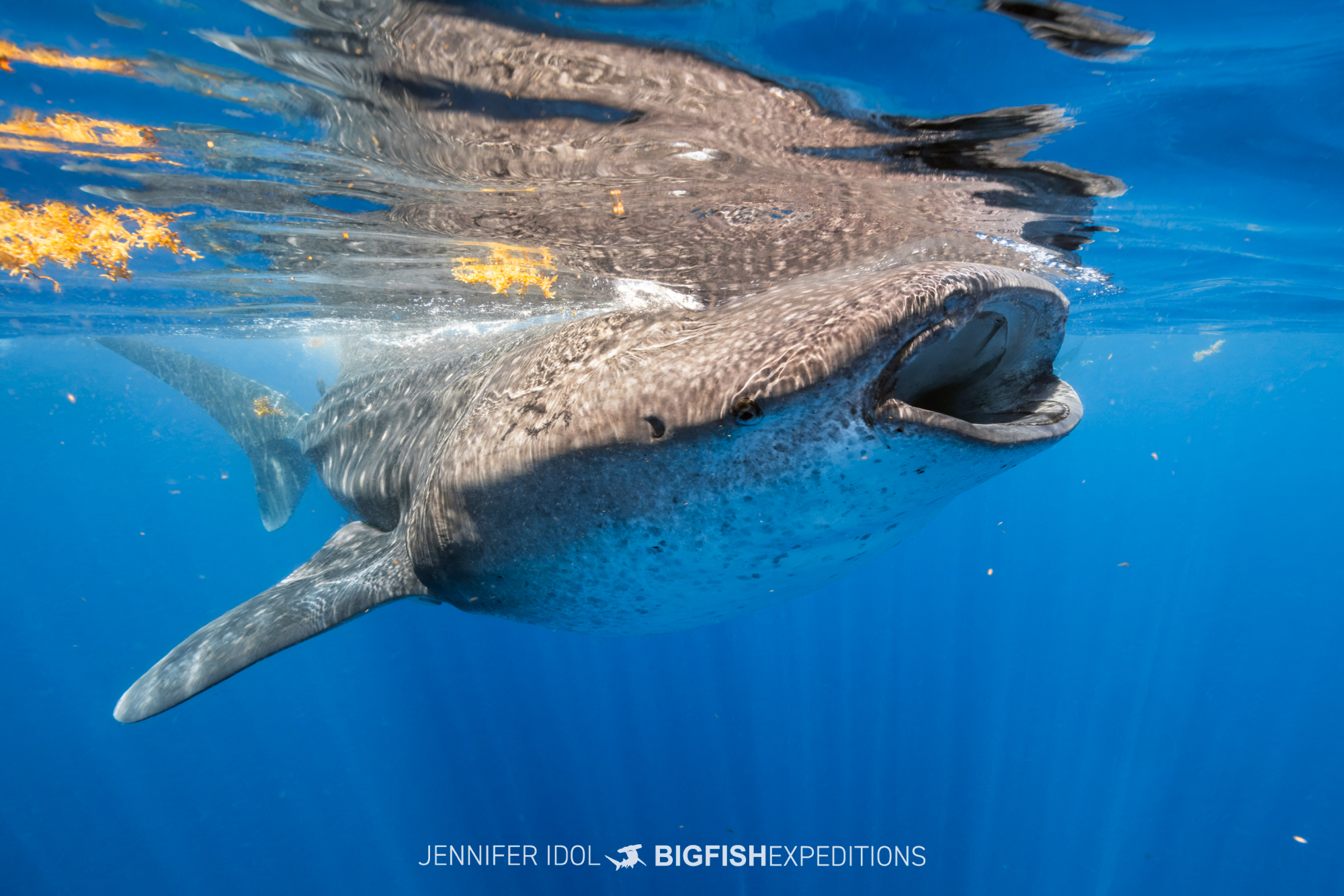
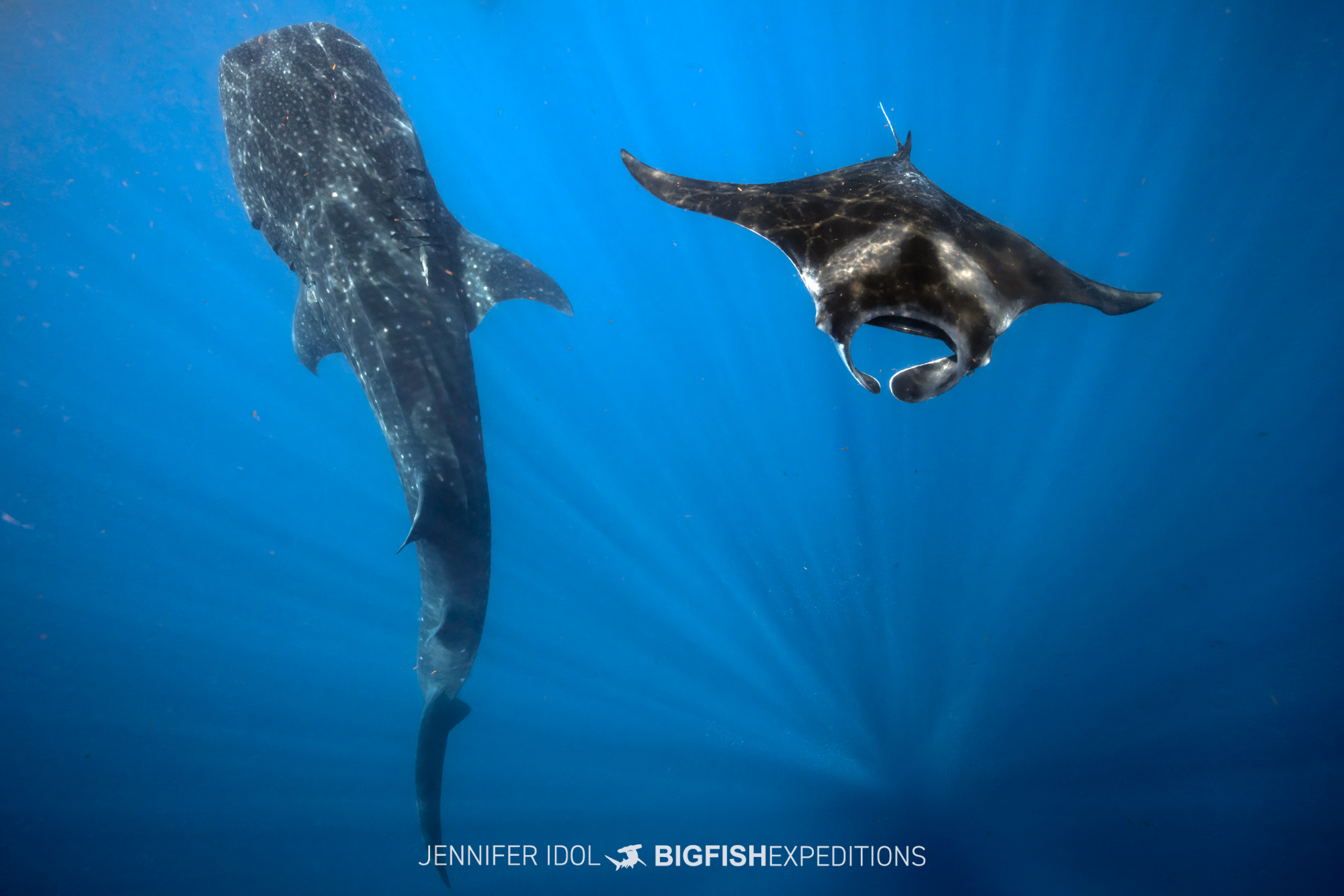
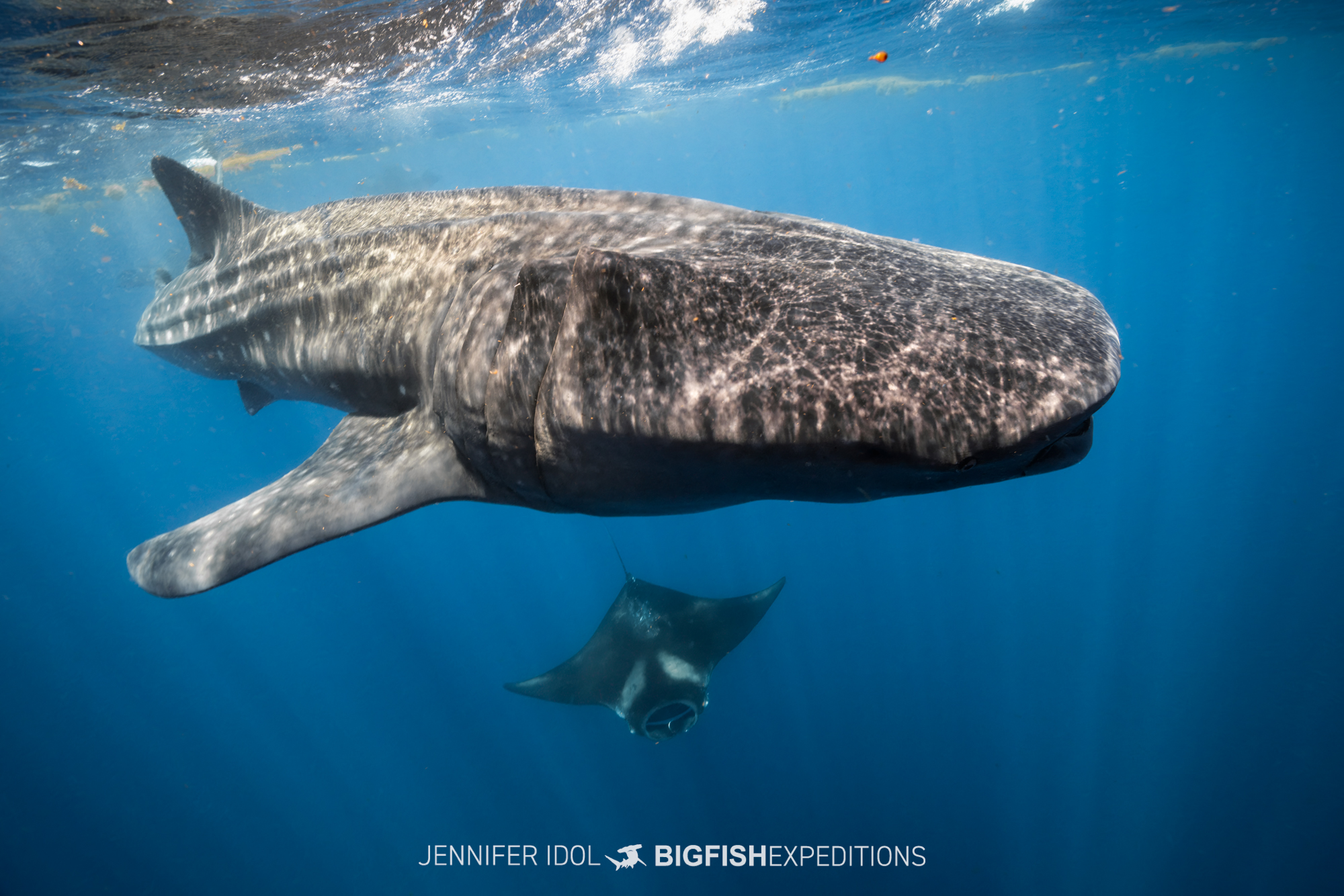
There is something astonishing about seeing a whale shark and a manta ray separately. Seeing them feeding together changes the entire scene.
The whale sharks moved steadily through the water with their enormous mouths open. Around them, mantas turned, climbed, and swept through the dense patches of food.
At times, it was difficult to know where to look. A whale shark would approach from one direction while a manta passed beneath it. Another shark might appear in the distance, already feeding at the surface.
These were not brief, isolated sightings. We were immersed in an active gathering of some of the ocean’s largest filter feeders.
A proper manta feeding chain
For years, I had hoped to witness a proper chain of feeding mantas.
This year, it finally happened.
The mantas formed a long, fluid procession, following one another through the food-rich water. Each ray moved in rhythm with the one ahead of it, creating a living chain of sweeping wings and open mouths.
Rather than passing through once and disappearing, they continued feeding. We had time to watch the pattern form, change, and form again.
Some encounters arrive so quickly that you spend years wondering whether you truly saw them. This one gave us time to be present, to understand what was happening, and to appreciate just how extraordinary it was.
The frame I had waited ten years to make
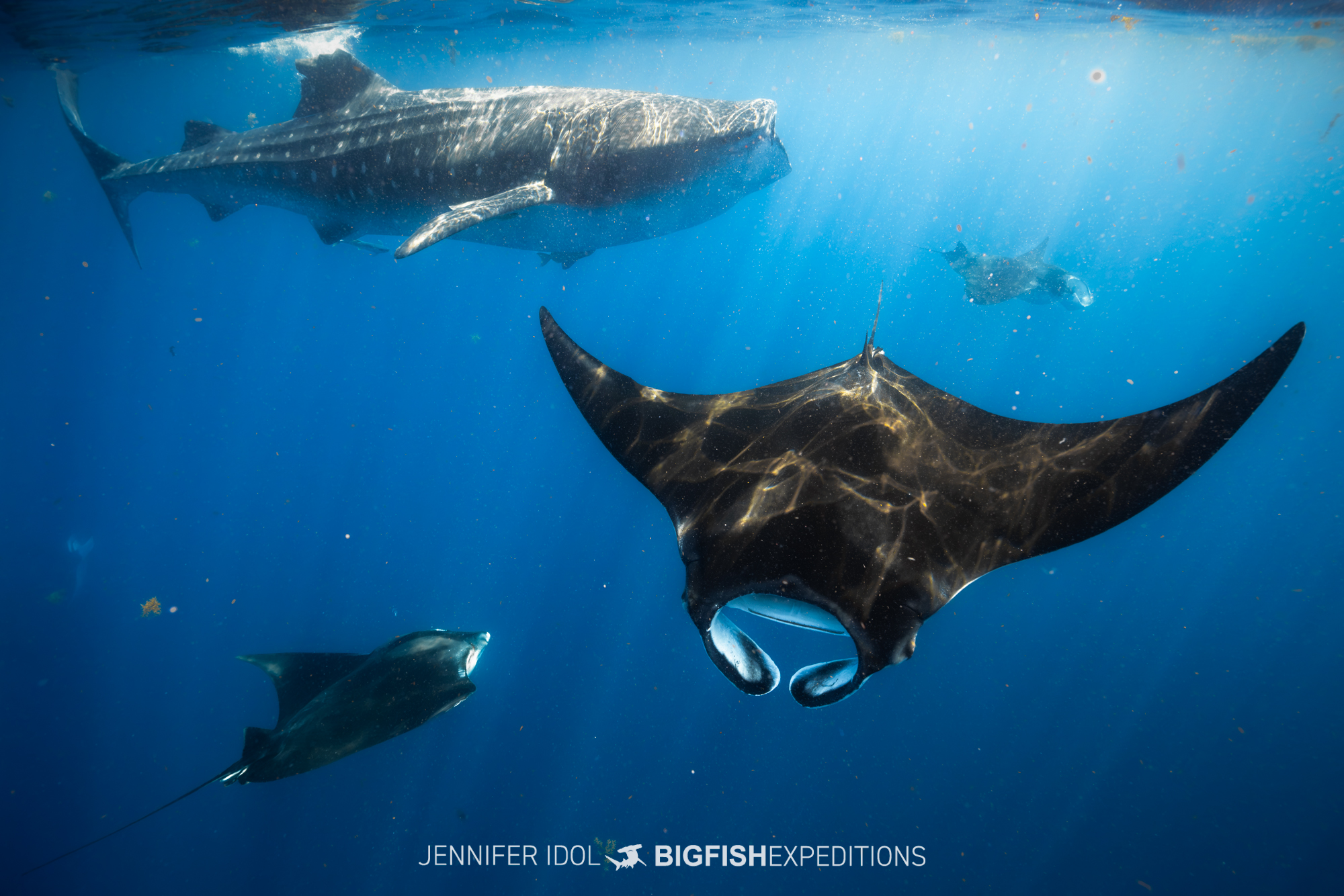
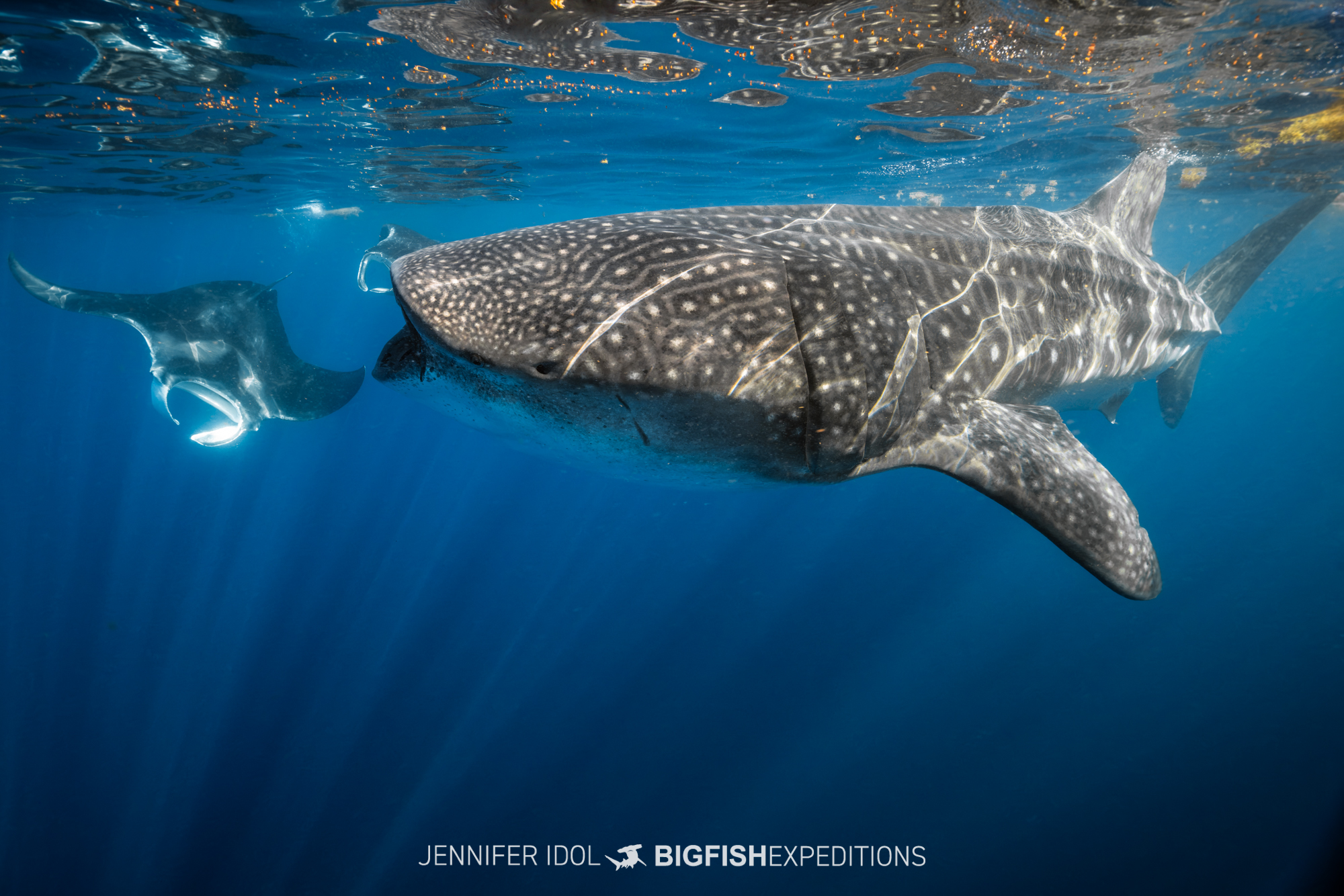
For ten years, I had tried to photograph a whale shark and a manta ray together in the same frame.
I had seen both animals in the same region before. I had watched them appear minutes apart or just beyond the reach of a single composition. But the moment I imagined had always remained elusive.
Then, in the middle of this incredible concentration of food and animals, everything aligned.
A whale shark entered the frame. An Atlantic manta ray swept through the same blue water. For a moment, both animals were exactly where I had waited years for them to be.
We wait for moments like this.
They are the reason wildlife photographers return to the same places and spend countless hours on the water. You cannot manufacture them. You can only choose the right place, give yourself enough time, and be ready when the ocean brings everything together.
Why we return to Isla Mujeres
Every summer, whale sharks gather in the waters northeast of the Yucatán Peninsula to feed. The Afuera has hosted the largest recorded gathering of whale sharks in the world, drawn by one of the ocean’s great seasonal feeding events.
This is why we come to Isla Mujeres during the aggregation. It is also why we spend four full days on the water.
One day can be wonderful, but remaining at sea over several days gives our guests the opportunity to see how dramatically conditions can change. It allows time for the first whale shark encounter, the next one, and the unexpected moment no one could have predicted.
This year, our timing around July’s full moon brought us extraordinary water, an immense concentration of food, whale sharks everywhere, and more Atlantic manta rays than we could have hoped to see.
It was one of those rare expeditions when each day became better than the one before it.
Join us in 2027
We return to Isla Mujeres from July 17–22, 2027, once again timing our expedition around the July full moon.
The trip includes four full days on the water, giving us the time and flexibility to seek meaningful encounters with the whale sharks rather than rushing through a handful of brief swims.
Every season is different, and wildlife can never be guaranteed. That uncertainty is part of what makes a year like this so extraordinary.
If you have dreamed of swimming beside the largest fish in the world, we would love to share this experience with you.
Join the Big Fish Expeditions Whale Shark Snorkeling Adventure