Baja Marine Megafauna Expedition 2026
by Julian Gunther
At certain times of the year, the Sea of Cortez is a marine superhighway, with large numbers of animals migrating to and from the region. Some come to give birth and nurse their young, others to feed or follow warmer water, and some to do all of the above. It was the possibility of encountering some of these creatures that led us to lead our Marine Megafauna Expedition this past May.
Our expedition began and was based in La Ventana, Baja California Sur, a small coastal town on the Sea of Cortez, about two hours north of Cabo San Lucas. Our vessel was a traditional Mexican panga, dubbed the “Dory” after the ever-optimistic Blue Surgeonfish from “Finding Nemo.”
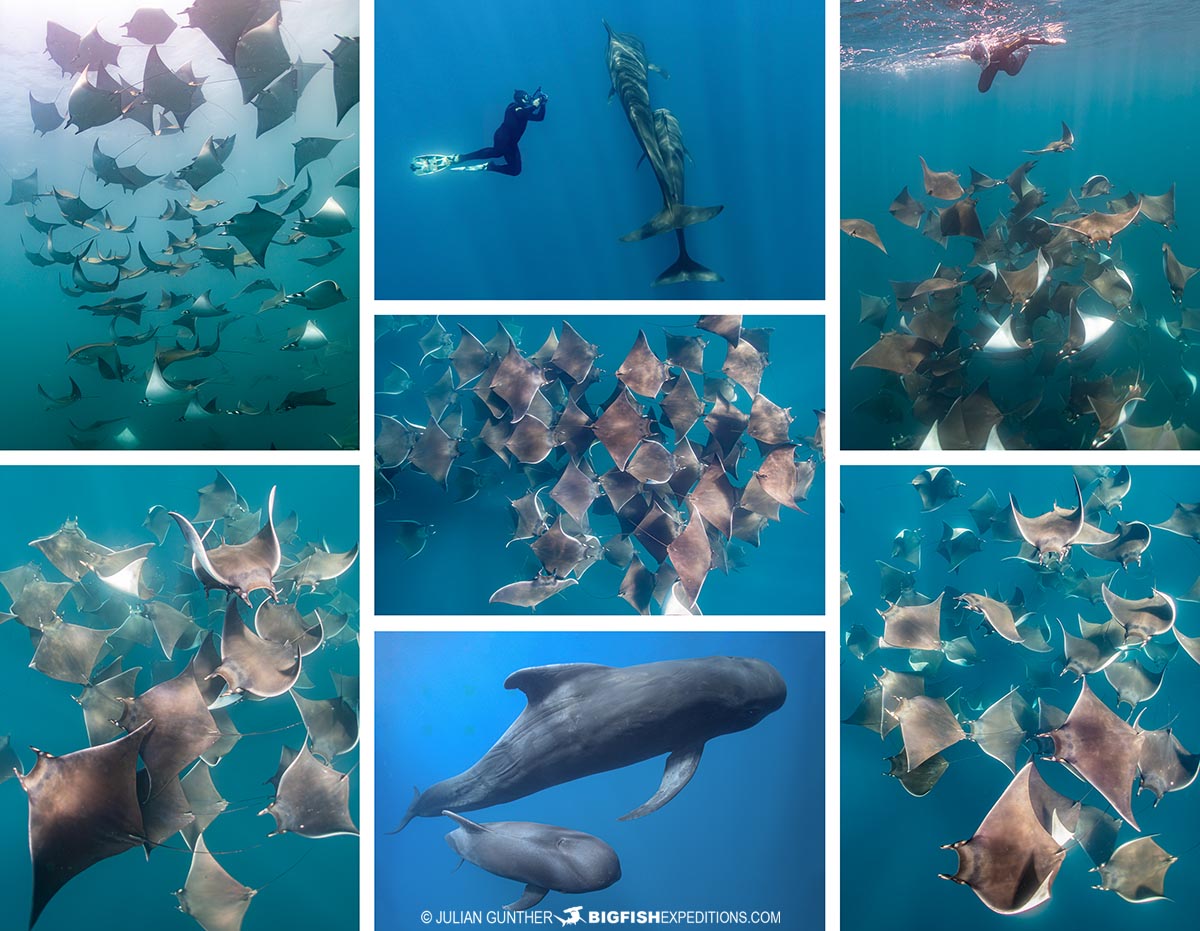
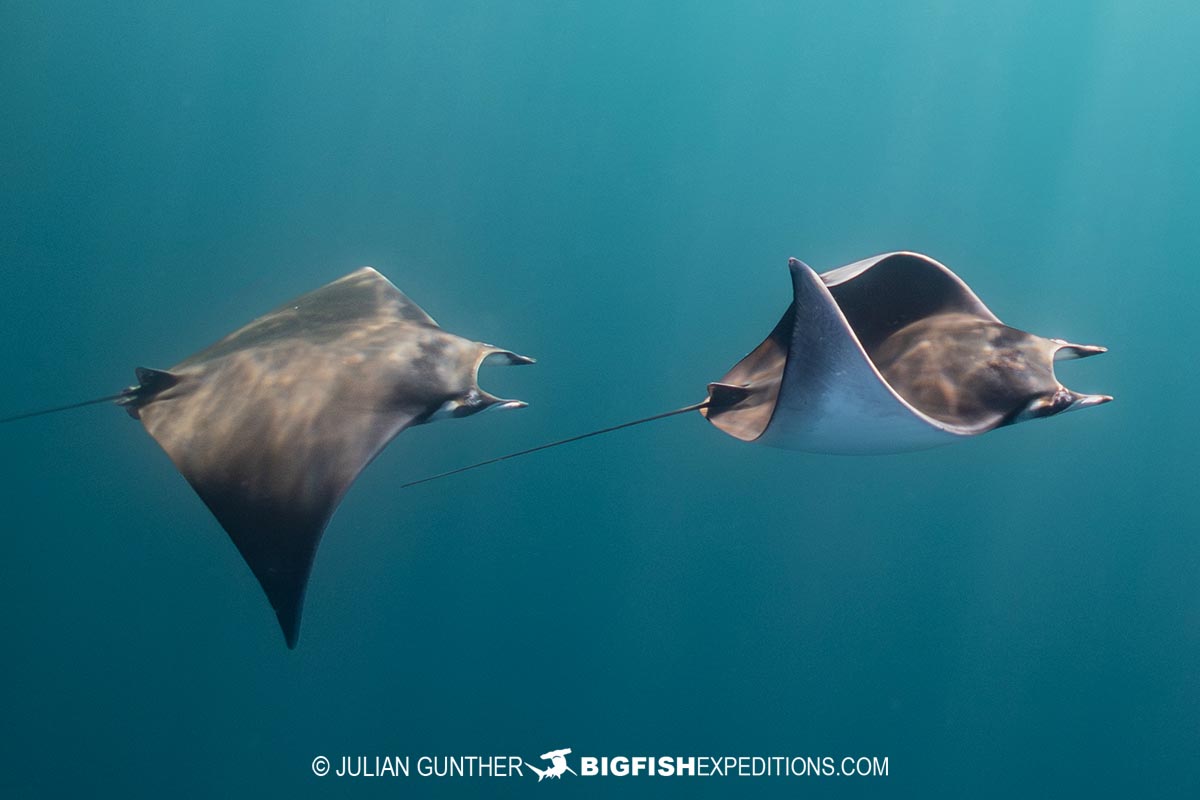
We set out on day one with reasonable conditions and high hopes. We knew that scanning the surface would result in seeing either marine mammals surfacing or rays jumping. Either would be a welcome sign. It didn’t take long for us to sight small groups of Mobula rays jumping, or “popcorning” on the surface. The initial groups we spotted were
small, generally on the order of six or fewer. We dropped in on several small groups and were able to get some proof-of-life shots, but nothing worthy of National Geographic covers.
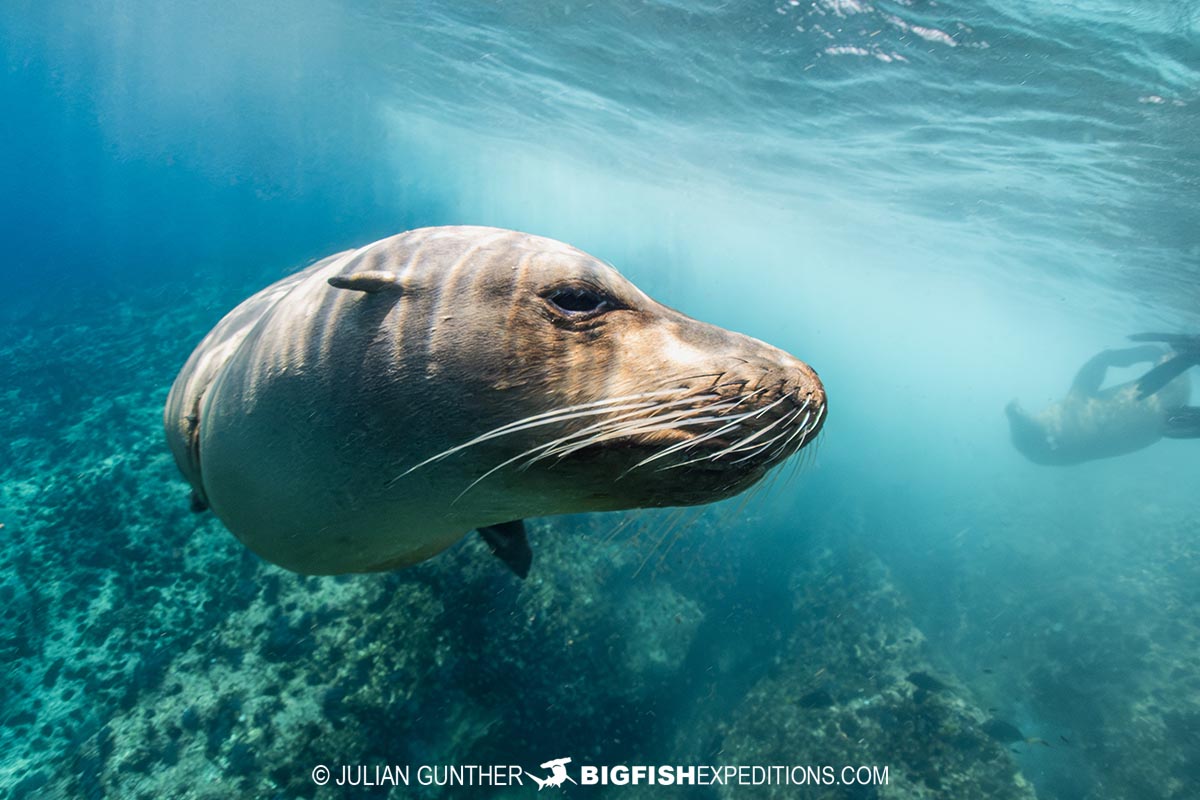
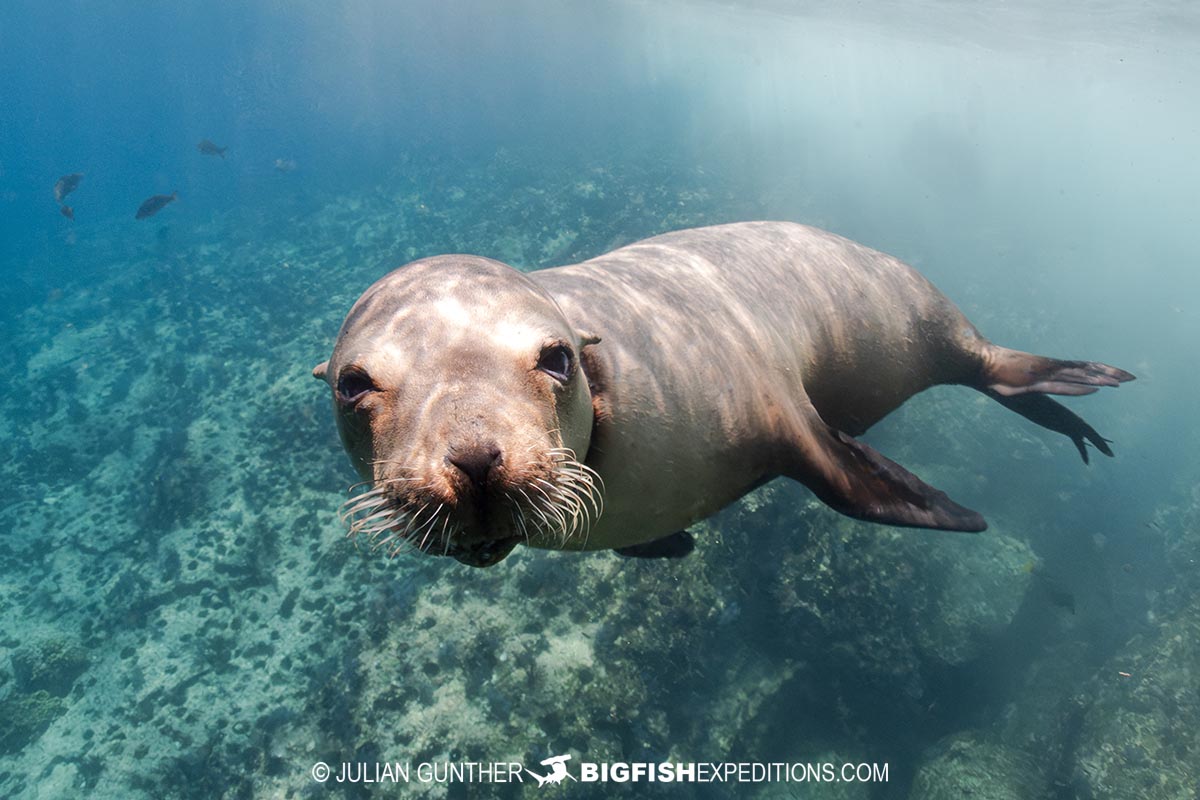
At lunch, we headed over to a nearby sea lion colony where several sleepy females lounged in the water and allowed for some close-up interactions. Then, we continued our search and found several more small groups of Mobulas, then returned to shore, having whetted our appetite for what would come in the subsequent days.
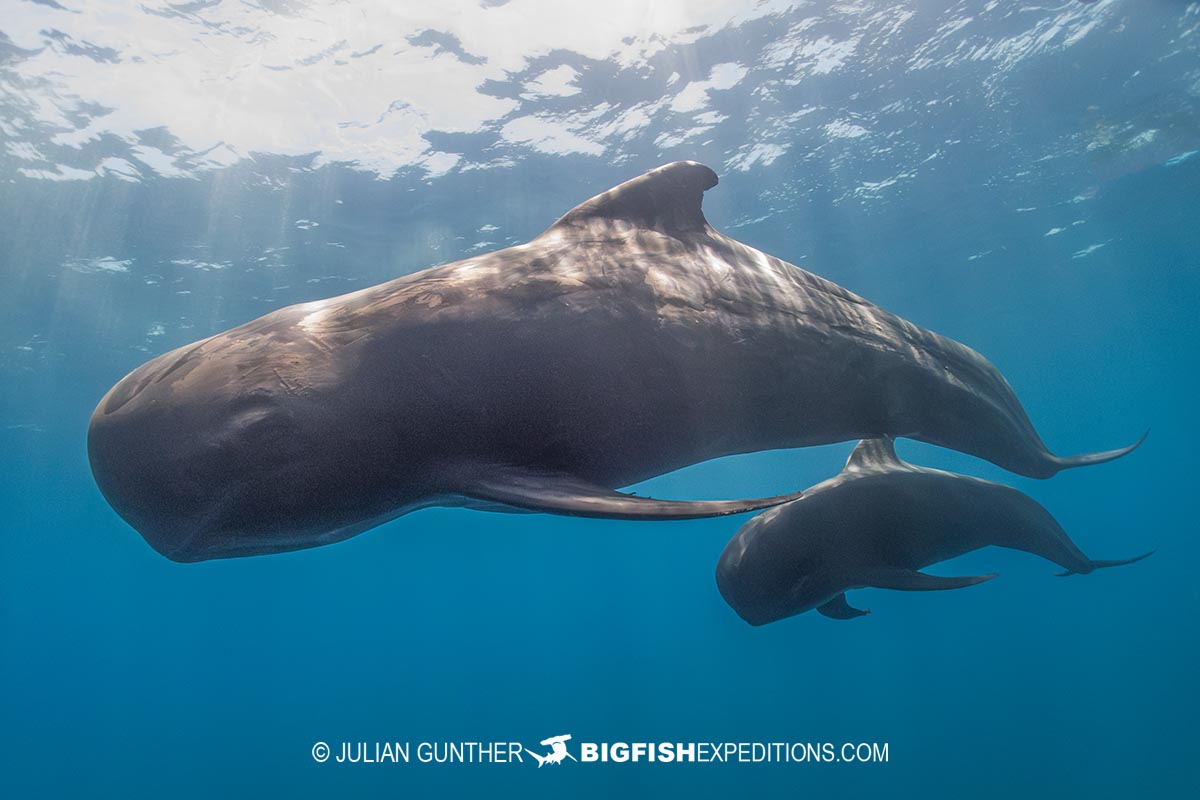
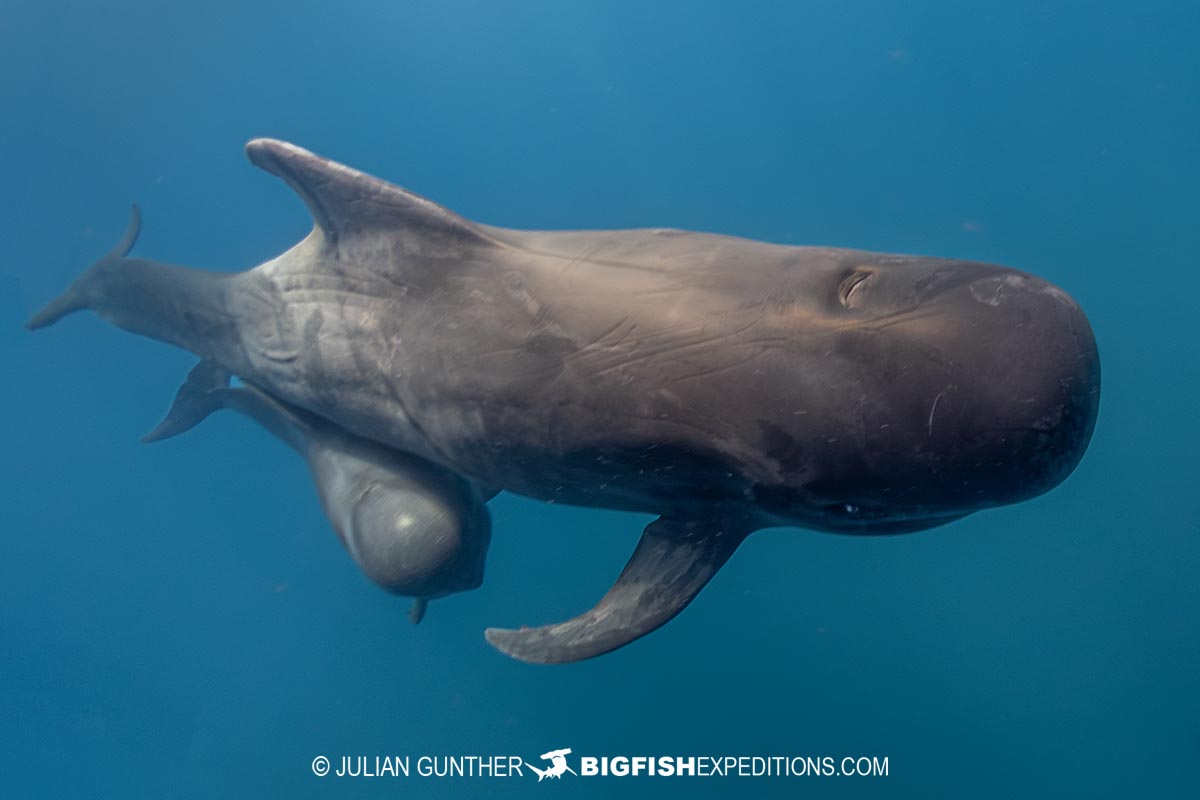
Day two picked up where day one left off, with small groups of Mobulas visible here and there. After Several hours we got the call: Pilot whales nearby! It is almost comical how things like this happen out on the ocean. Right when you are on the cusp of giving up or losing patience, the ocean presents something magical. In this case, it was a mother pilot whale and her offspring, leisurely heading south. It didn’t take long to find the pair; because the young one needed to breathe more often than its mother, the two appeared in no rush and would surface at regular intervals. We proceeded to do a sequence of “hot drops.” We would motor well ahead of the pair, enter the water, and wait for them to swim past. This allowed us to get some close views while minimally disrupting the pair’s journey.
After four or five passes, it was time to let our small family go about their journey and for us to return to shore.
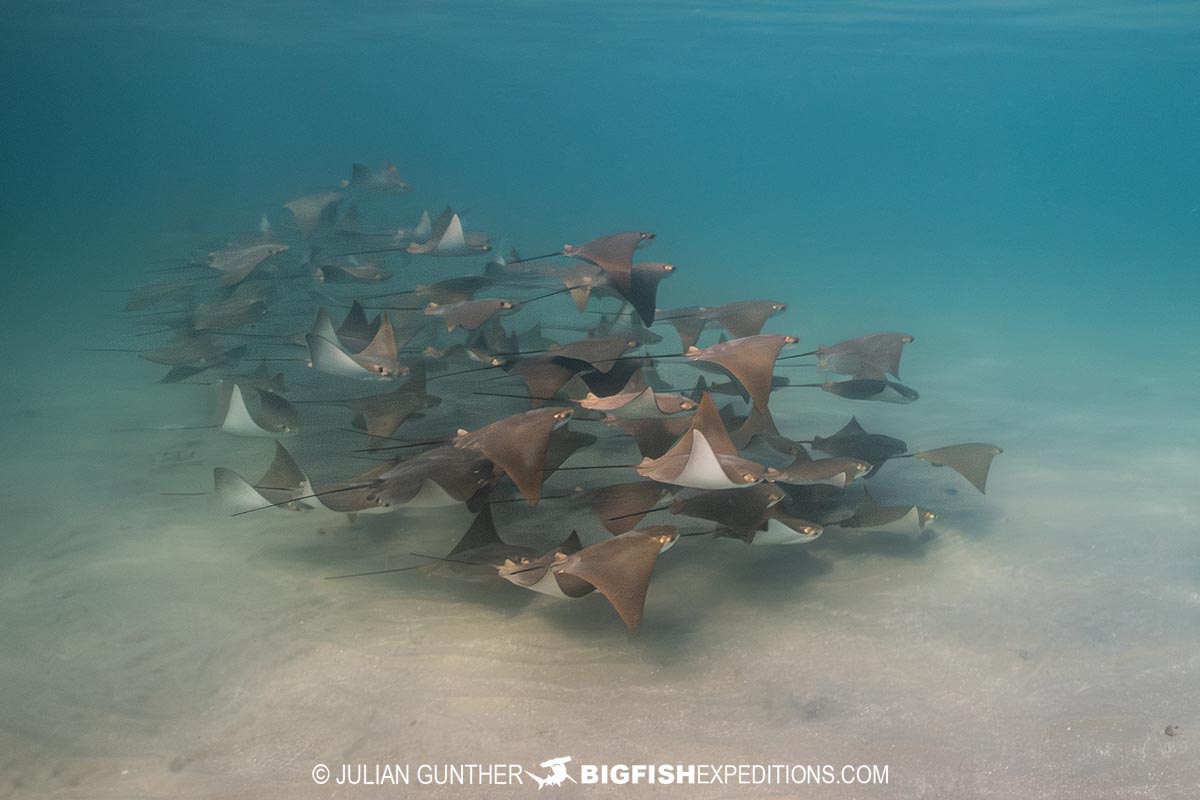
Our third day got off to an auspicious start as weather conditions looked good for the morning, but were expected to rapidly deteriorate in the afternoon. As such, we made the call to leave earlier than prior days to try and take advantage of whatever time we had. As if to reward us for our moxie, we quickly encountered a reasonably sized group of Cownose Rays in relatively shallow water. Although they seemed wary of our presence, they stayed well within our field of view, and the good visibility allowed for some decent shots and sightings of their aggregation. Once they moved off, we resumed our search for what else the ocean would provide.
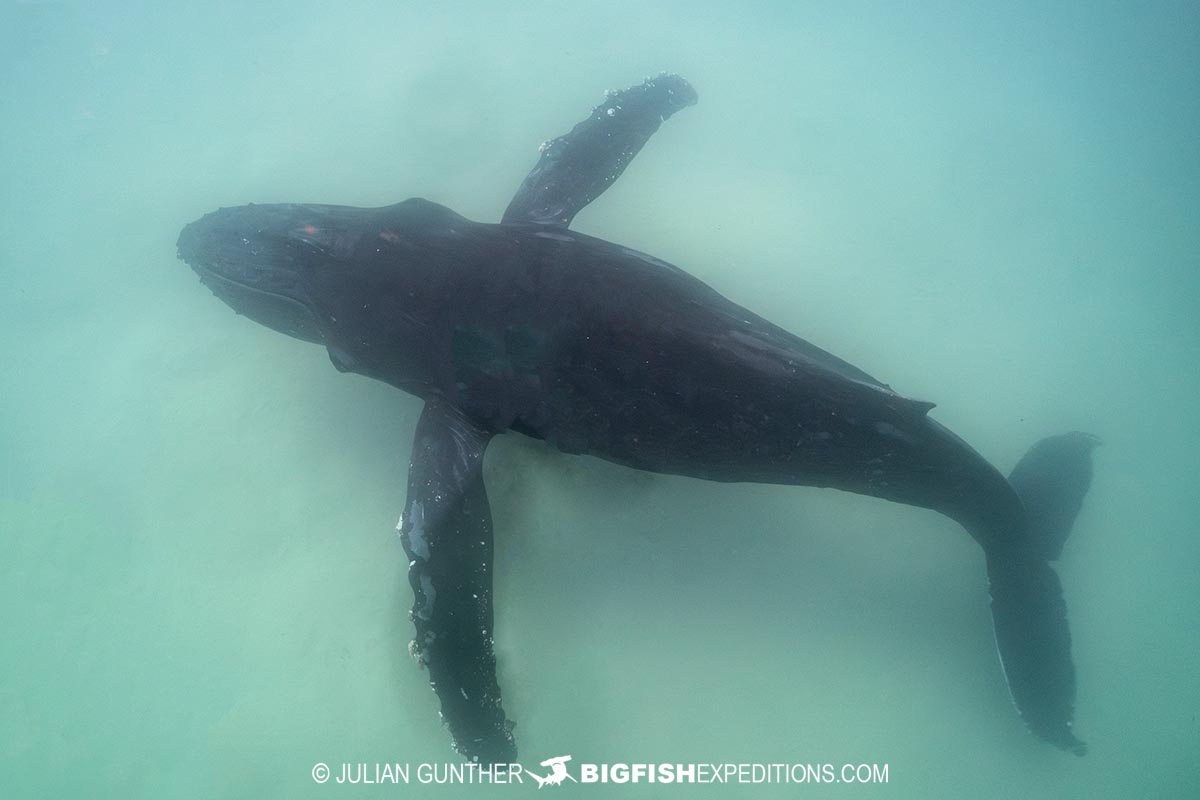
Suddenly, in the distance, we spotted a large splash… it was a young Humpback Whale breaching! We raced over and quickly found this playful youngster and its accompanying mother. Regulations dictated that we couldn’t jump in with the Humpbacks, but we were able to lean over the side of our panga and shoot them from the
surface. The little one indulged us with a few more leaps before they decided to continue on their way. As predicted, offshore conditions quickly started deteriorating after we separated from the whales, and we made the difficult, but necessary, decision to return to shore.
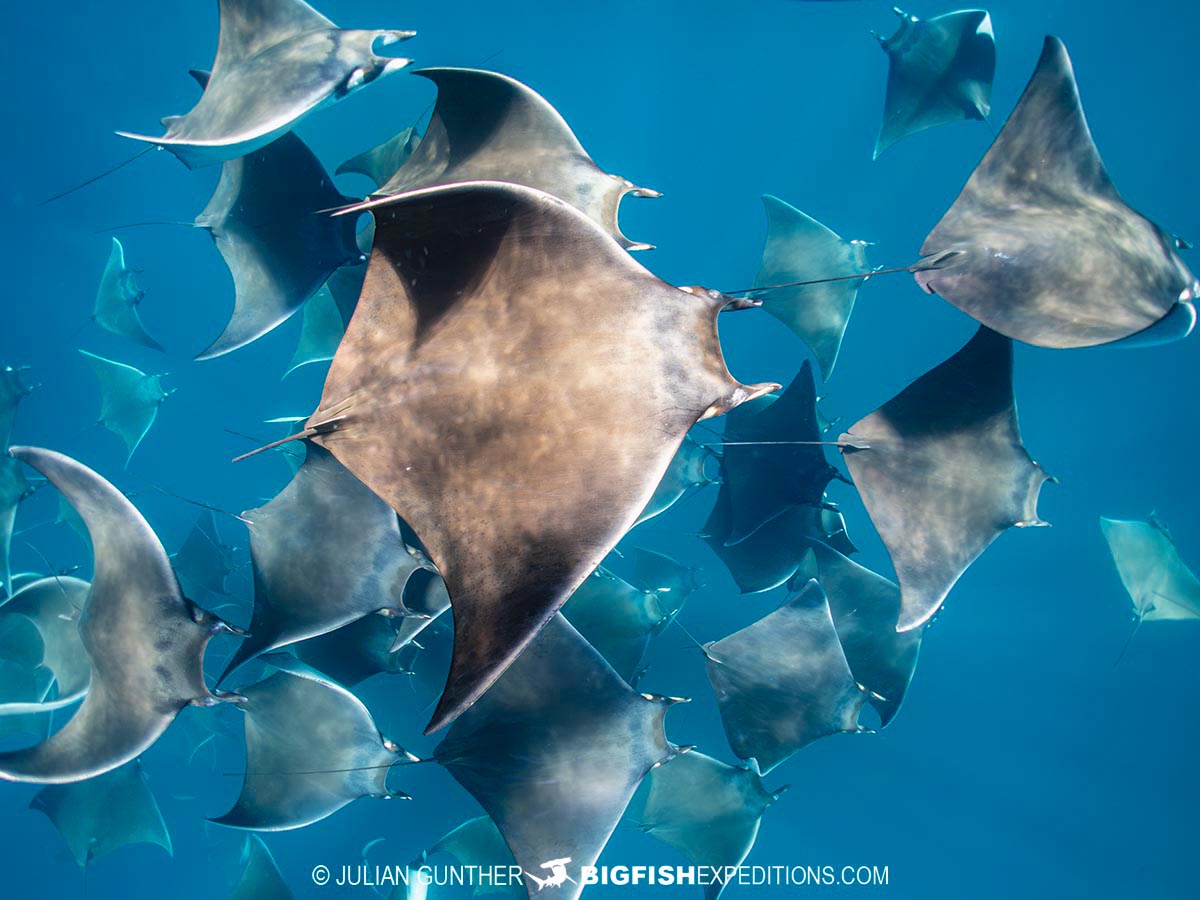
Our fourth day started much like the others; we departed early and went in search of what the ocean would provide… little did we know what it had in store for us. Soon we encountered small groups of Mobula Rays, but again they were reticent to engage with us in the water, often fleeing and only returning once we’d exited. However, we did notice these small groups seemed to be more concentrated in a tighter area. After a few hours of chasing small groups, we spotted a more pronounced disturbance: more rays cruising along the surface. As we approached, we suddenly realized we’d hit the jackpot—a Mobula tornado!
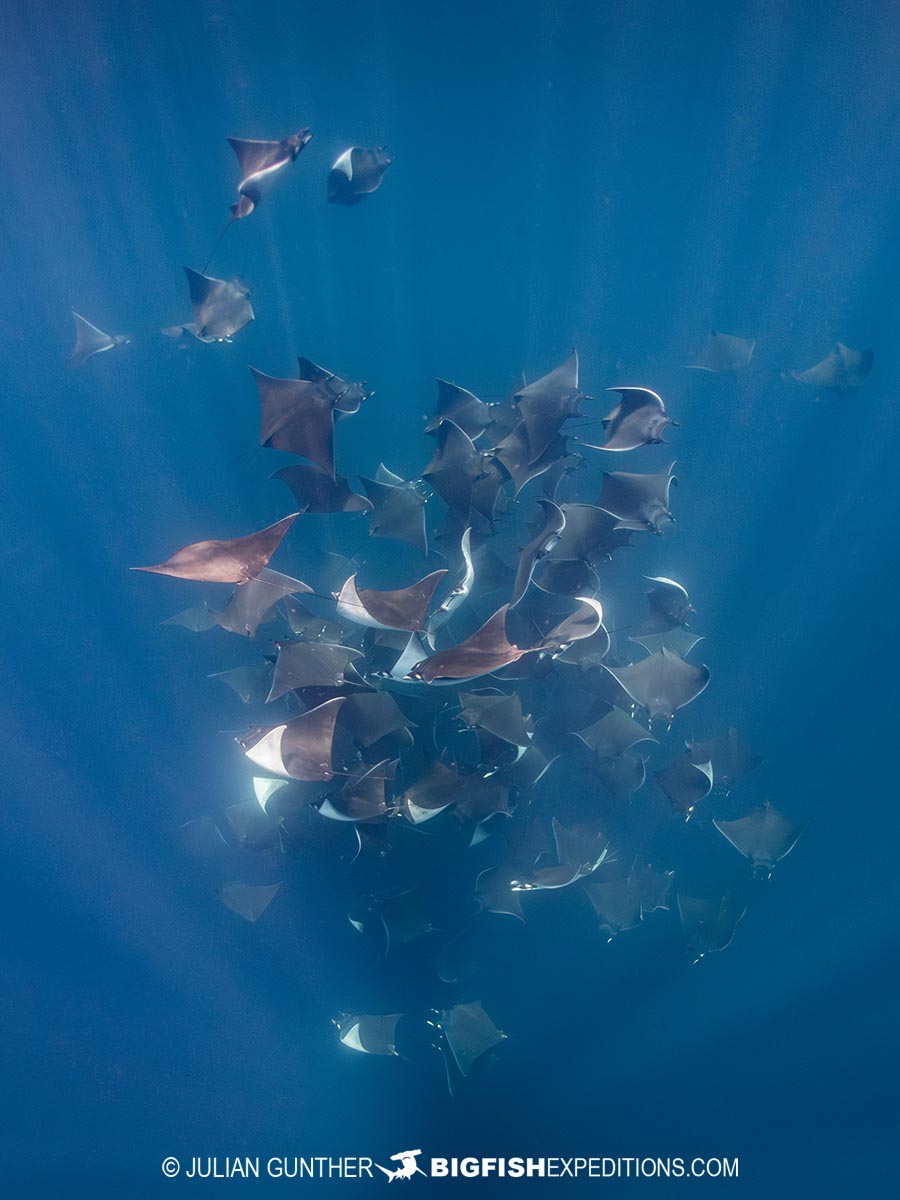
There were several hundred Mobulas swimming in a circular formation around a small area. We slowly entered the water, trying to make as little disturbance as possible, but it quickly became apparent the Mobulas didn’t care; they continued right about their business. Mobulas would dart in and amongst the divers and then return to their cyclone formation. We were soon blessed with the problem of trying to choose what would be the best photograph or video.
Mobula aggregations like this may last only a couple of minutes or up to several hours… thankfully, we got the latter. Several of our divers even had to return to our panga to swap out batteries, memory cards, or both. The Mobulas simply did not care. As the day progressed, it quickly became apparent that fun shots would also be in order, so everyone posed and dove alongside the rays to get those shots that would later form talking points at work or at home.
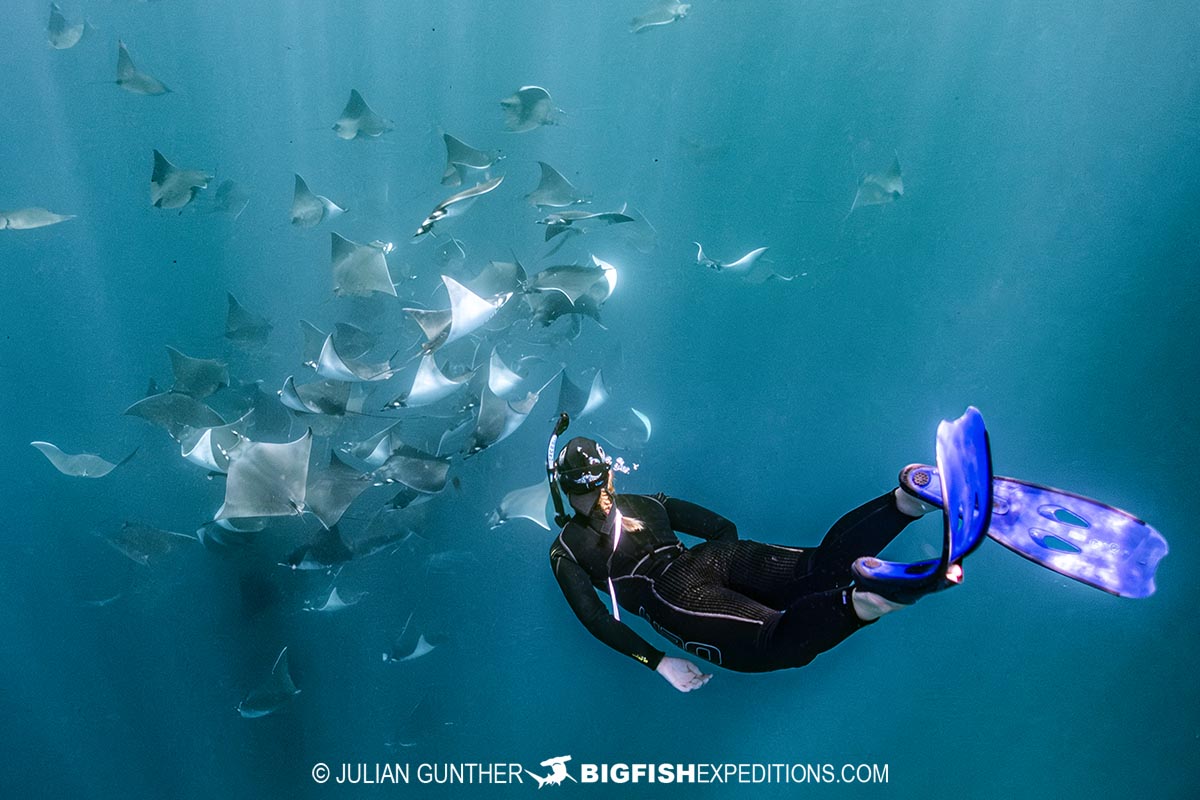
We spent the remainder of the day—in excess of four hours—with this Mobula tornado. We ended up having to leave, not because the rays dissipated, but because it was getting too late in the day and we needed to make it to shore before nightfall! The smiles and high-fives on the ride back to shore were almost as plentiful as the Mobulas themselves.
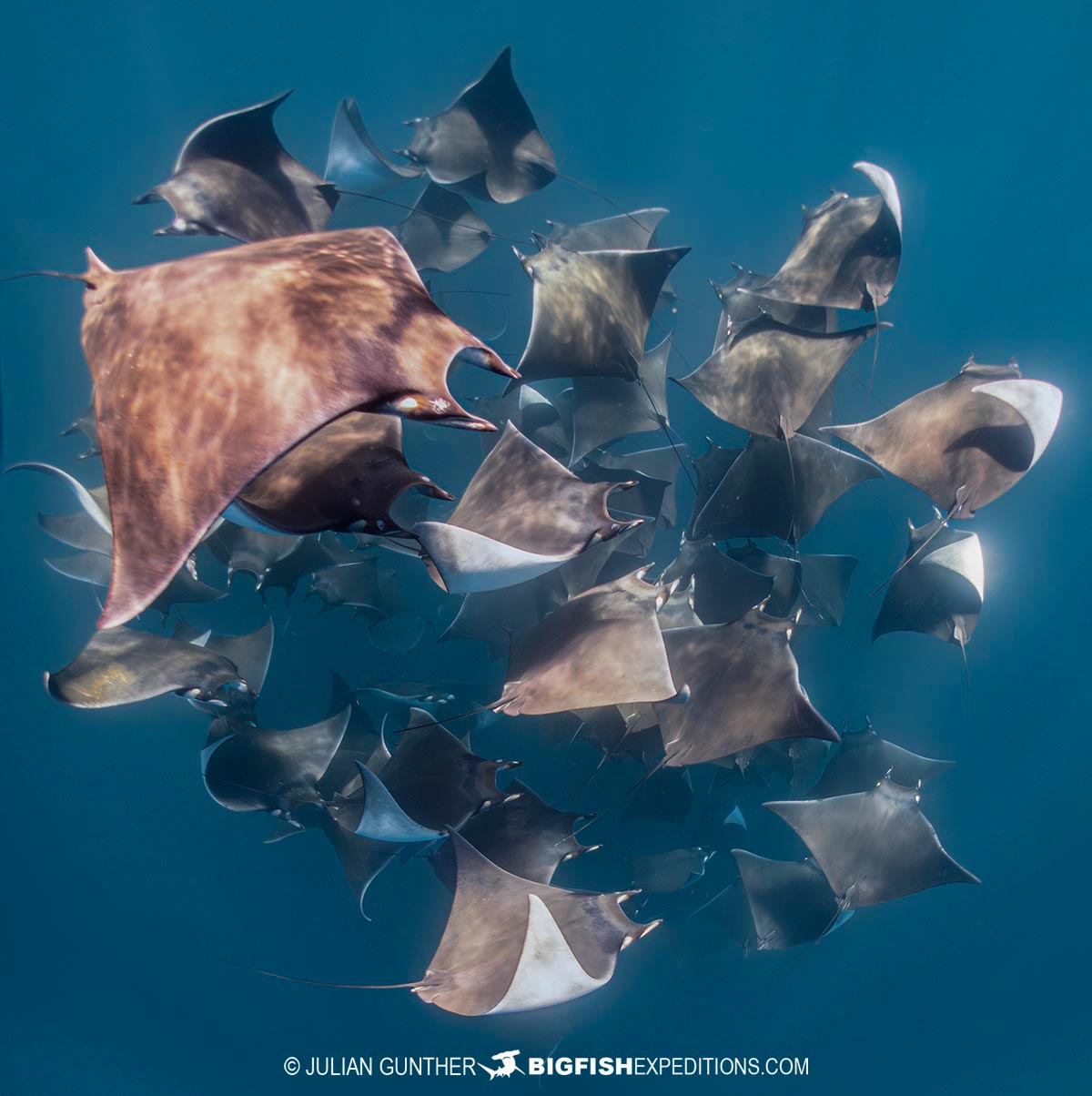
Our final day on the water came with high expectations, especially after the events of the prior day. We encountered small groups of Mobulas, but unfortunately, no tornadoes like the day before. However, the small groups we did encounter seemed to have gotten the message that we intended no harm and were only there to observe. They weren’t nearly as skittish as earlier in the week. We also encountered intermittent groups of dolphins. Some came for a few passes, but others were only interested in riding our panga’s wake, and once we turned off the engine they quickly scattered. Our day ended with a few more shots of small groups of Mobulas and soaking in the late afternoon sun of what Jacques Cousteau once coined ‘the aquarium of the world’—the Sea of Cortez.