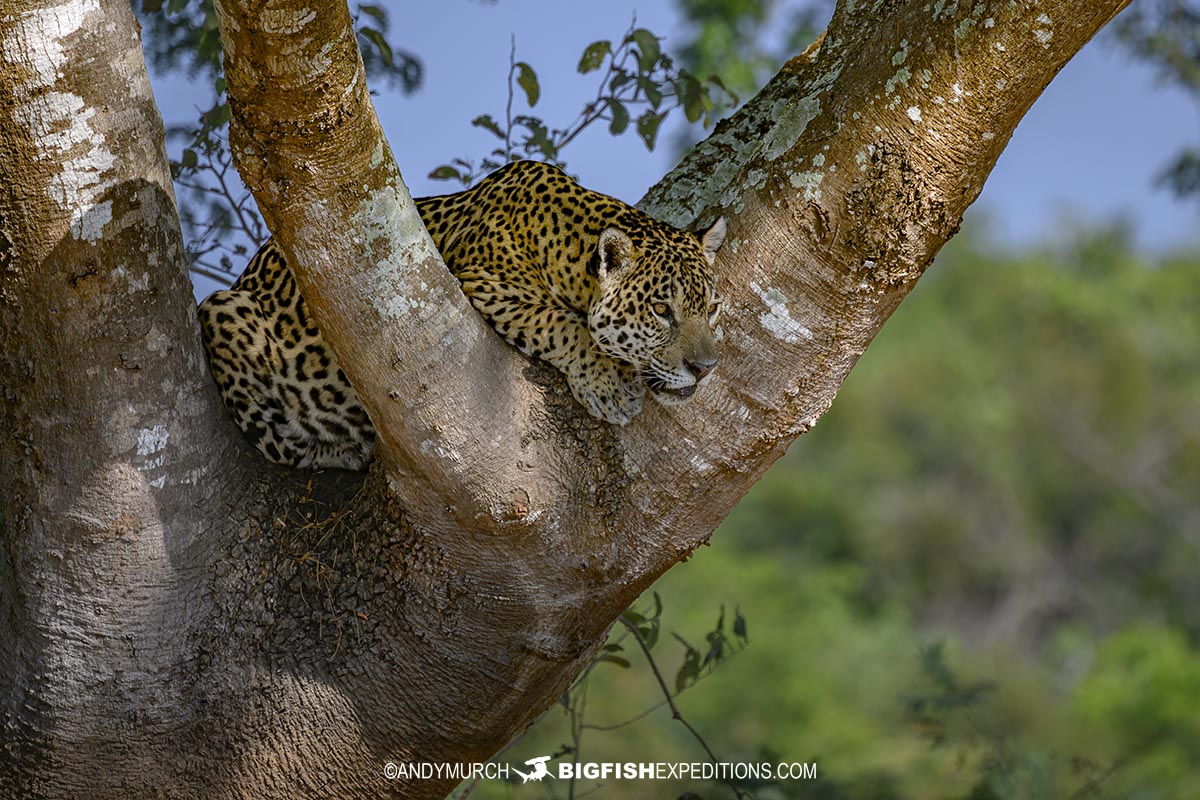
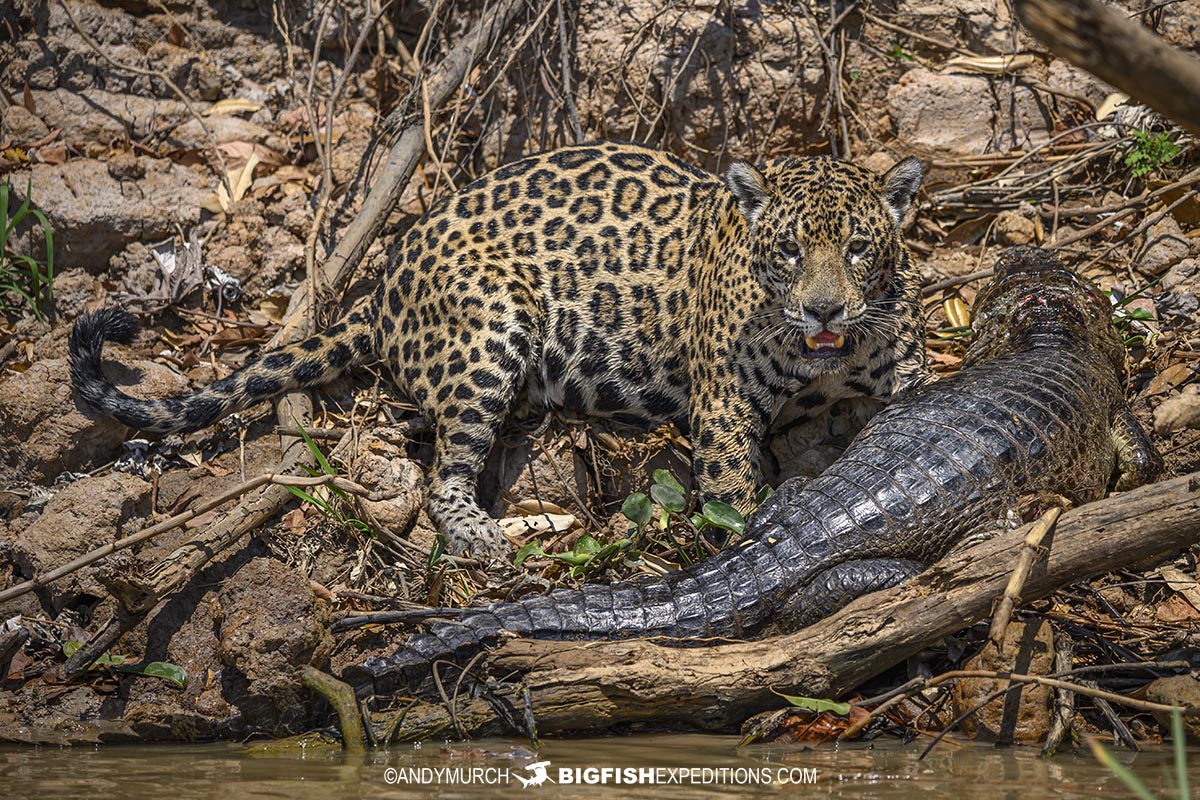
An EPIC Jaguar Adventure in the Brazilian Pantanal.
After bidding farewell to our first jaguar group, I went straight back into the Pantanal for a second EPIC week with Jaguars. On our second week we saw 15 different jaguars and saw 3 successful predations. It was a truly spectacular photographic adventure!
Day 1: Into the Pantanal
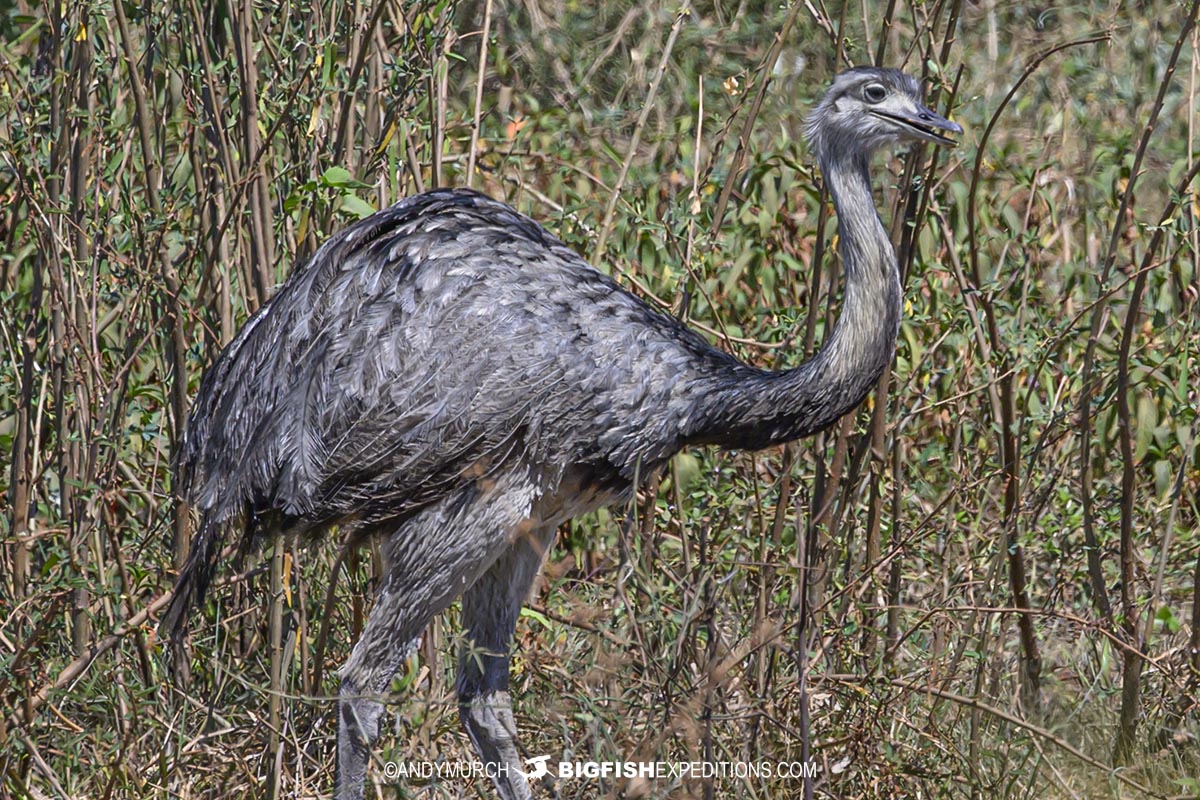
Our trips are split between two locations: the Pantanal Wetlands, which has the densest and most accessible population of jaguars in the world, and the Pantanal dry forest, which is a great place to see ocelots, monkeys, and a host of incredible bird species. This week we visited the ocelot lodge first; a three hour drive south from Cuiaba. On route we saw huge flightless rheas, hundreds of hawks, and a who’s who of herons, egrets, and other Pantanal waterfowl.
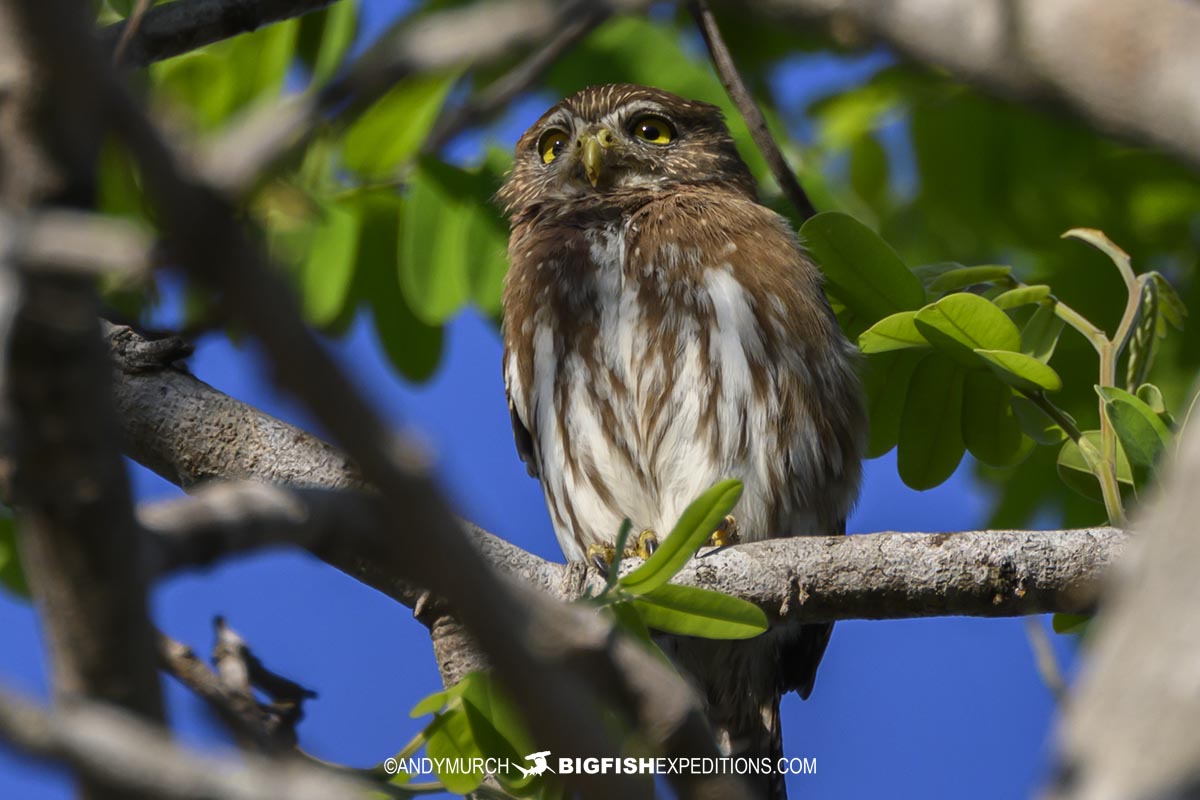
When we got to the lodge, we found a pygmy owl perched in a tree. The Pantanal is filled with raptors, but there is something special about seeing owls, especially in daylight when you can get a good look at them.
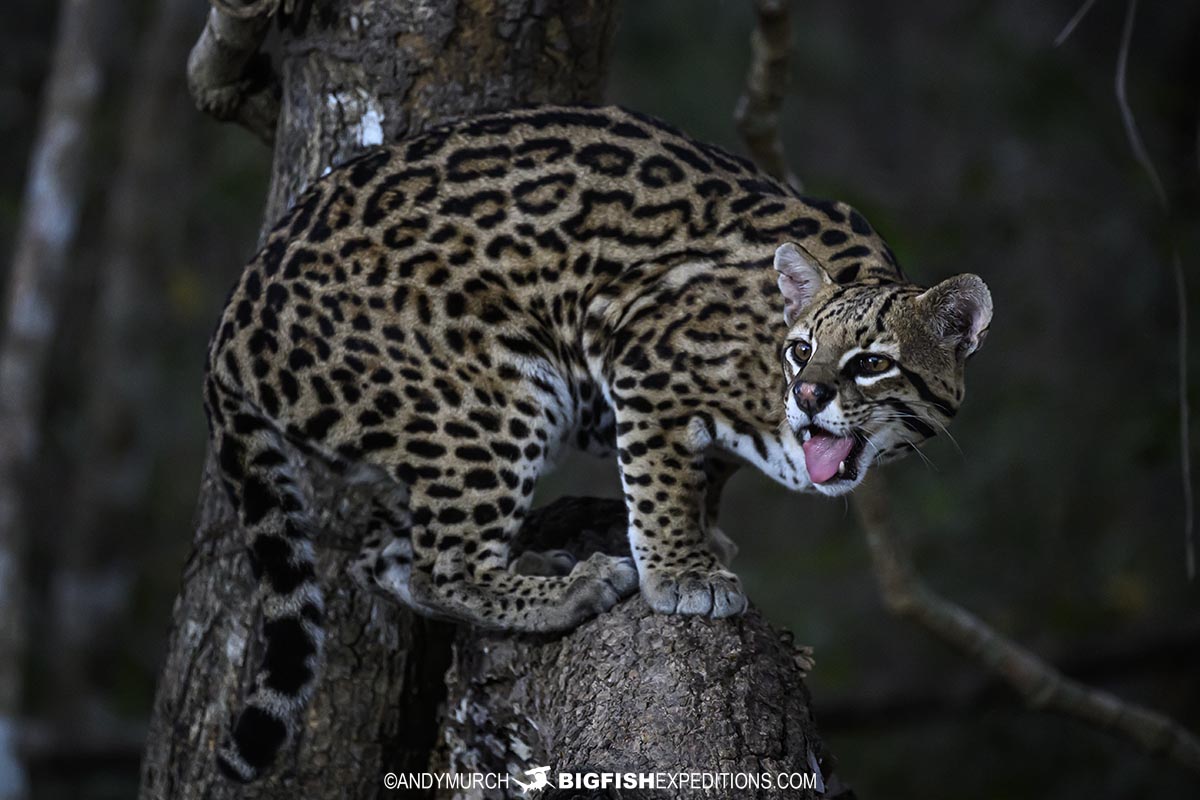
Ocelot Encounter!
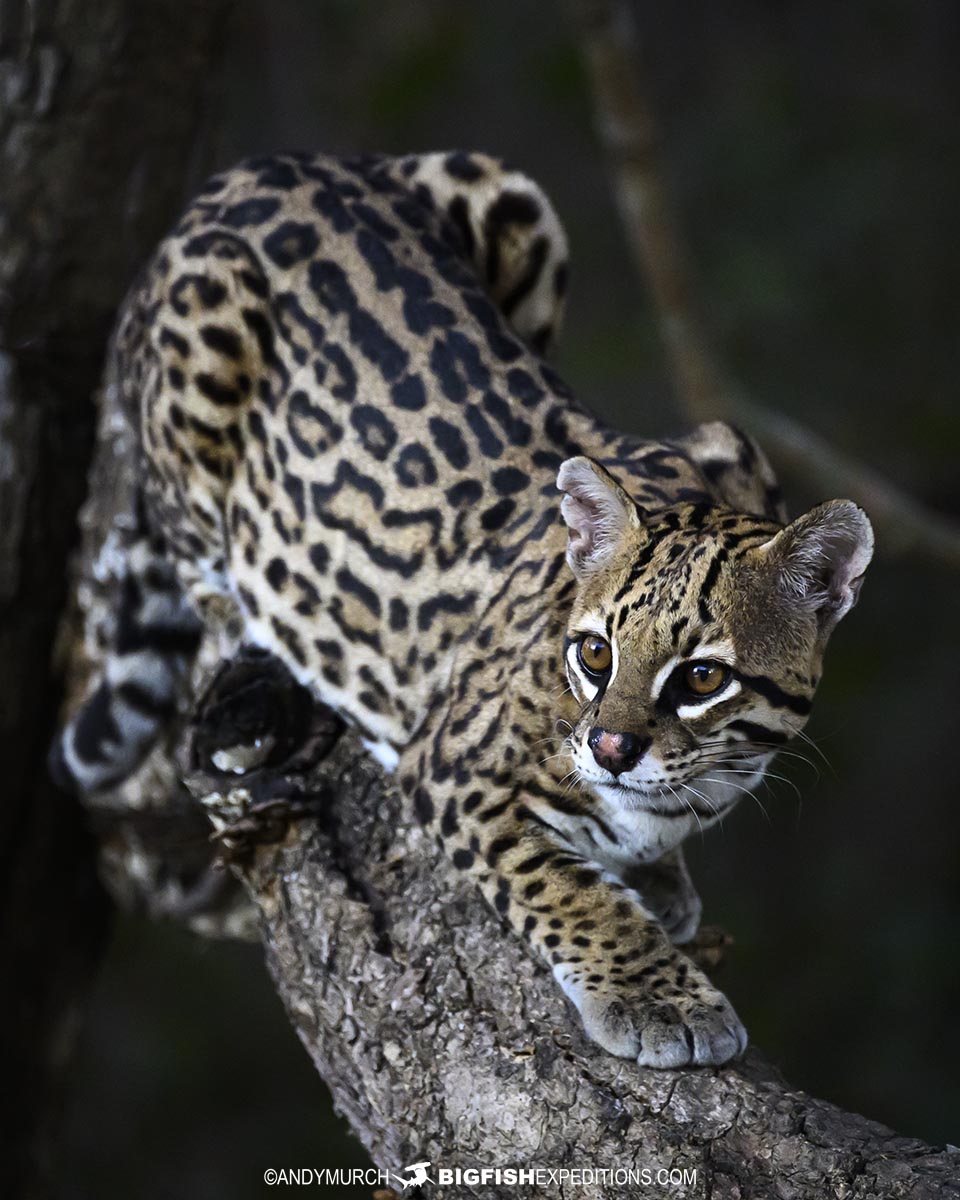
At dusk we walked to the forest hide in hopes of seeing an ocelot. The local guides say ocelots show up 50% of the time, but I have seen them every single night that I have tried. Watching an ocelot slink out of the forest at dusk is an experience you will never forget!
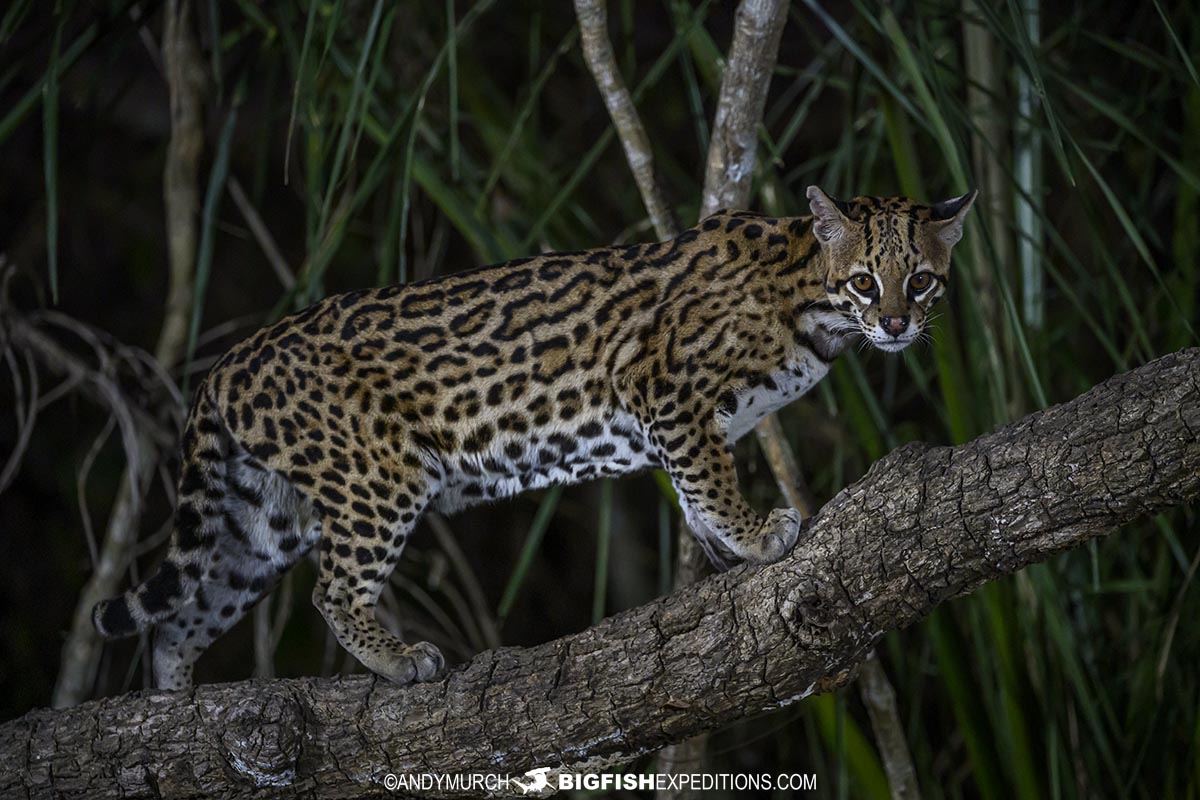
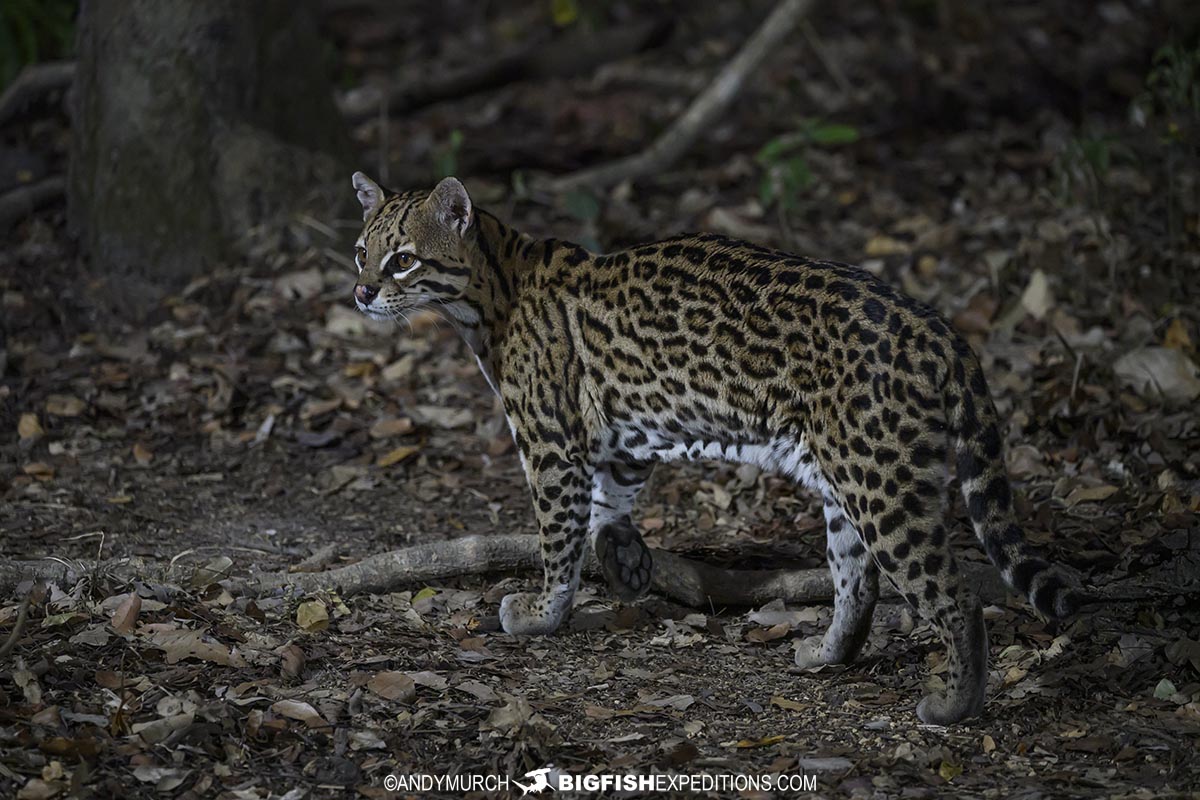
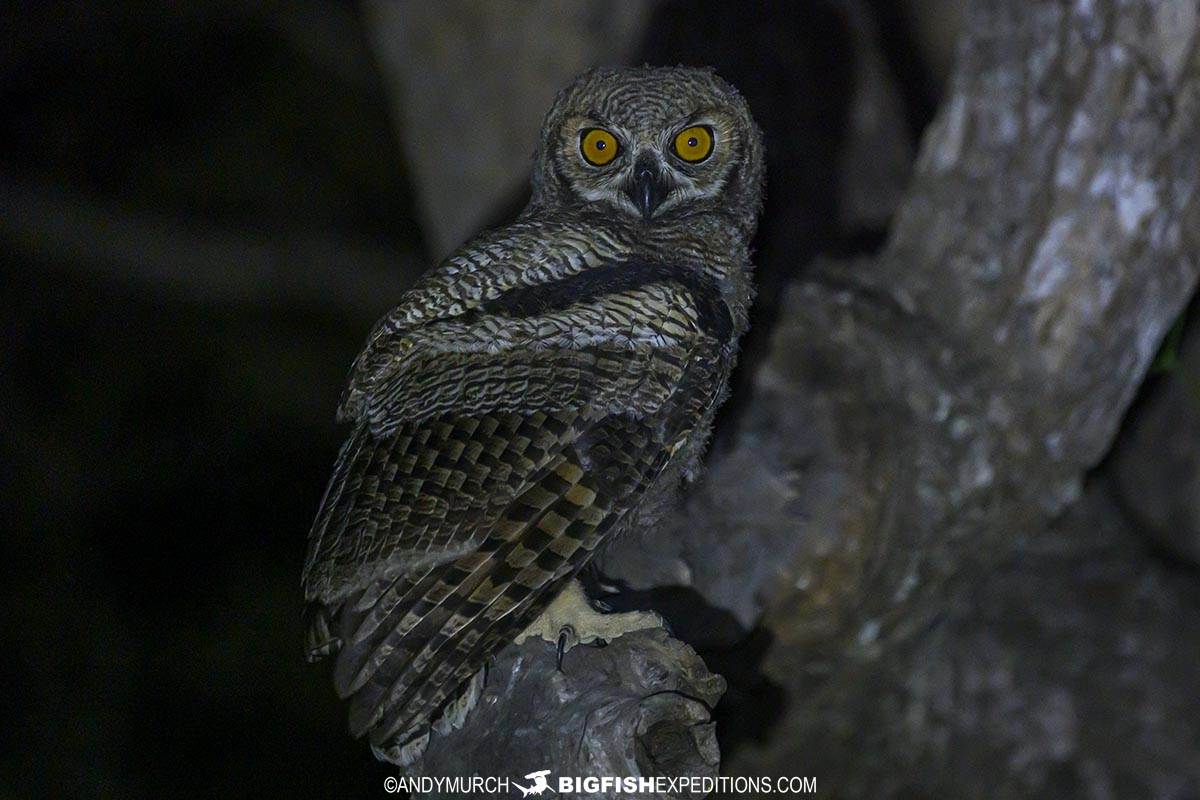
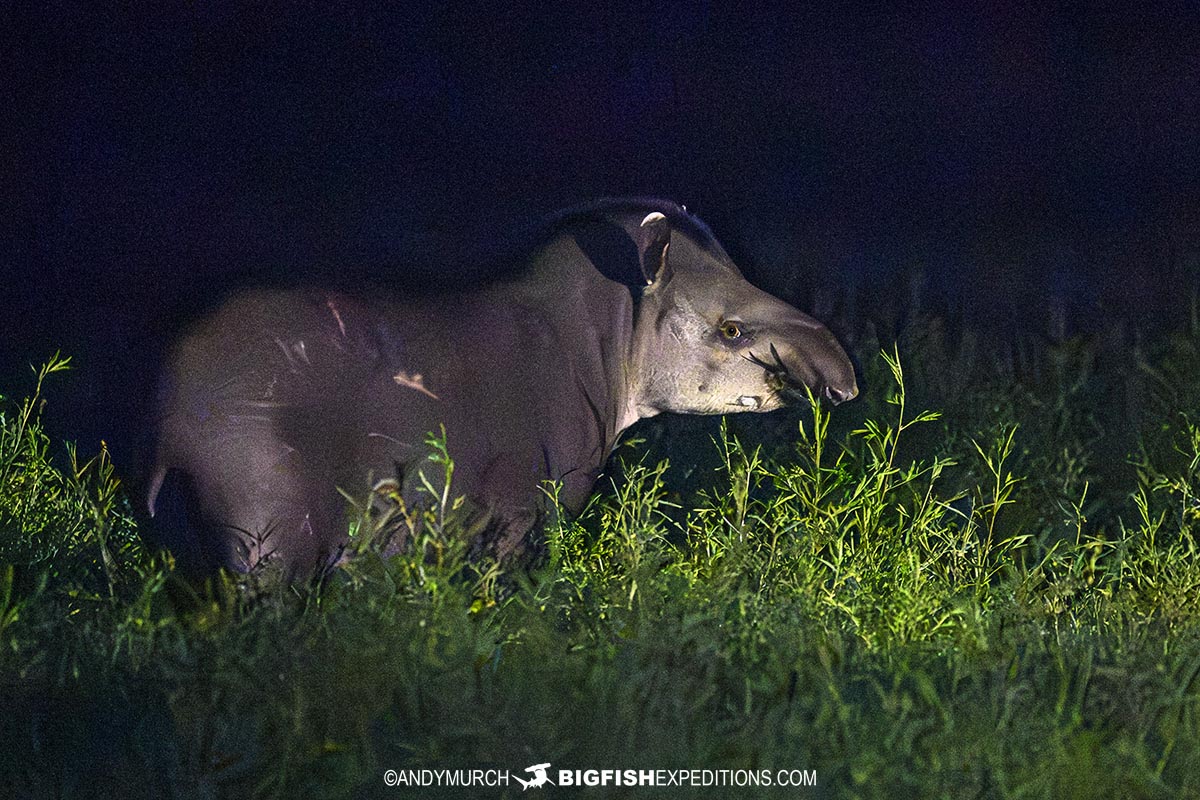
After dinner we went out spot lighting. It was a good session with Great horned owls, many frogs, crab eating foxes and a tapir!
Day 2: Howlers and Capuchins
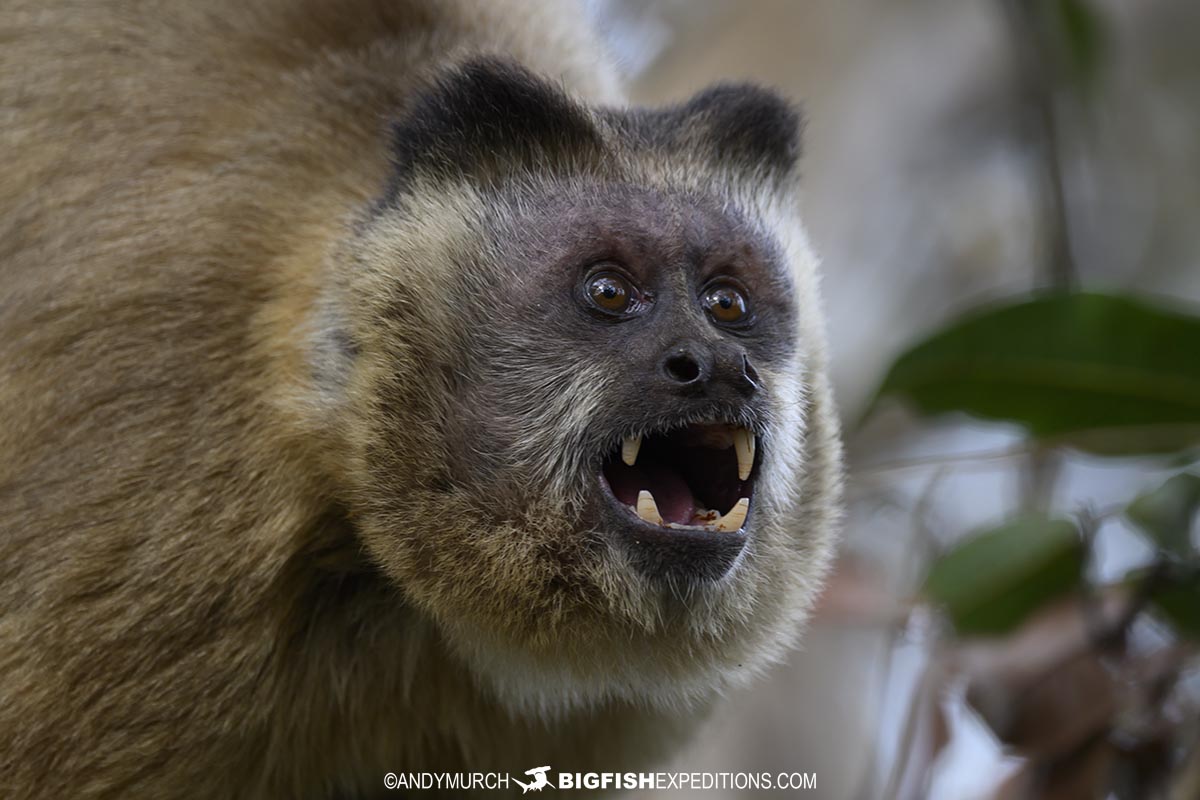
After a delicious breakfast we hiked into the forest and climbed up to a raised platform to watch Zara’s Capuchins and Black and Gold Howler Monkeys. Capuchins are a bold species so they’re pretty easy to see everywhere in the Pantanal, but this is a great spot for close up encounters with howler monkeys that usually keep their distance from humans. Black and Gold Howlers are extremely sexually dimorphic. The males are larger and jet black, where as the females are a rusty gold colour.
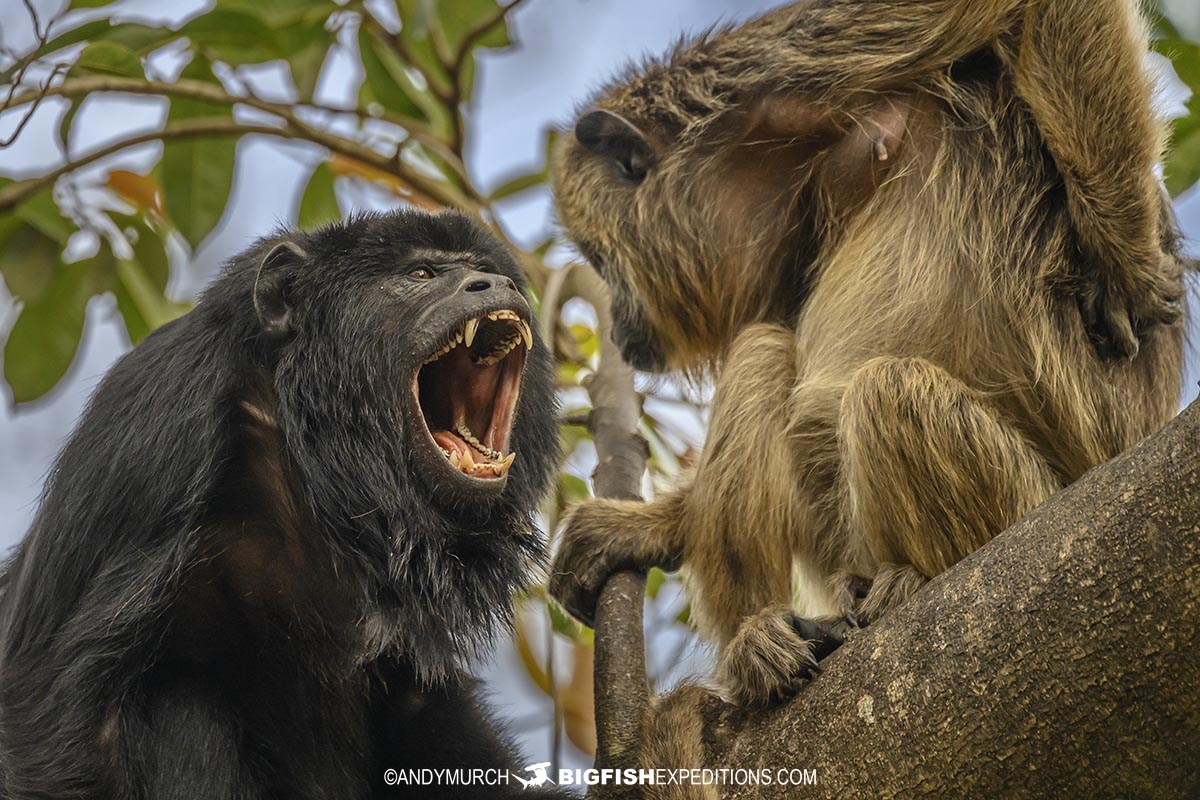
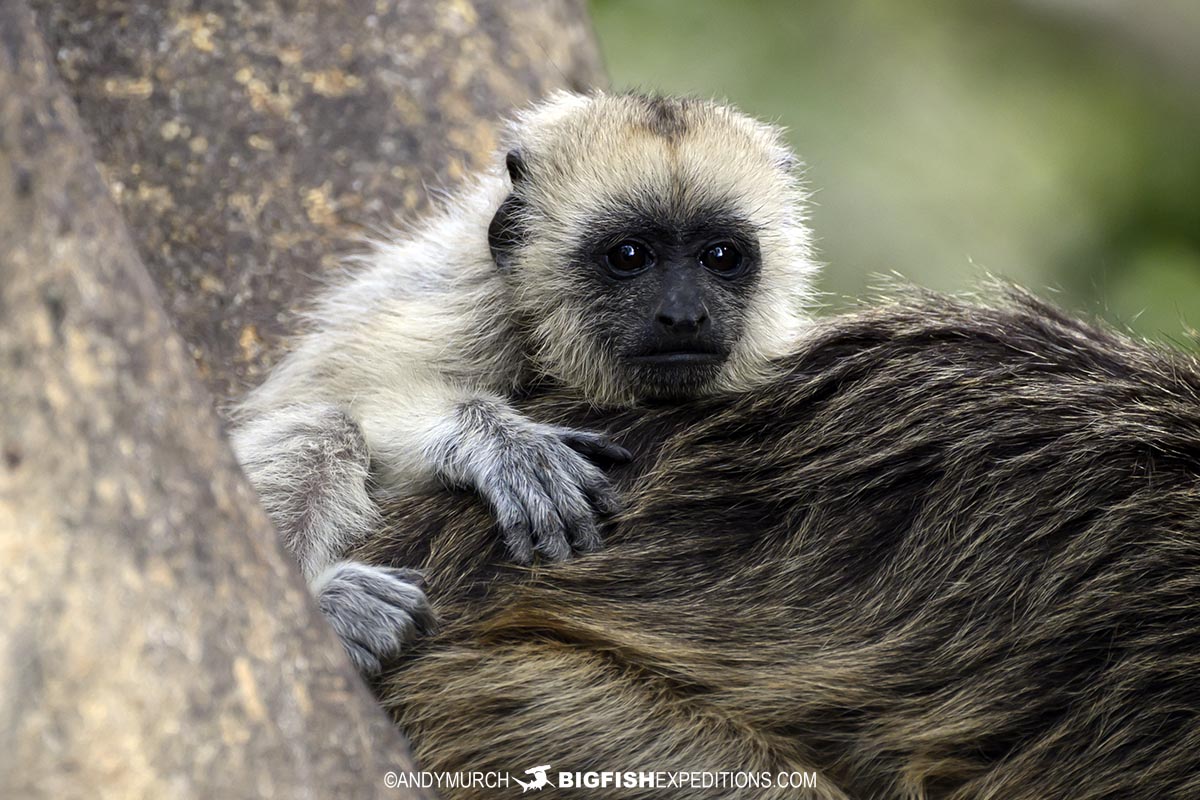
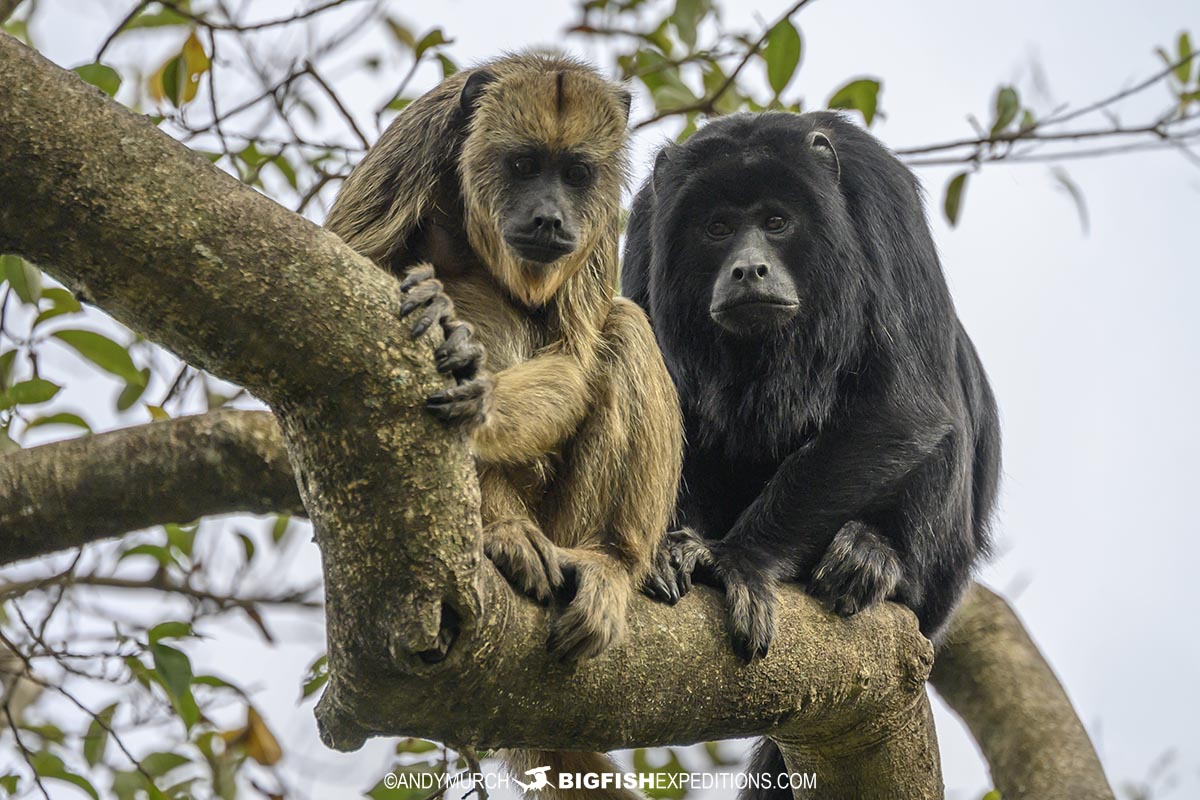
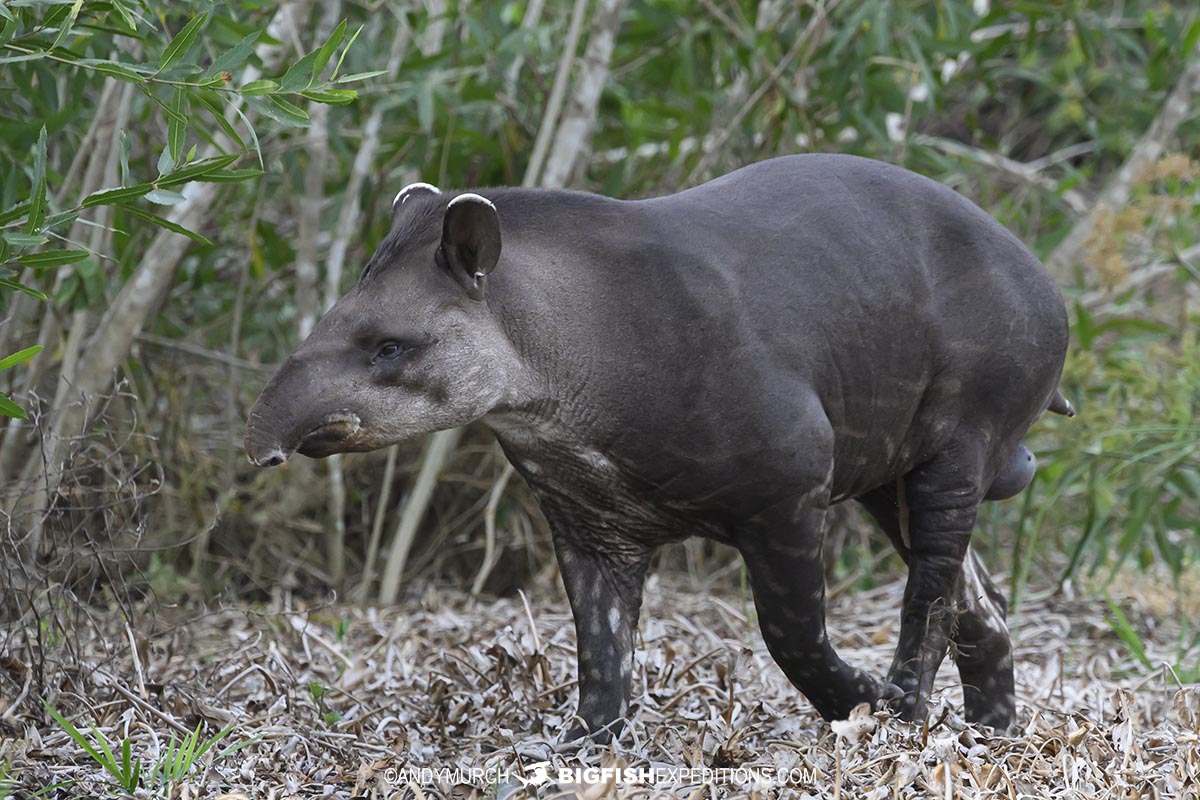
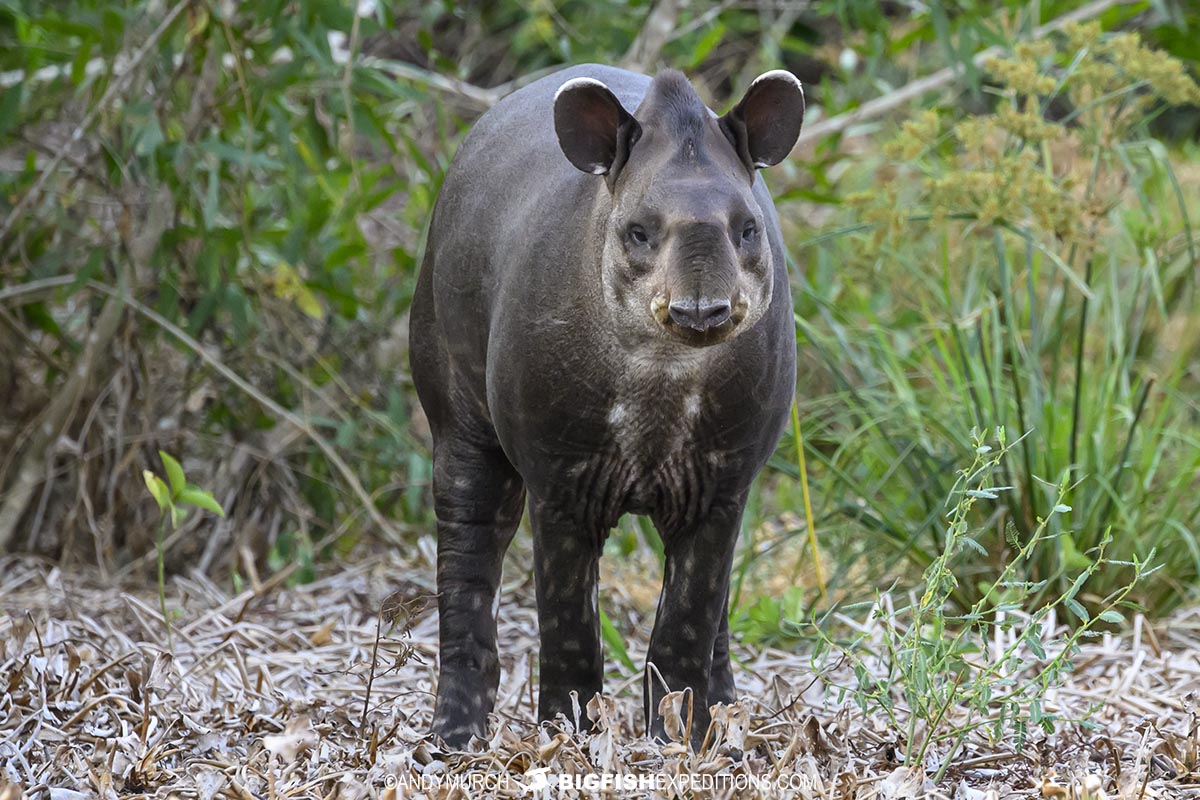
After the monkey encounter, we went in search of birds in the forest. On the way back to the lodge, we came across a tapir foraging in a dry river bed. It was a long encounter that allowed us to get some great images.
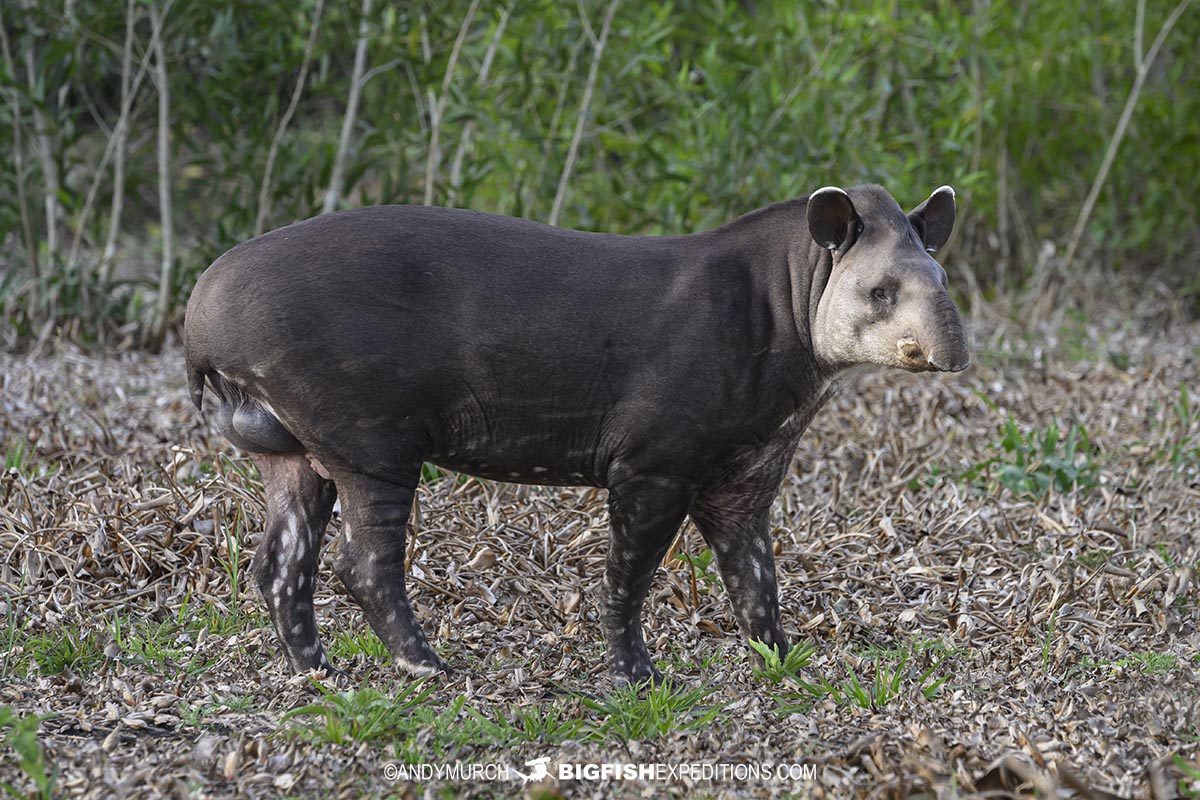
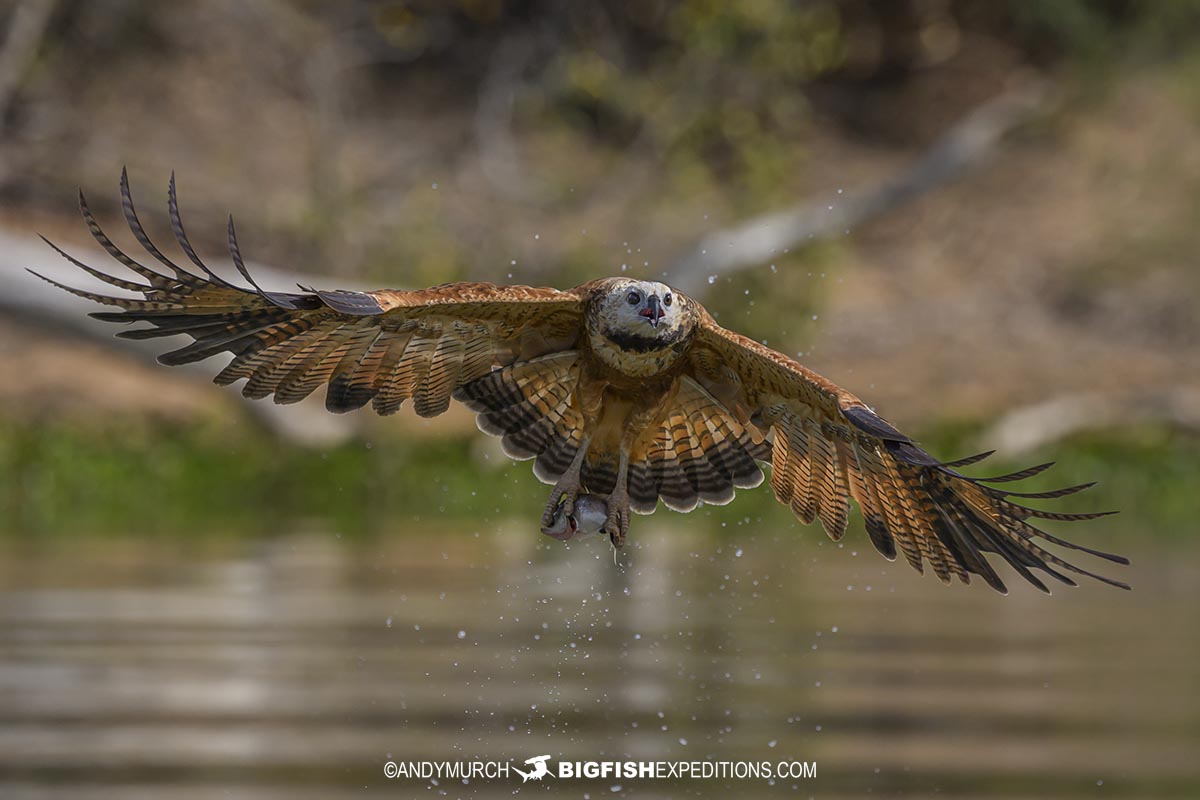
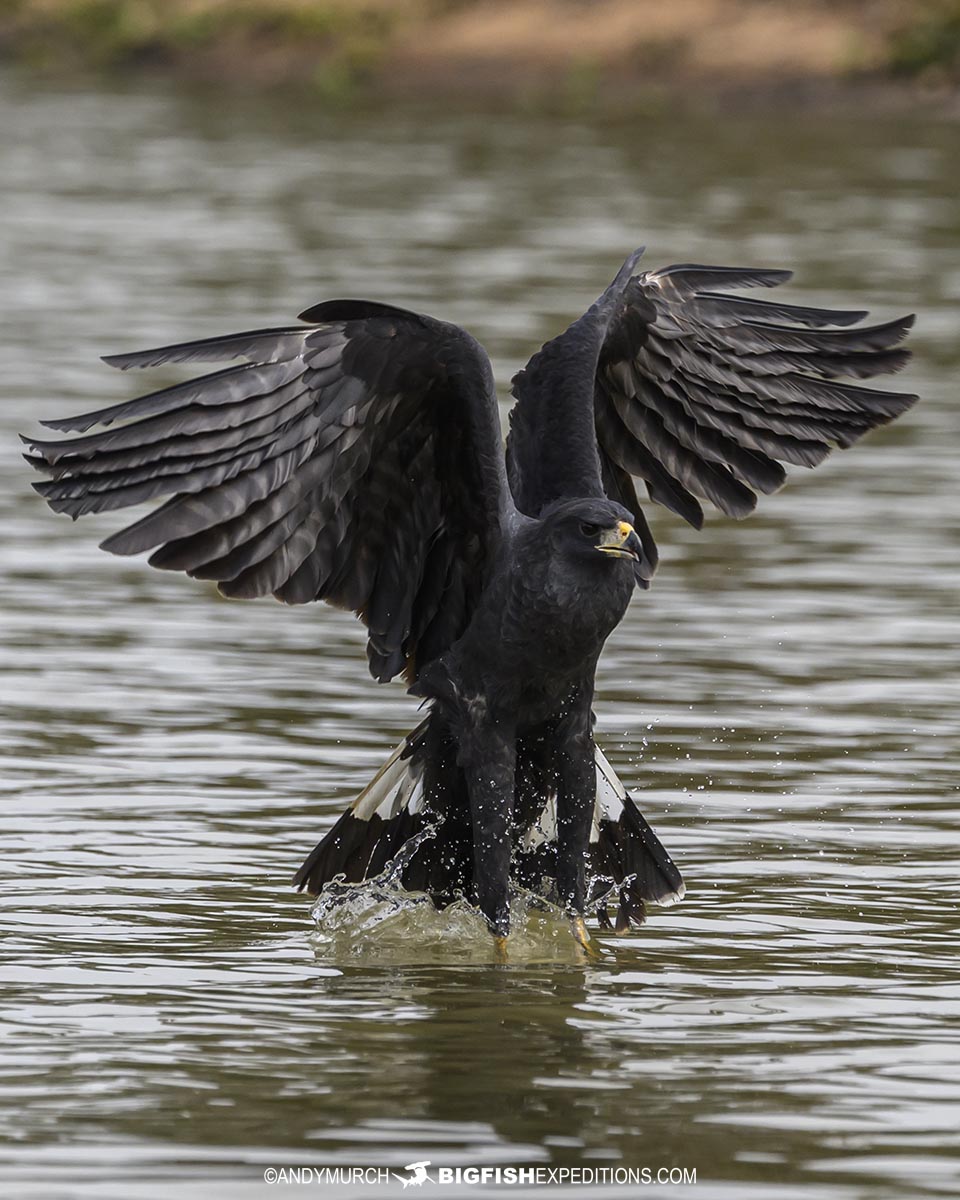
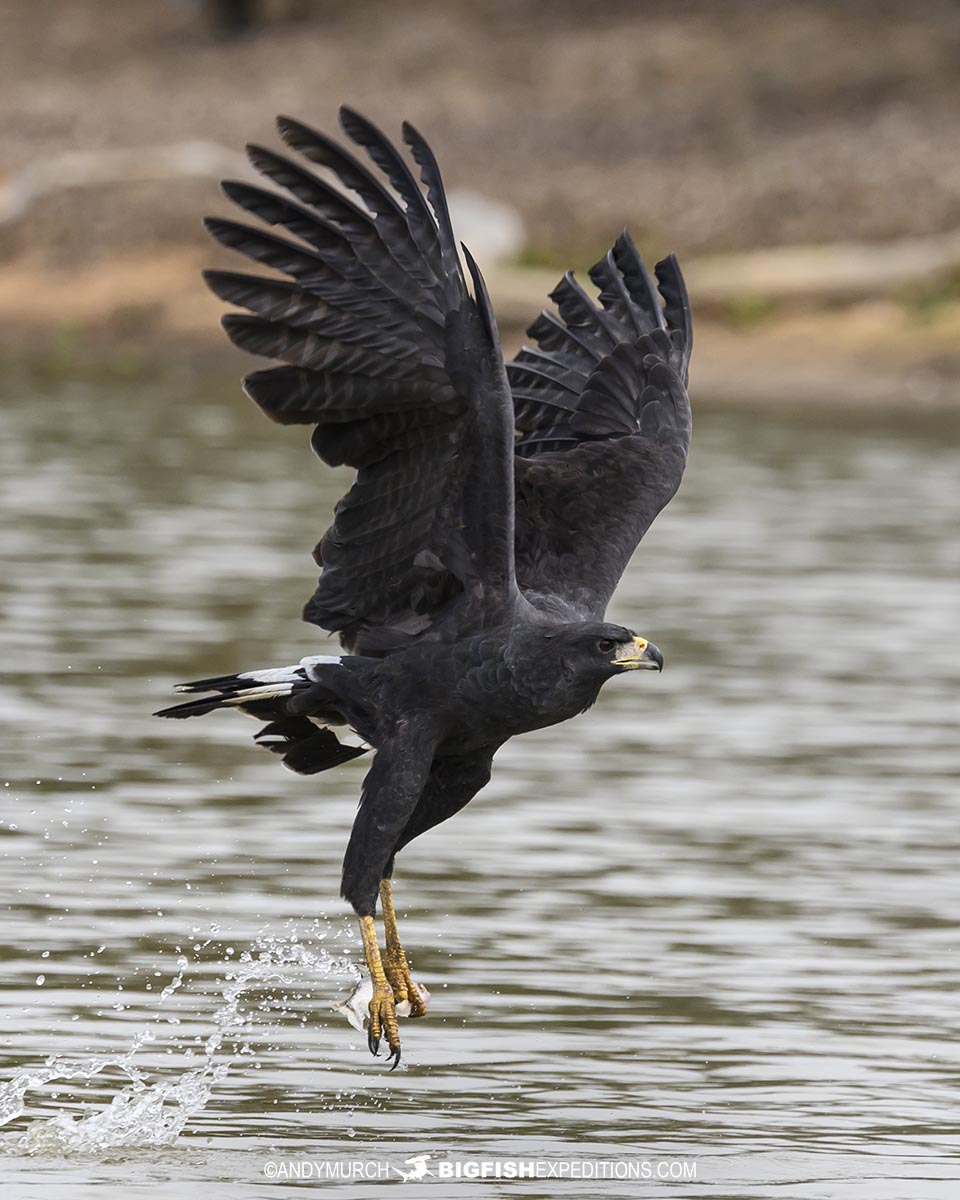
After lunch, we drove to a nearby birding lodge and took a boat ride to photograph raptors diving on small river fishes.
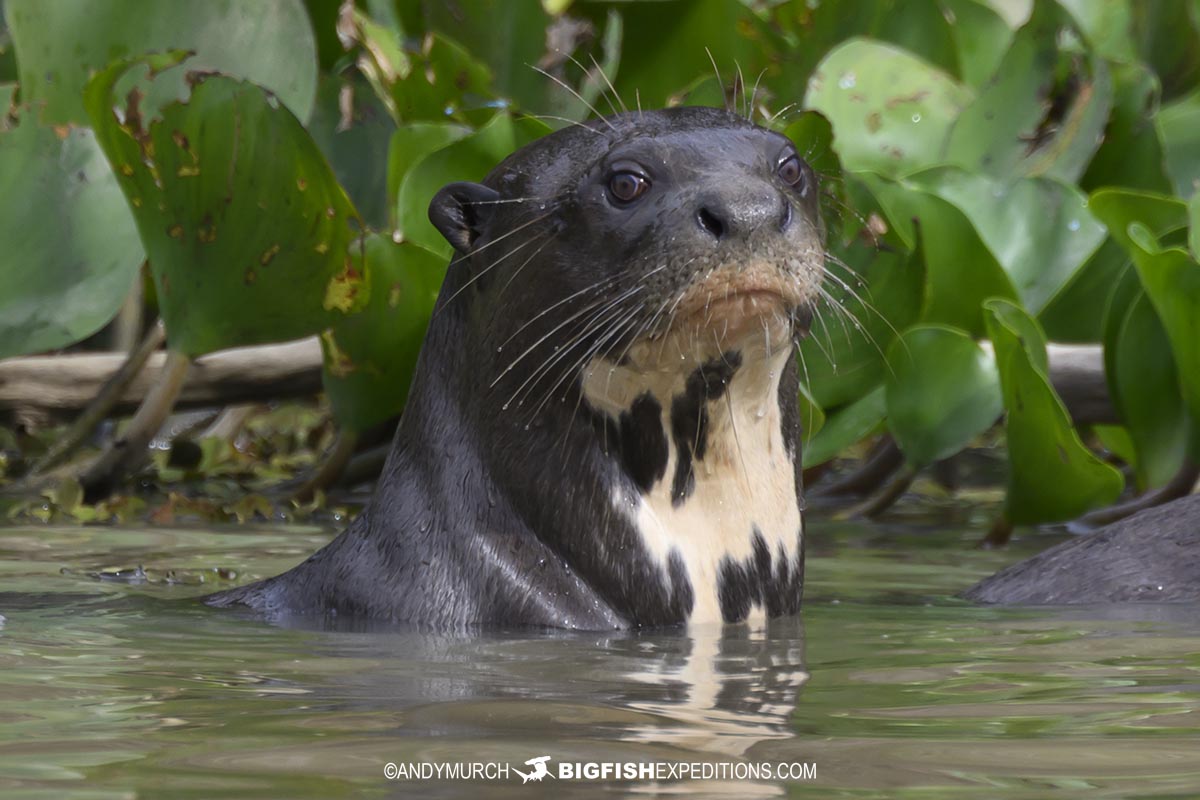
While there, we ran into a family of Giant River Otters that were busy hunting for catfish, eels, and anything else they could catch in the murky water.
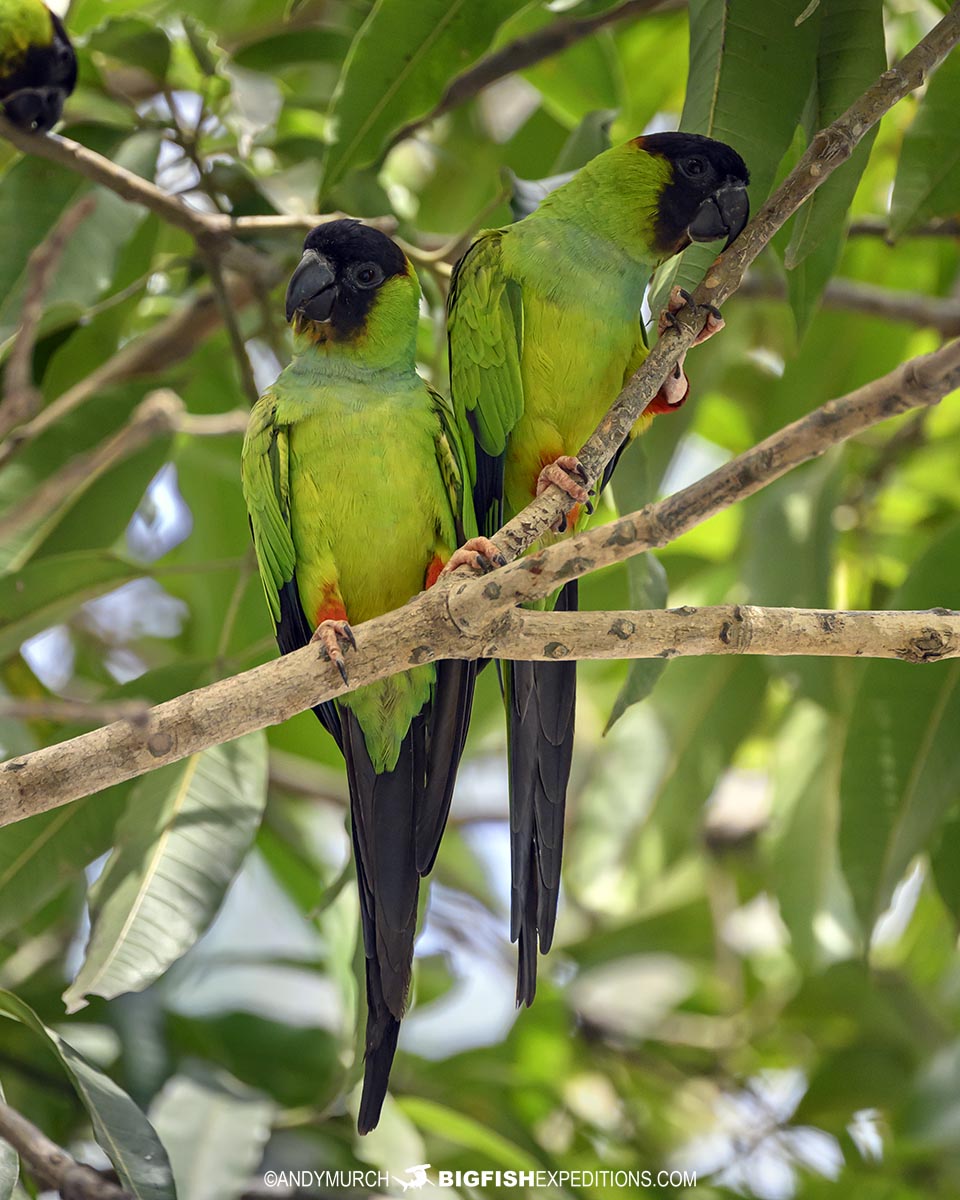
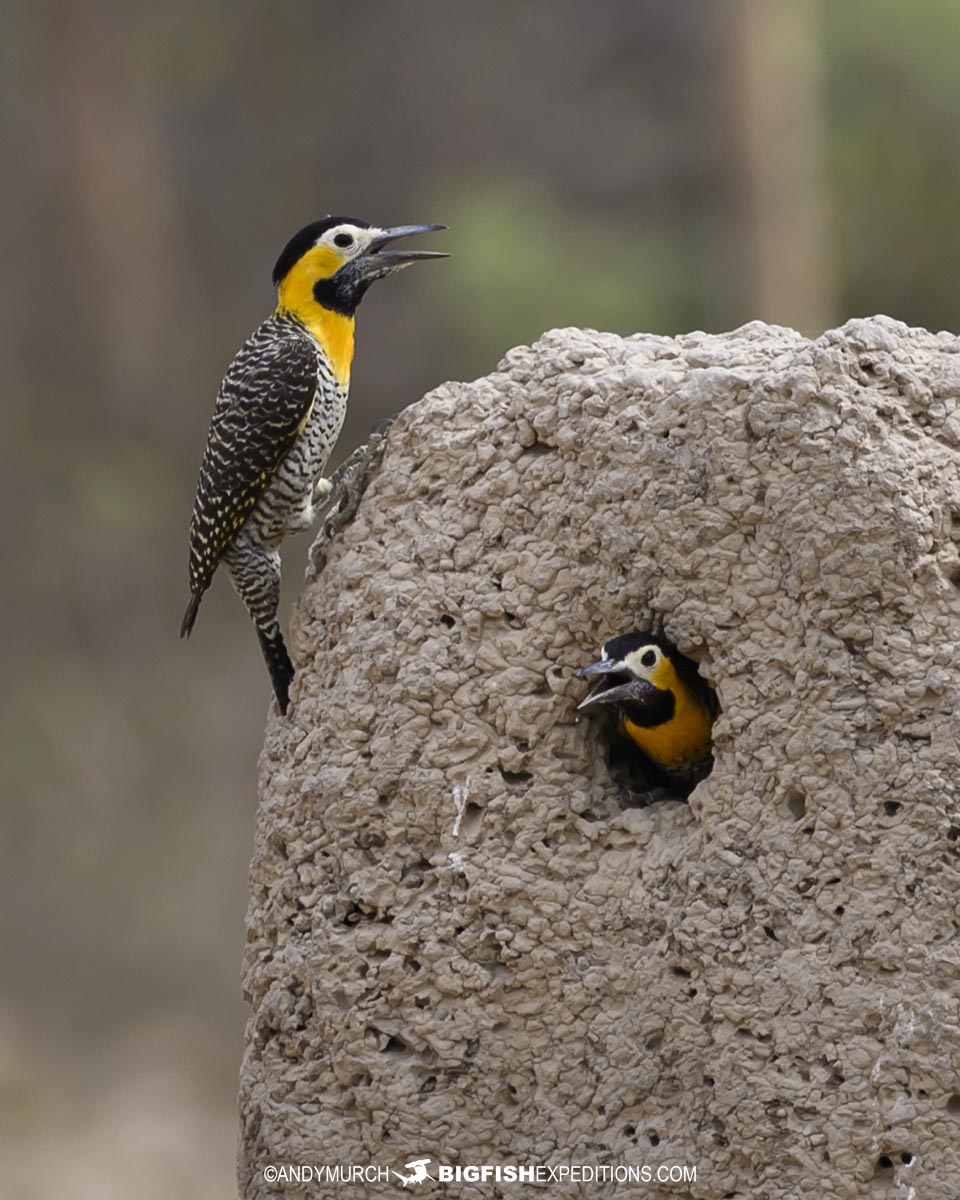
This lodge turned out to be a great place to see Nanday Parakeets; easily recognizable by the black heads. I also saw my first Campo Flicker (a type of woodpecker) clinging to a termite mound where it had made its nest.
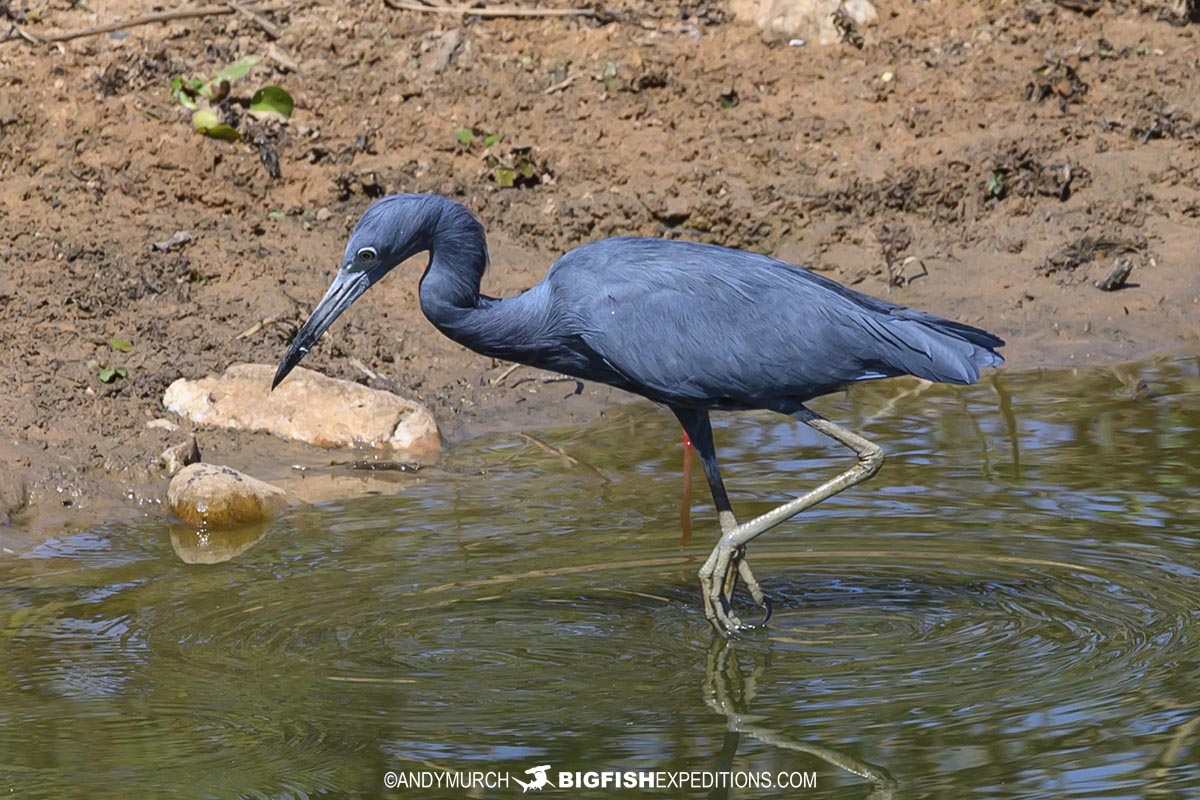
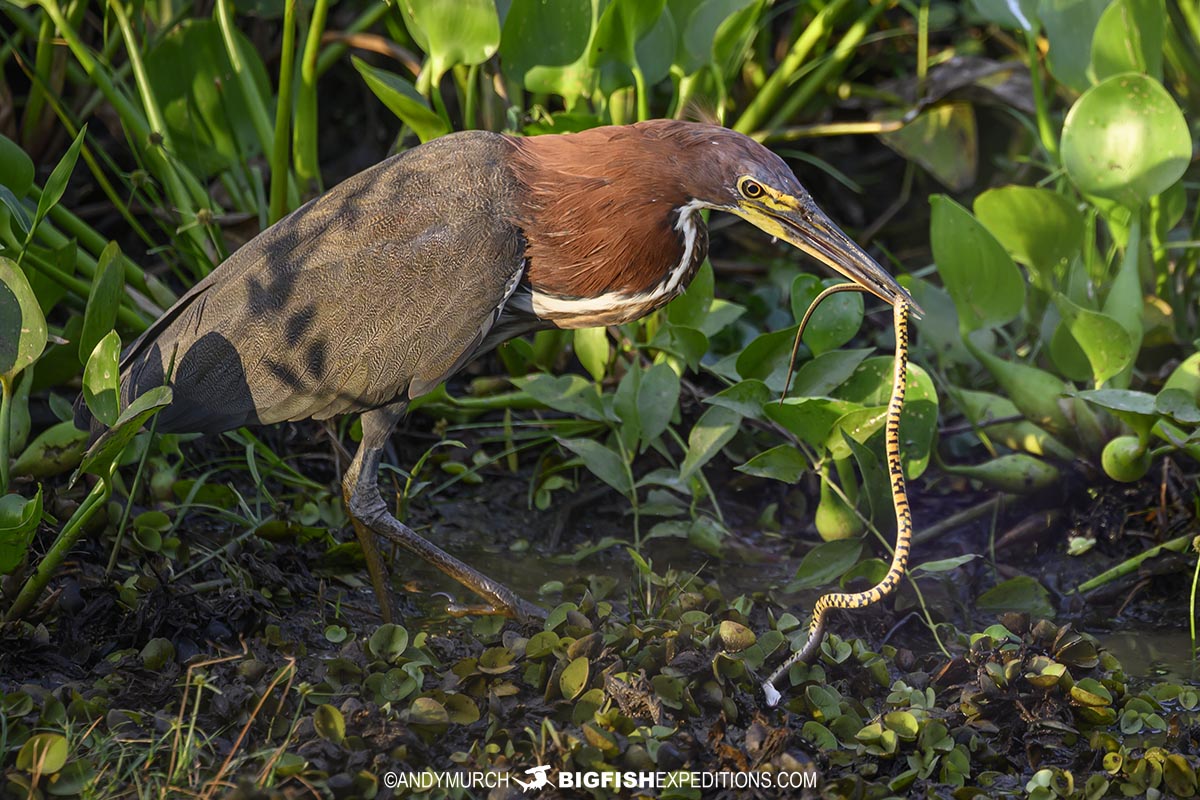
Later, on our way back to the ocelot hide, we passed a Tiger Heron devouring some kind of snake. After a short struggle, the heron gulped down the snake while it was still wriggling.
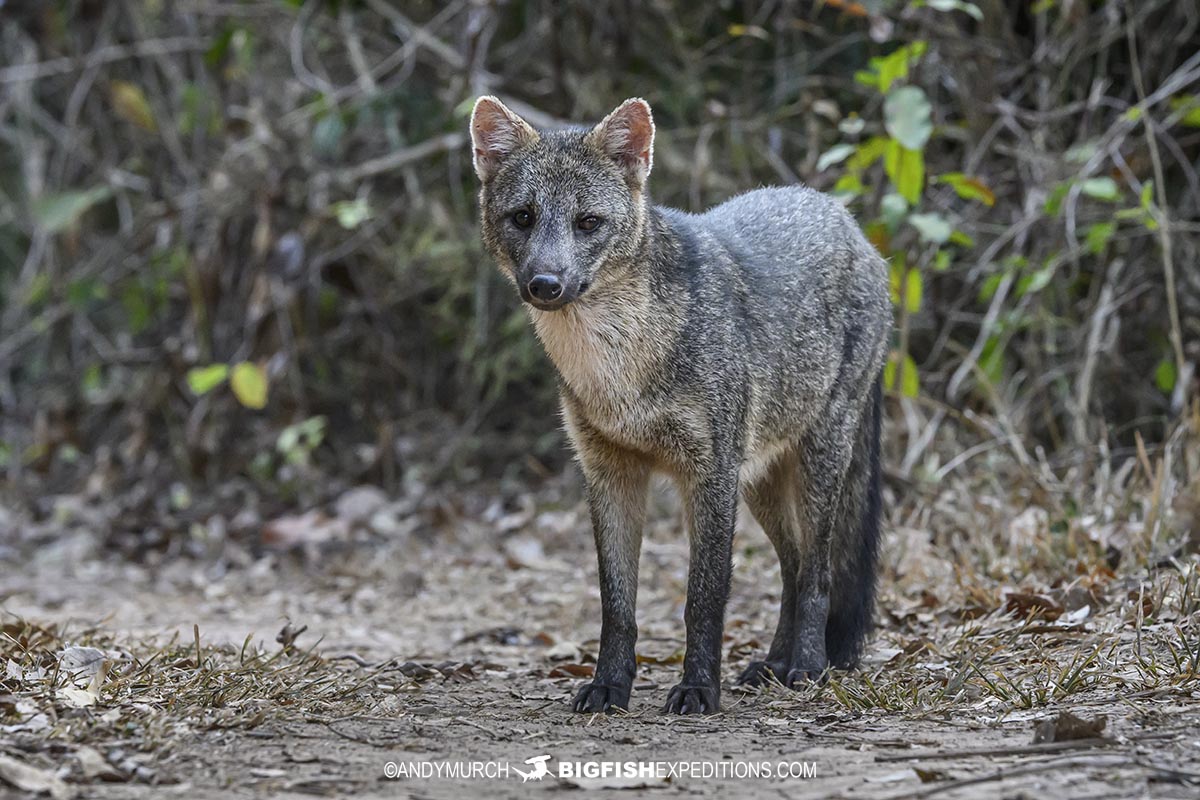
On the trail through the forest, we also ran into a very relaxed Crab Eating Fox that was kind enough to stop and pose for some nice portraits.
The ocelot encounter was fabulous again, but left us wanting more time with cats. Fortunately, that was coming soon enough!
Day 3: Onward to the Jaguar Lodge
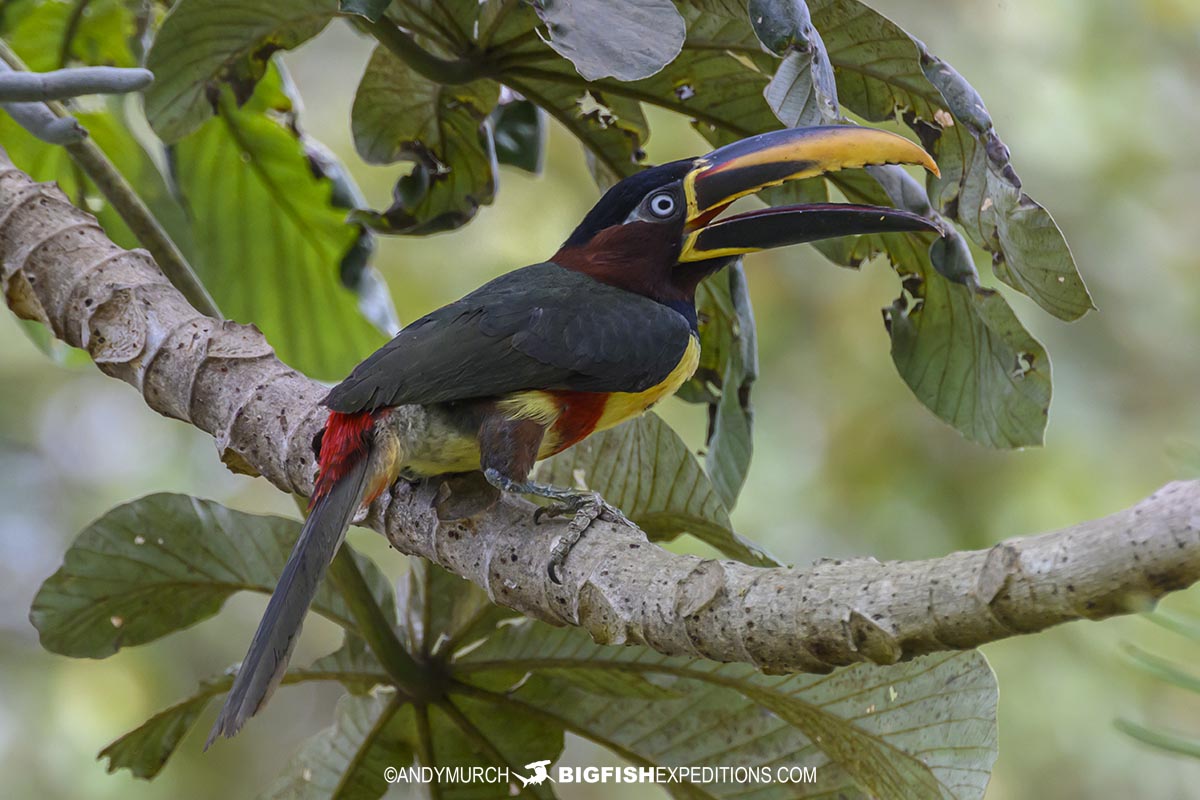
More monkeys in the morning and then we continued our journey south, deeper into the Pantanal to the heart of Jaguar country. On route we stopped at another excellent birding lodge to view blue hyacinth macaws, numerous parakeets, and one of my favourite birds from this area; the incredible Chestnut-eared Aracari.
Day 4: Jaguars and more!!!
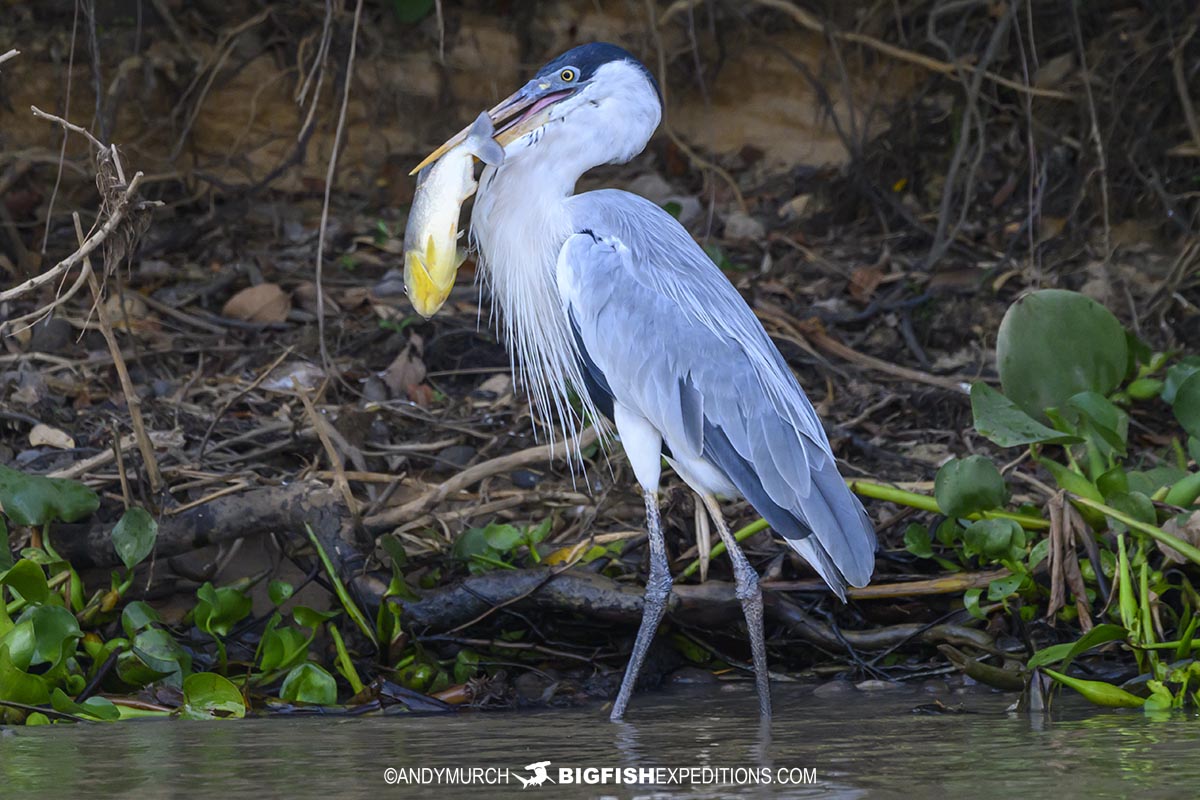
After an early breakfast, we headed upriver just as the sun was rising. The first notable encounter was a Cocoi Heron fishing with a huge piranha. The piranha was far too big for the heron to consume so it repeatedly dropped the dead piranha in the shallows and waited for smaller fishes to come to eat it. Then it darted at the smaller fishes. This complex behavior is the only example of birds using bait to attract food.
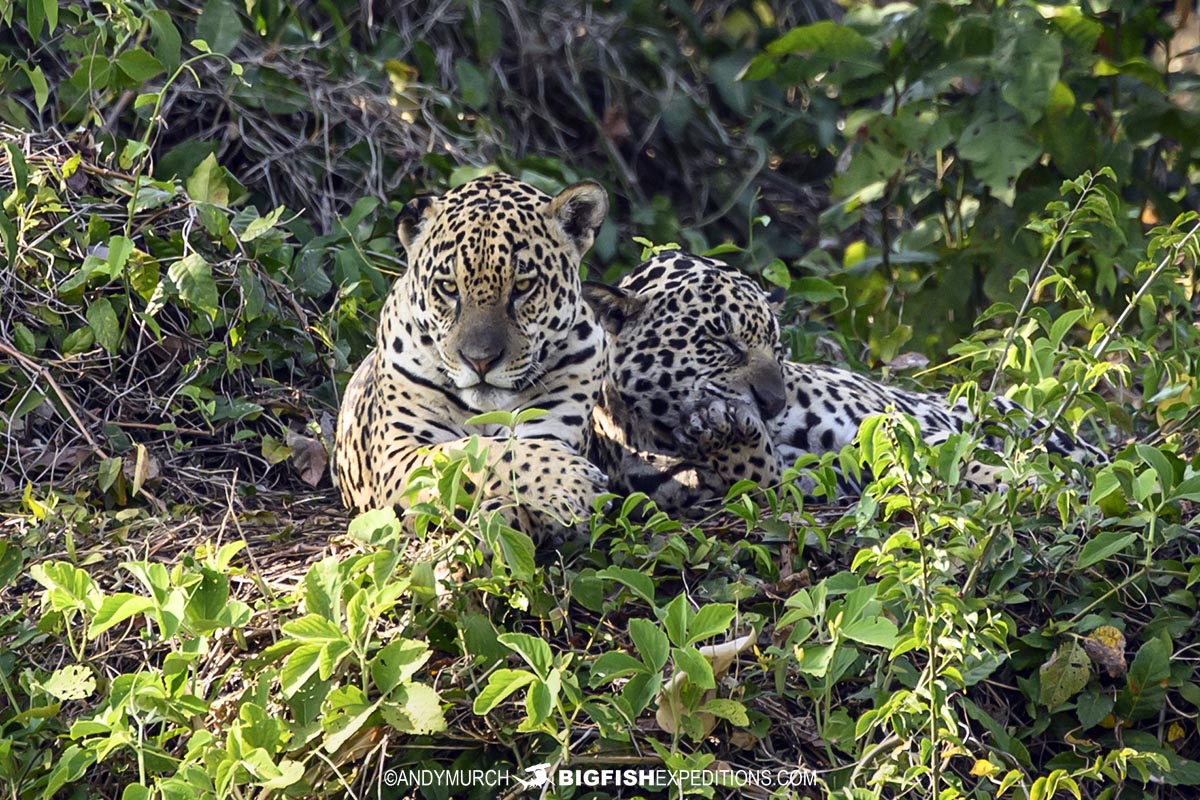
Jaguars #1 &2: The first jaguars we found were Pantanero and Makala sitting in the shade high on a bank, surveying their kingdom. Both are around 2.5 years old even though they are uncle and nephew.
Pantanero went for a walk and posed nicely against the forest.
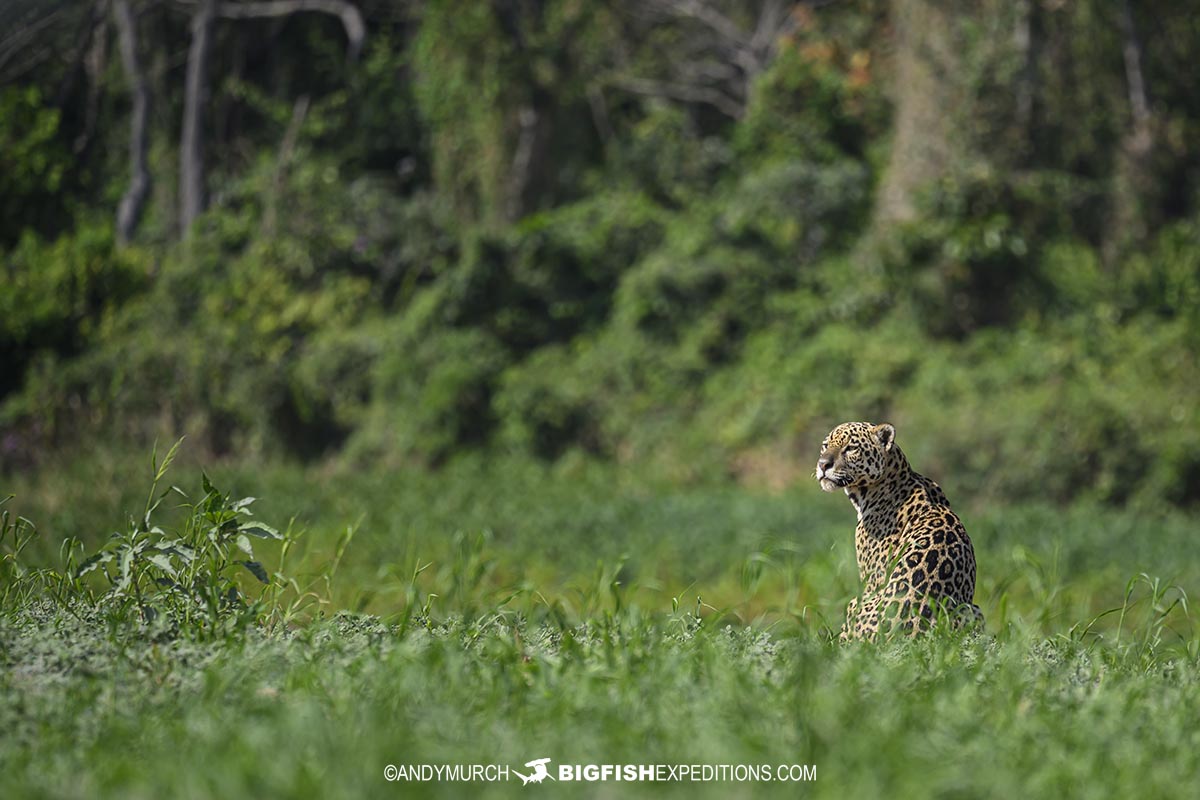
Jaguars #3-4-5: While navigating the infamous Black Channel, we got a glimpse of one of Madrosa’s two cubs disappearing into the bush.
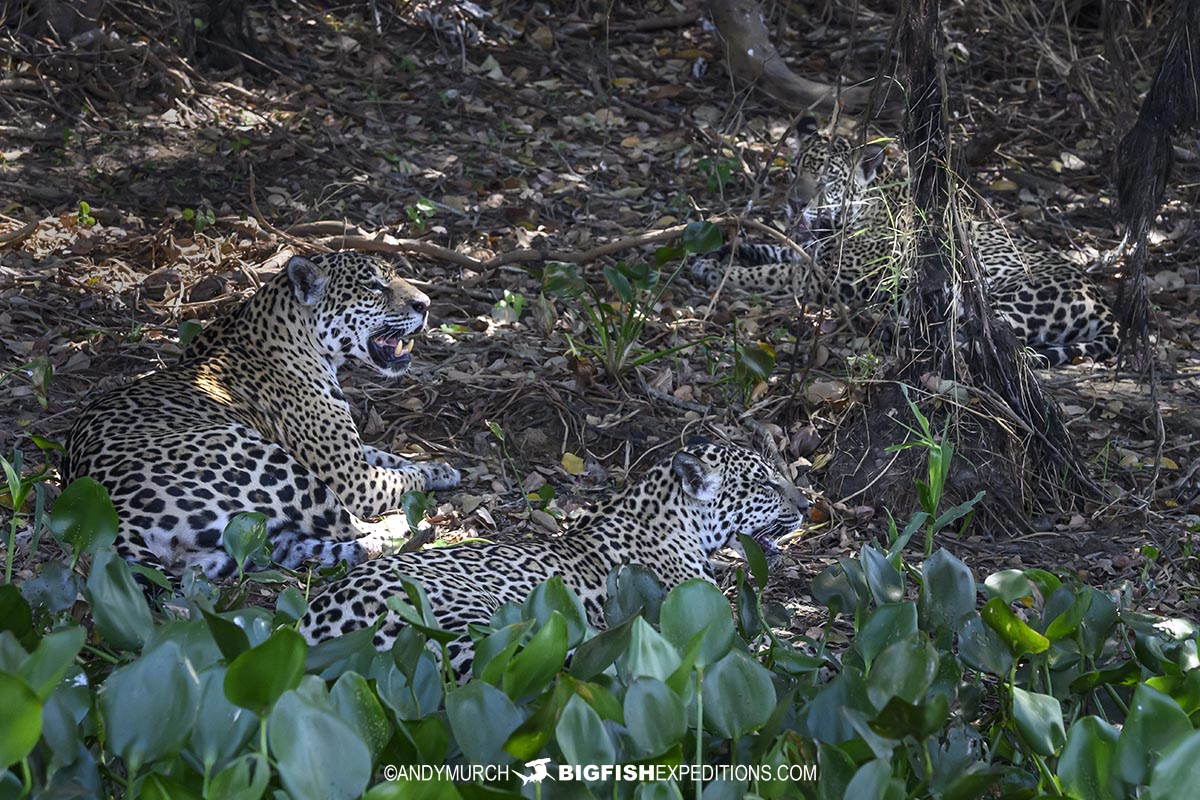
We moved back down the channel and found Pantanero again, patiently working his way upstream in search of caiman. When he finally disappeared, we went back upstream again and found Madrosa with both her cubs selva and kiara laying by the shore. It was a lovely encounter with the cubs playing and grooming eachother while mom rested nearby.
When she finally moved off, we continued watching Pantanero in his dogged pursuit of lunch.
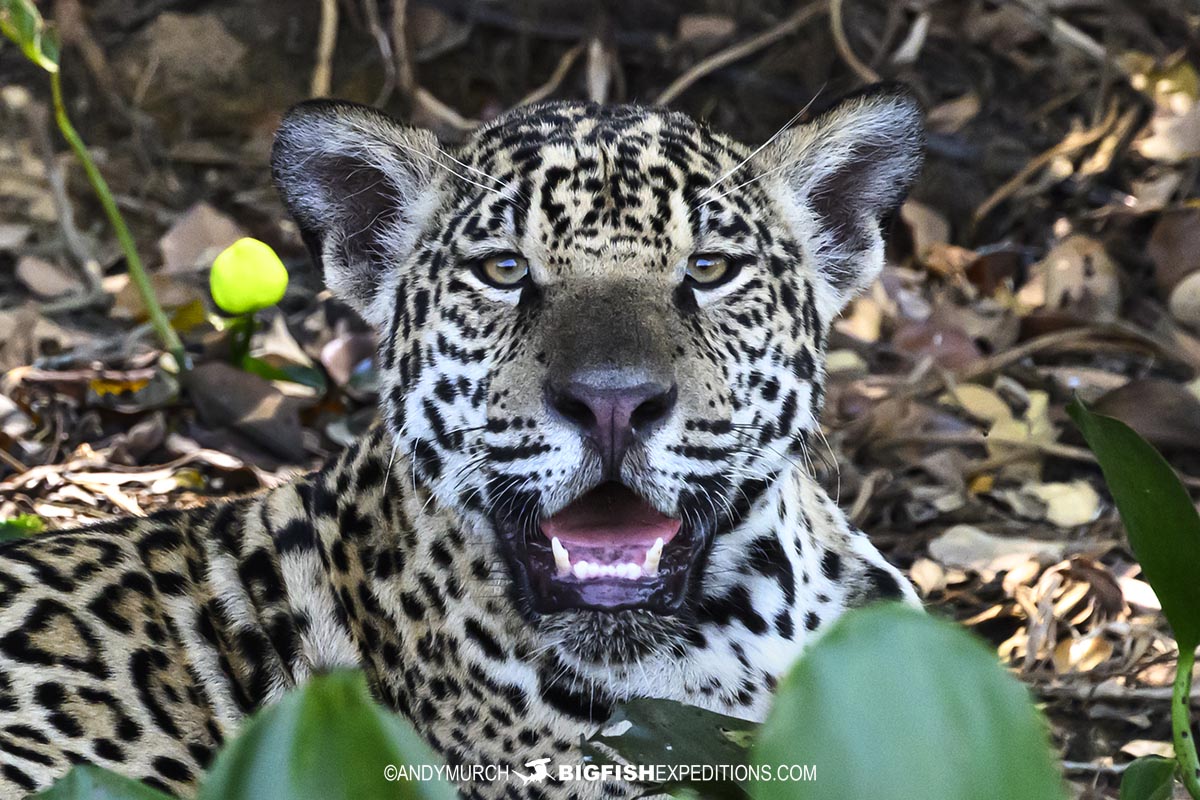
Jaguar #6: After a short break for lunch in the shade at the river bank, we found a massive male Jaguar named Tomas. He is estimated to be about 12-14 years old, but it’s impossible to say for certain because he did not show up until 2023. There is also no way to know which other jaguars he is related to.
Six jaguars was a great start so we were all on a high as we returned to the lodge to download the days images and settle in for the night.
Day Five: More Jaguars!
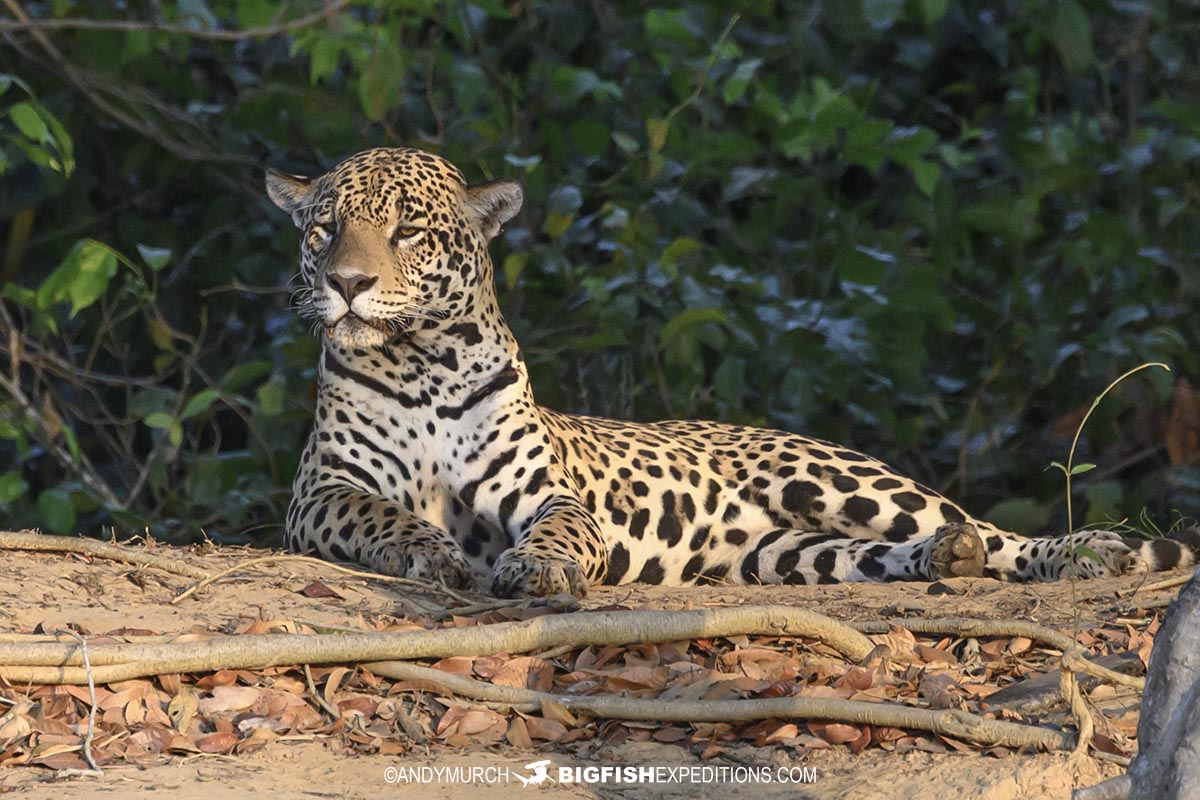
Jaguar #7: The day started early with an almost immediate sighting of Akaloi laying on a bank of the Piquiri River.
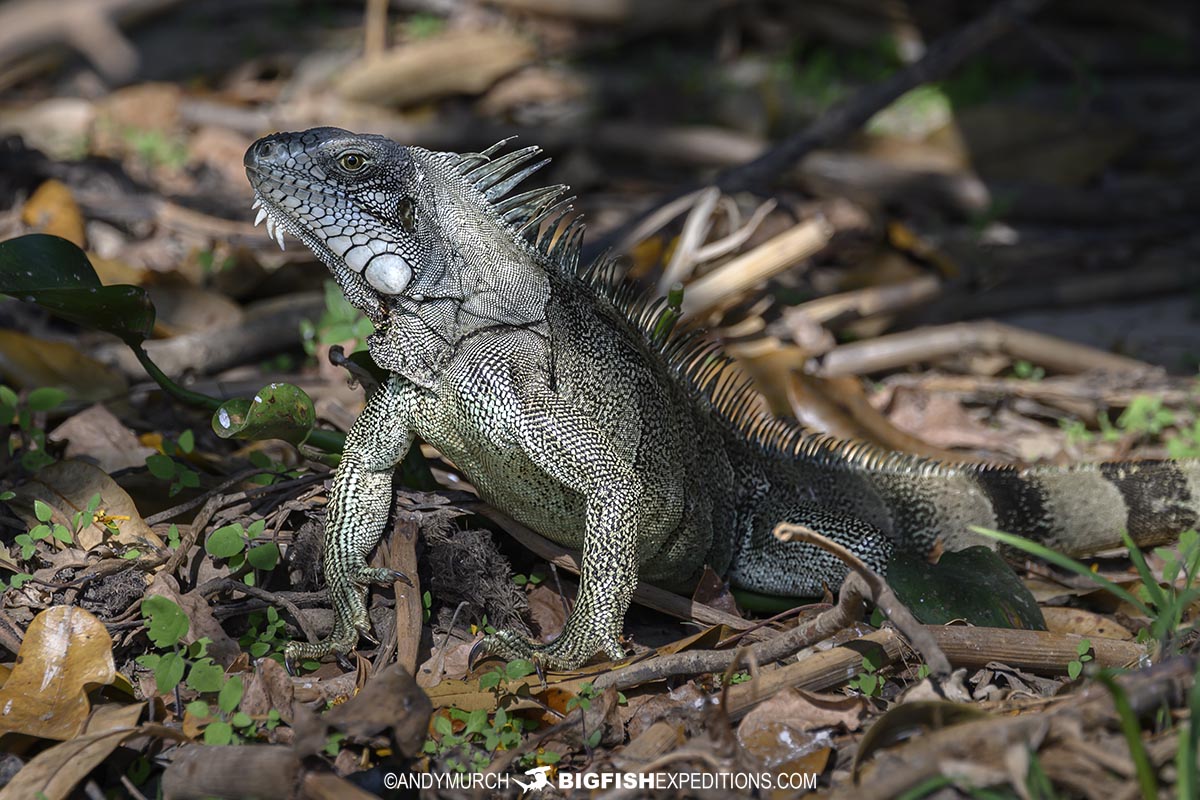
Other than a couple of Green iguanas warming up in the sun, the black channel was empty so we returned to the Cuiaba River to search further afield.
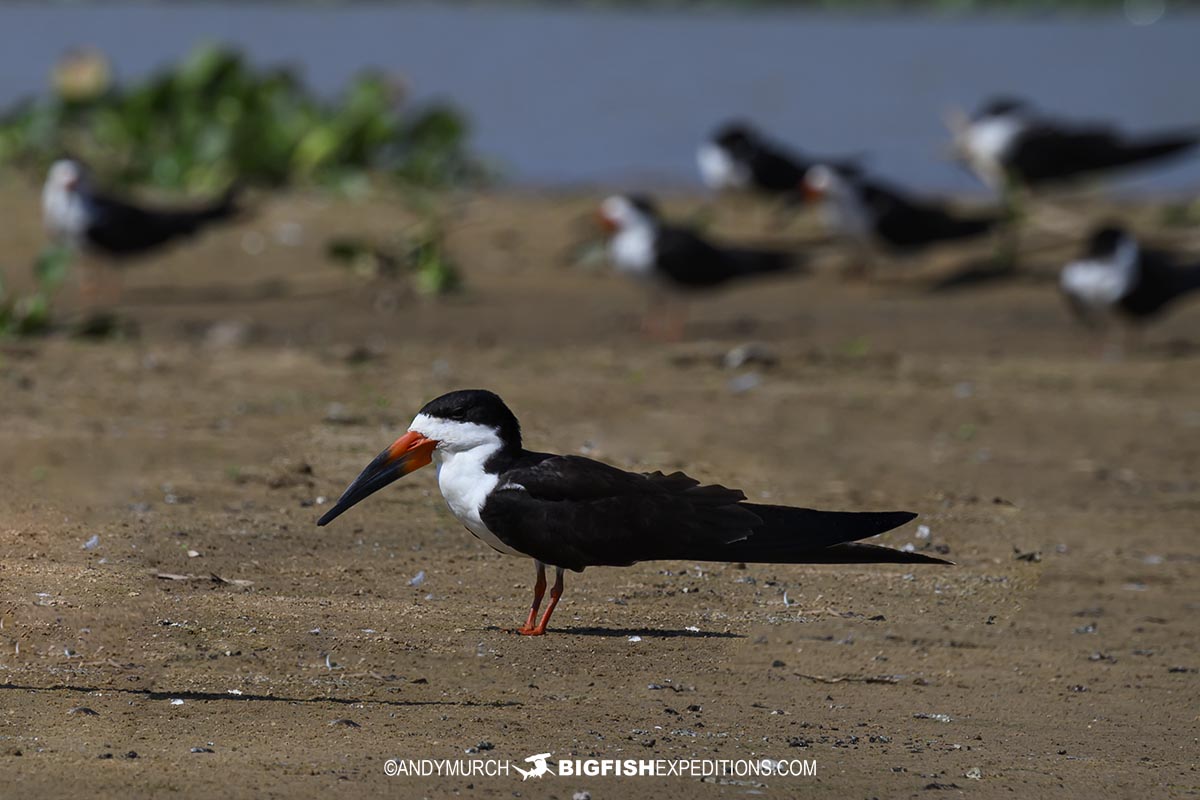
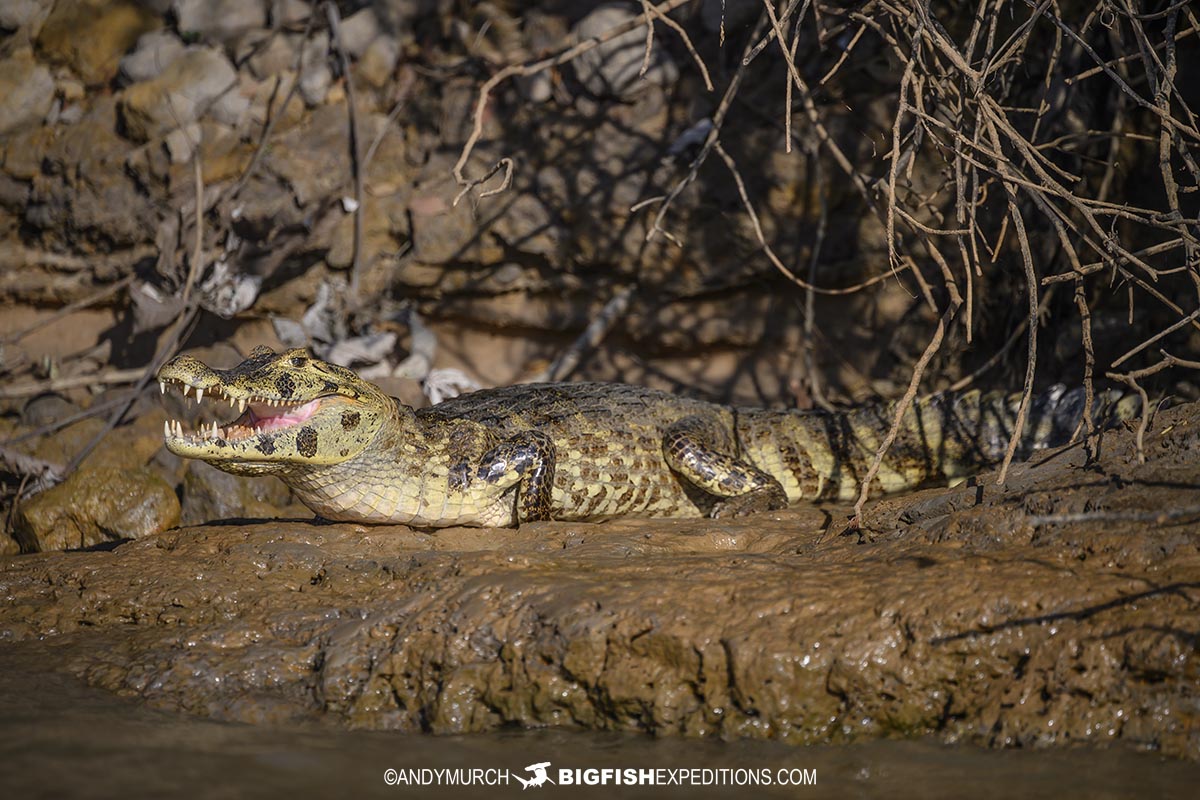
On route we came across endless Jacare Caiman and then a flock of migratory Black skimmers roosting on a sand bar. They travel up from Argentina to breed and raise their chicks before returning south in November. They lay their eggs on the beach where they are vulnerable to lizards, caiman and many other animals, yet this strategy somehow maintains the skimmer population.
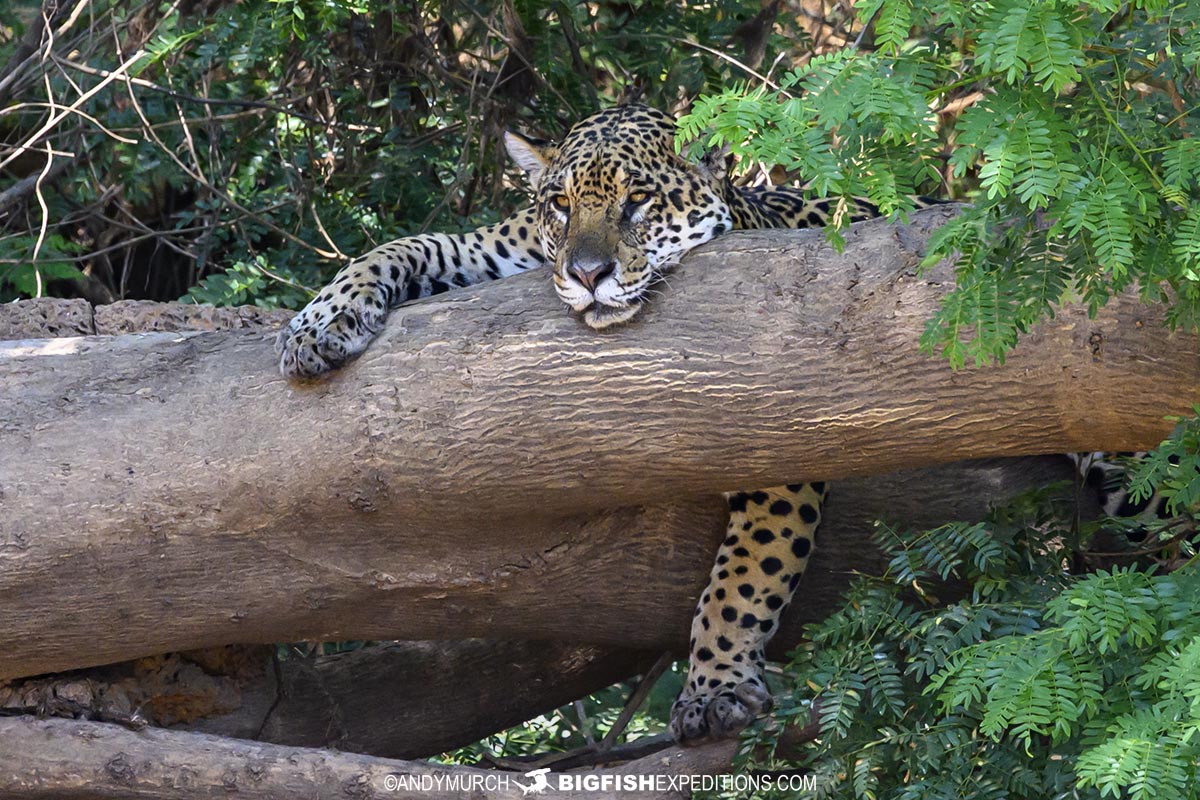
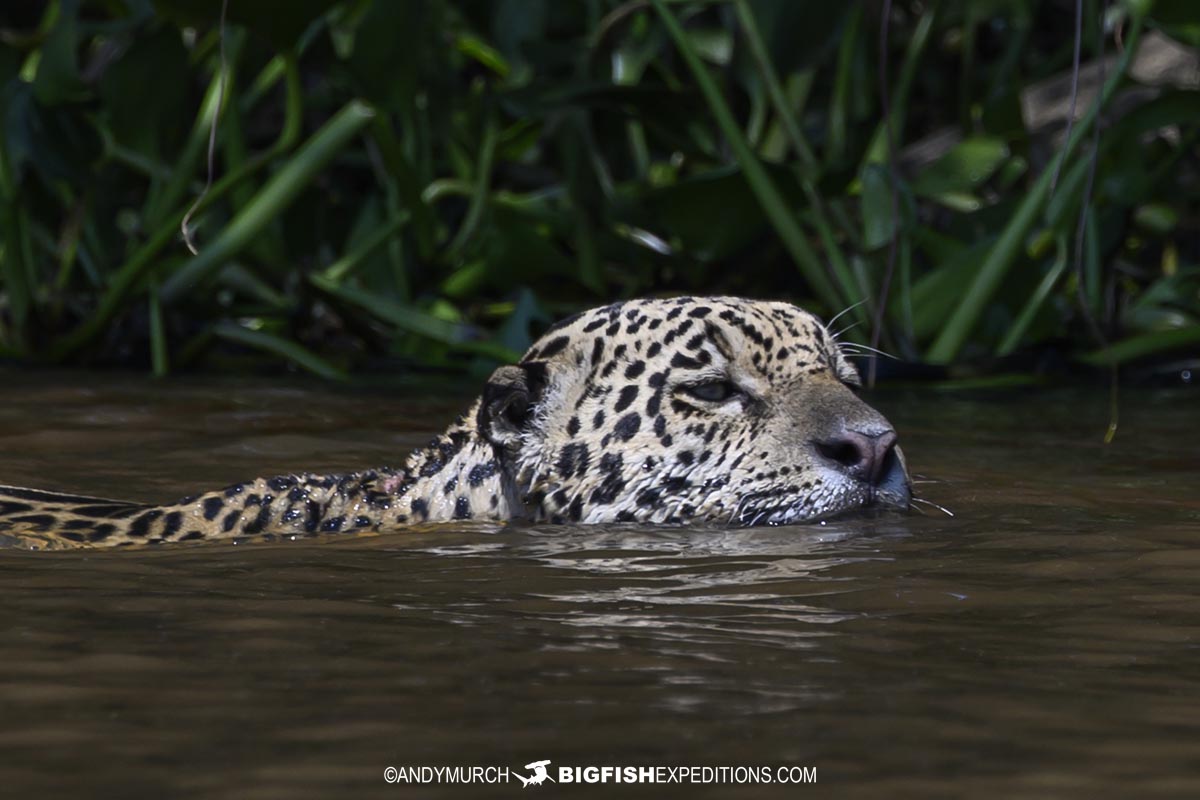
Jaguar #8: On the way back down the Three Brothers Channel, we found Ibaca snoozing on a tree branch. Ibaca is an indigenous name that means a star filled sky. When she turned around and flopped down with her back facing us, we got the message and moved on.
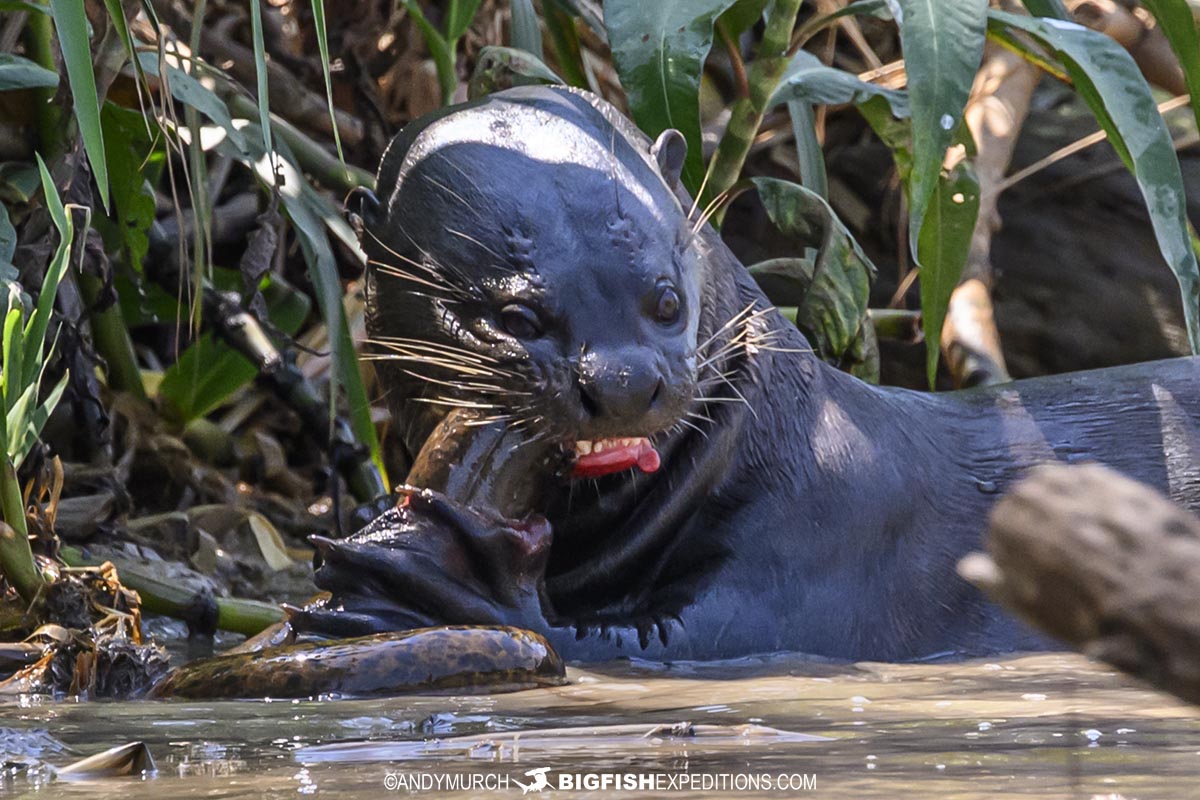
We passed a Giant River Otter munching on an eel and then we eventually arrived back in the Black Channel where we found Pantanero still looking for a meal.
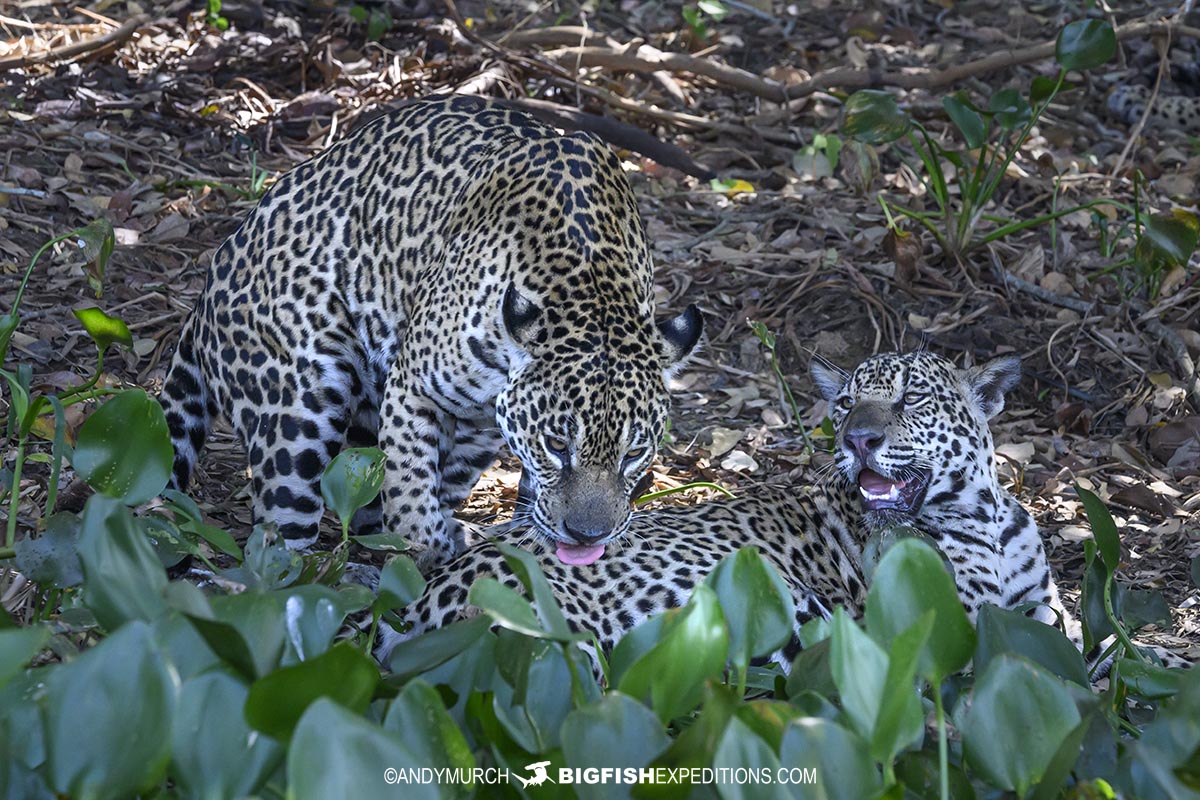
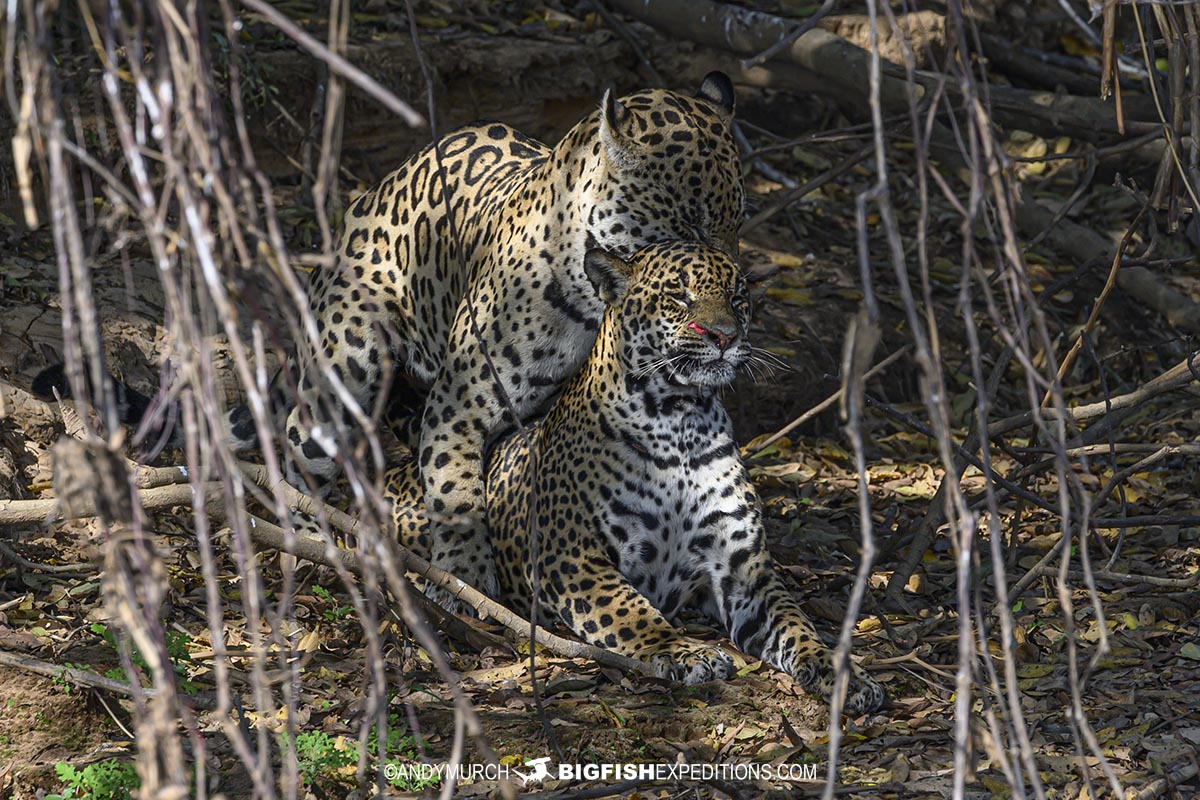
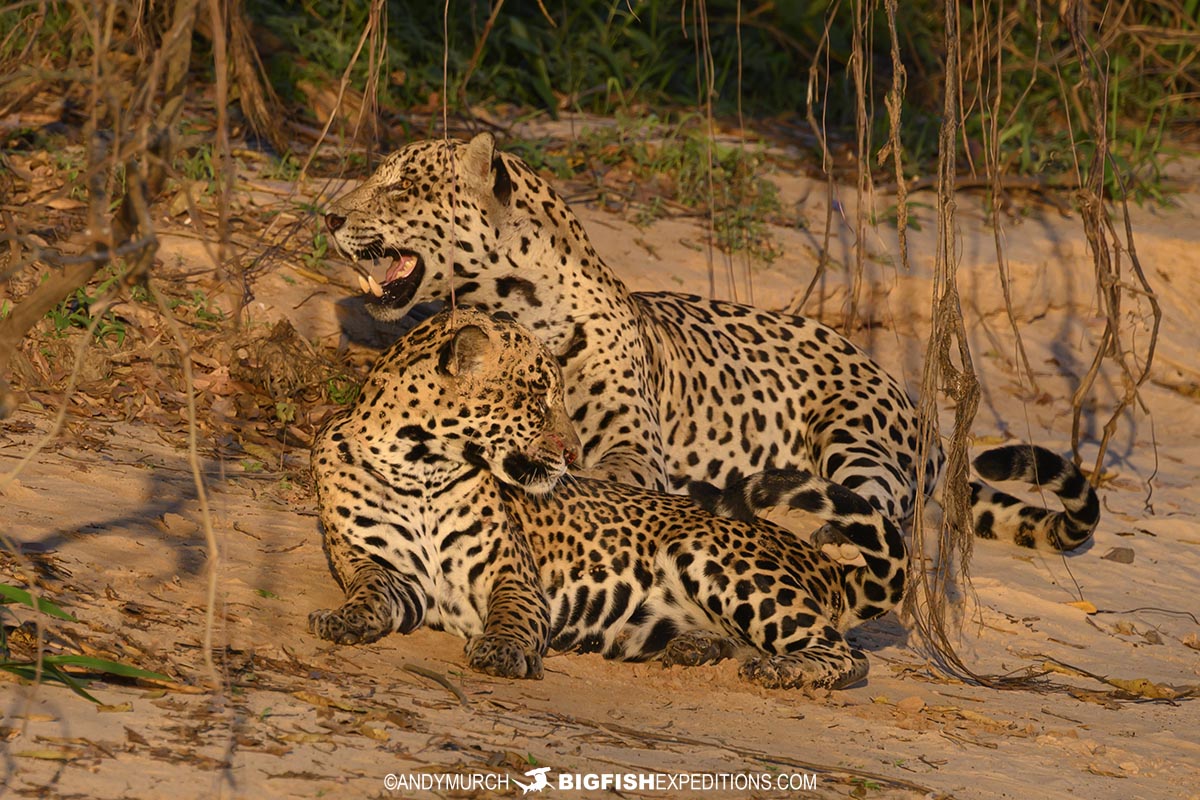
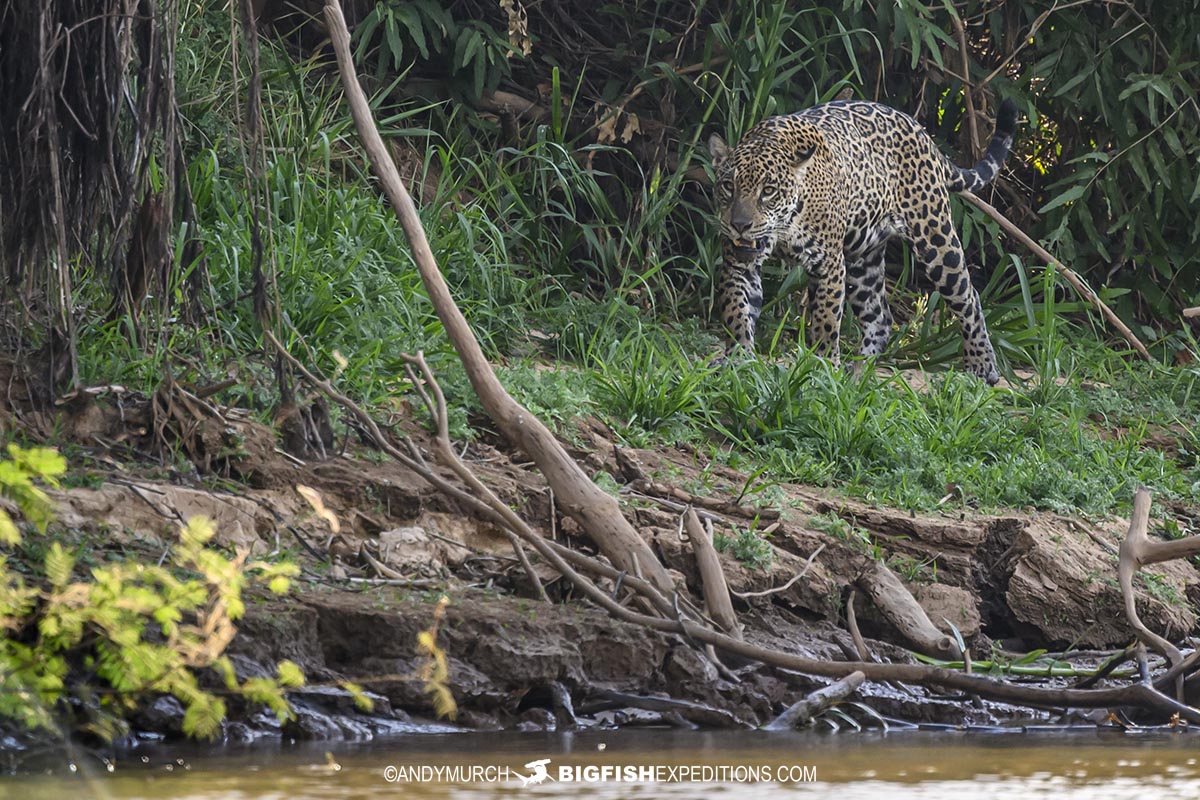
Jaguars #9-10: Later, we found a male named Oriel lying under a tree with a female above him almost completely obscured by the branches.
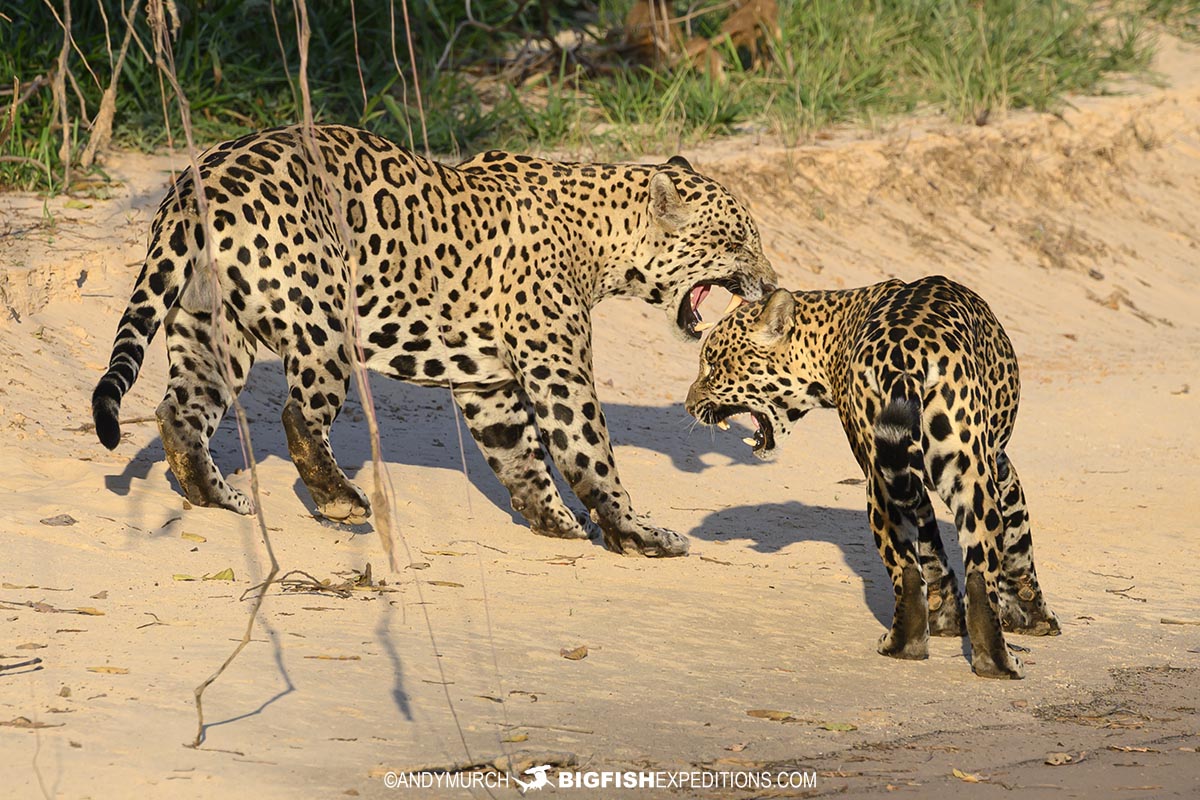
At first we thought they were a mating pair, but then we realized the female was Benita. She gave birth less than a month ago. She would not be in heat again already so one of two things are likely to have happened; neither of them good. Either she hid her cubs while she went hunting and Oriel found her, at which point she faked interest and copulated with him to draw him away from her vulnerable cubs. Or, he already killed her cubs and forced her to mate with him even though she won’t be in heat yet.
Nature can be cruel.
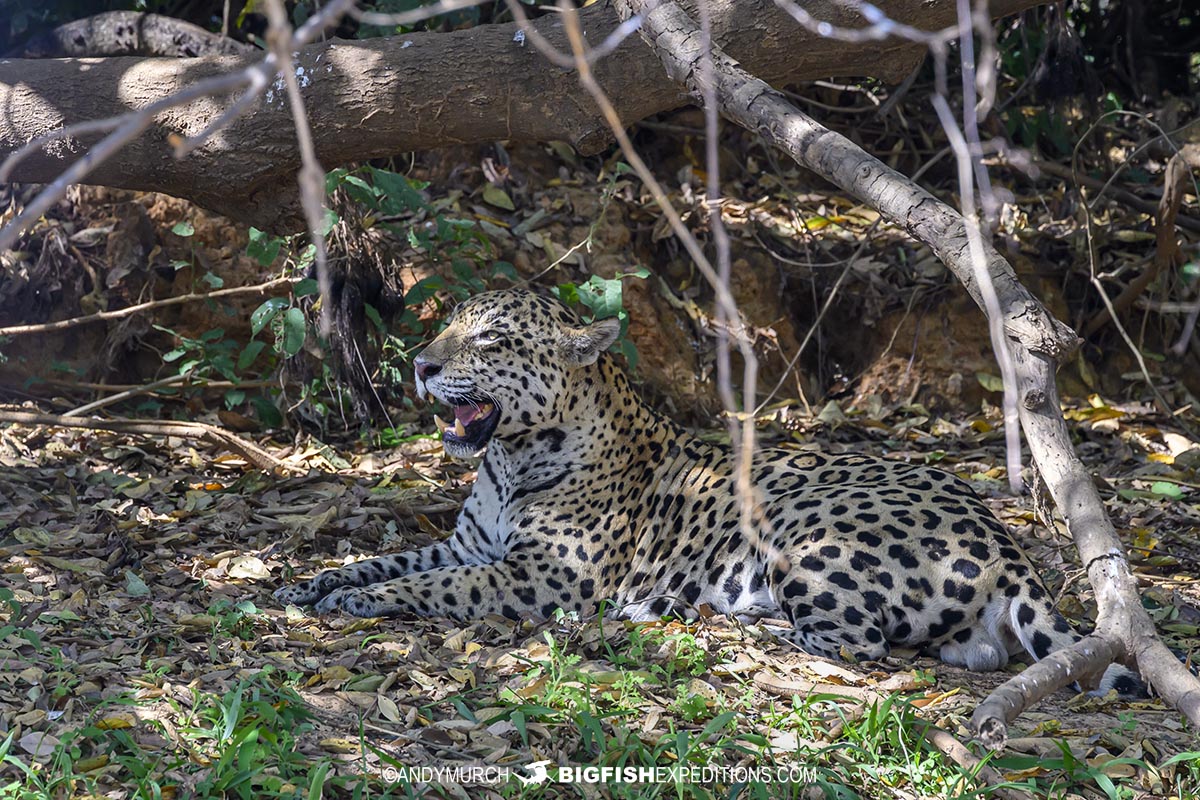
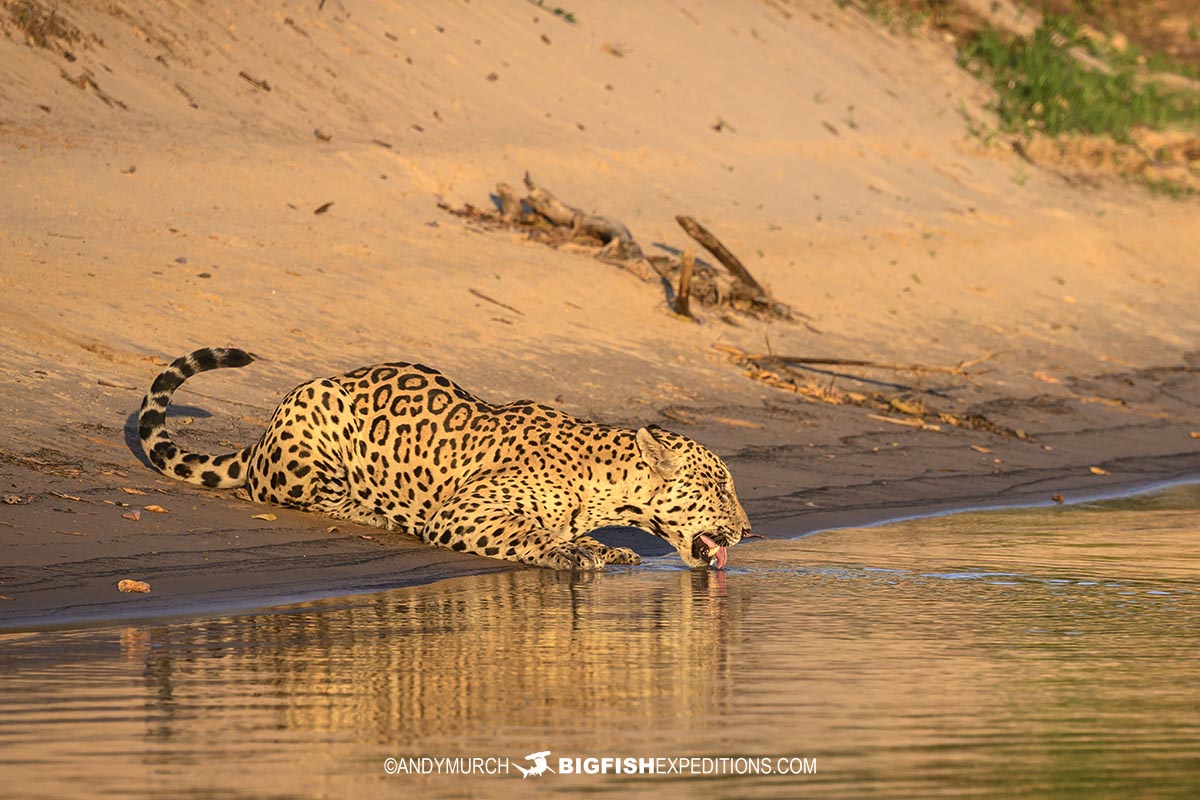
Jaguar #11: After maybe 30 minutes, Benita descended and briefly mated with Oriel. Afterwards, they rested near each other on the beach, both keeping a wary eye on a third jaguar named Apeiara that wandered past on the other side of the channel.
After Perhaps another hour, and some growling and snarling, they mated again; this time for a minute or two which is quite long for jaguars.
Shortly afterwards Benita climbed back into her tree where Oriel could not mate with her and with the light fading, we left them to it.
An amazing finish to the day.
Day 6: Three Jaguar Predations!
Jaguar #12: Ten minutes after leaving the lodge we found Tingana sleeping on a high bank of the Cuiaba River. Tingana is the daughter of Ti, who in turn is the daughter of Jenni. This is a different family of jaguars to Patricia’s clan that patrols the Black Channel.
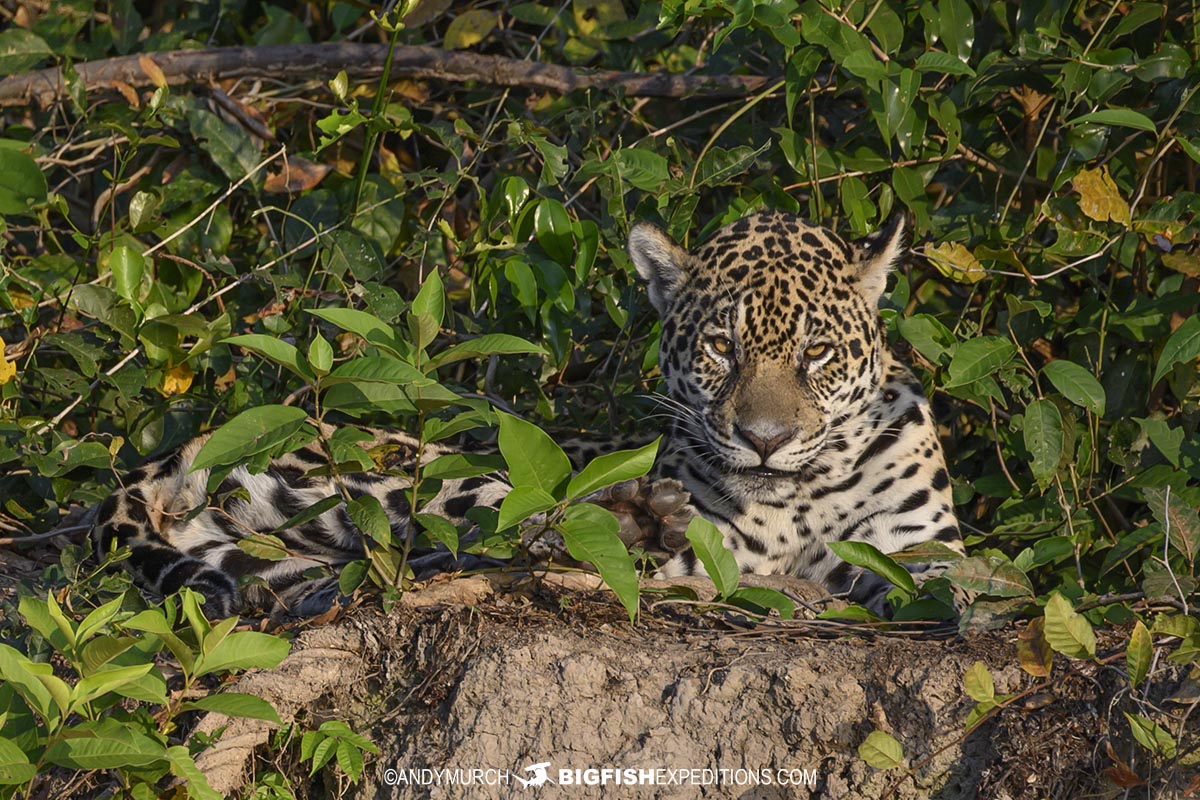
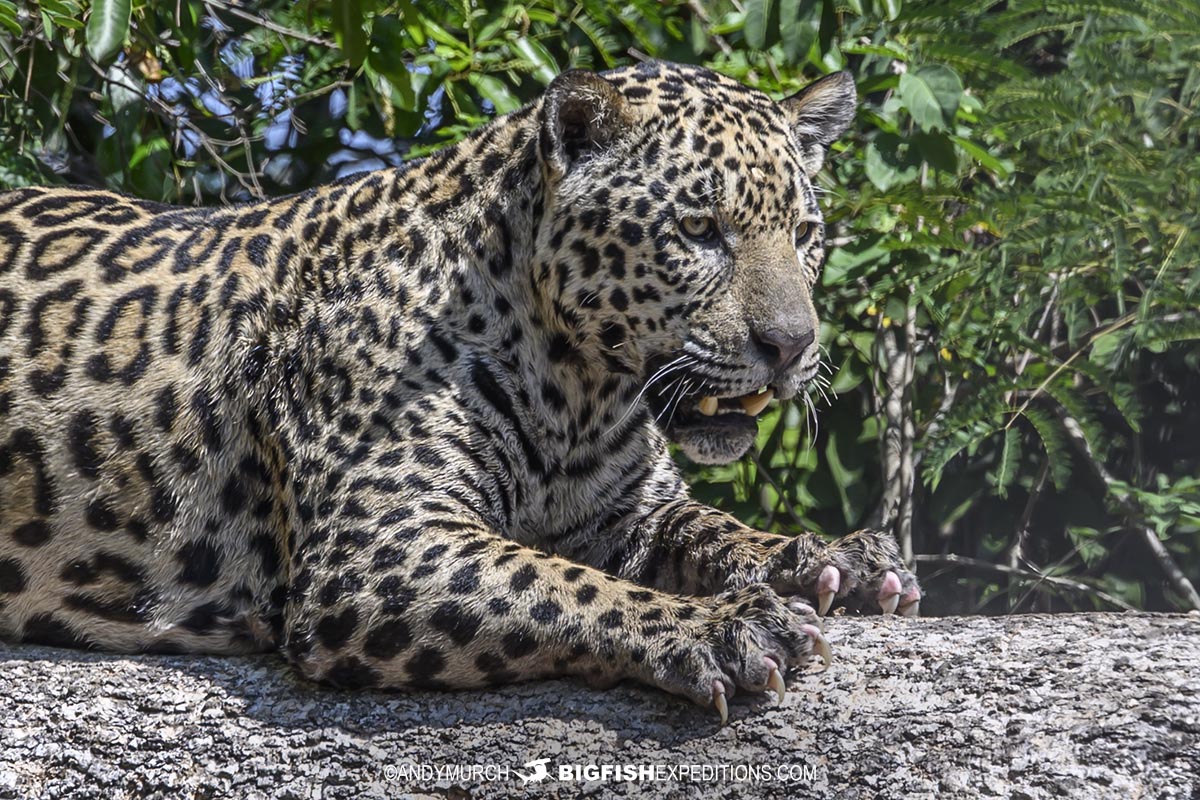
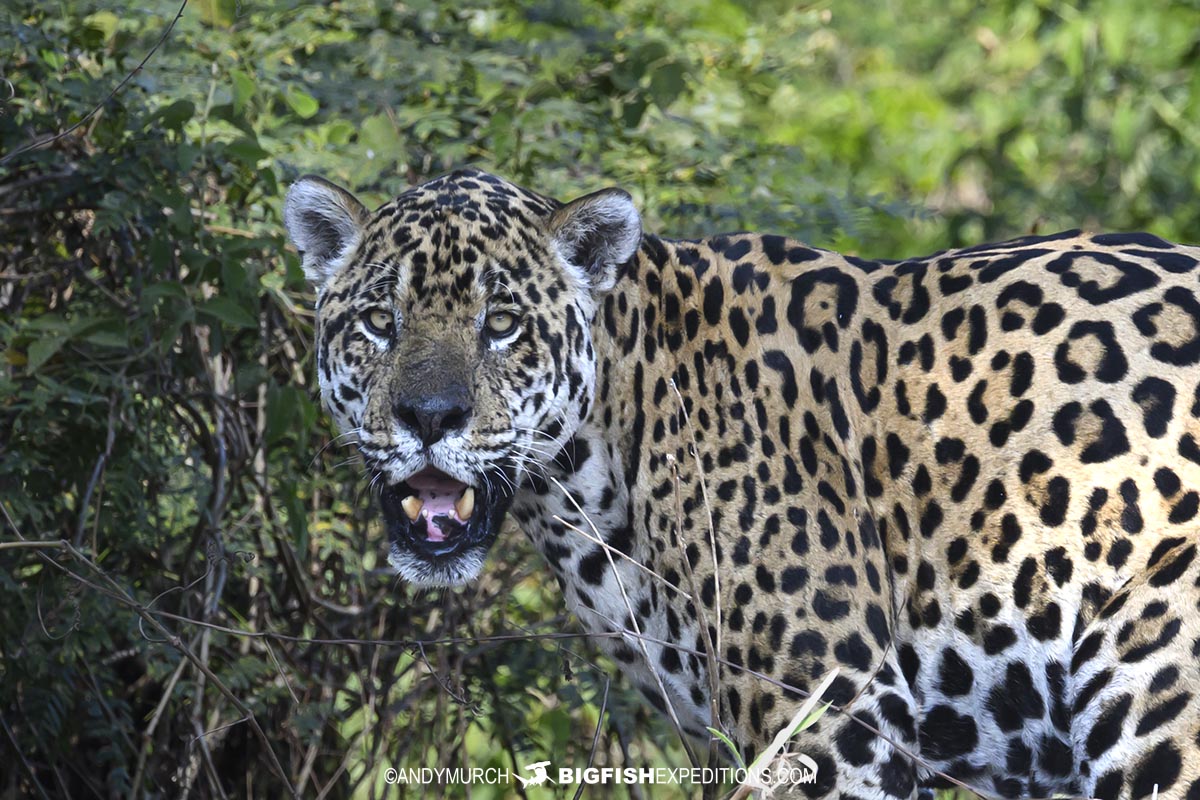
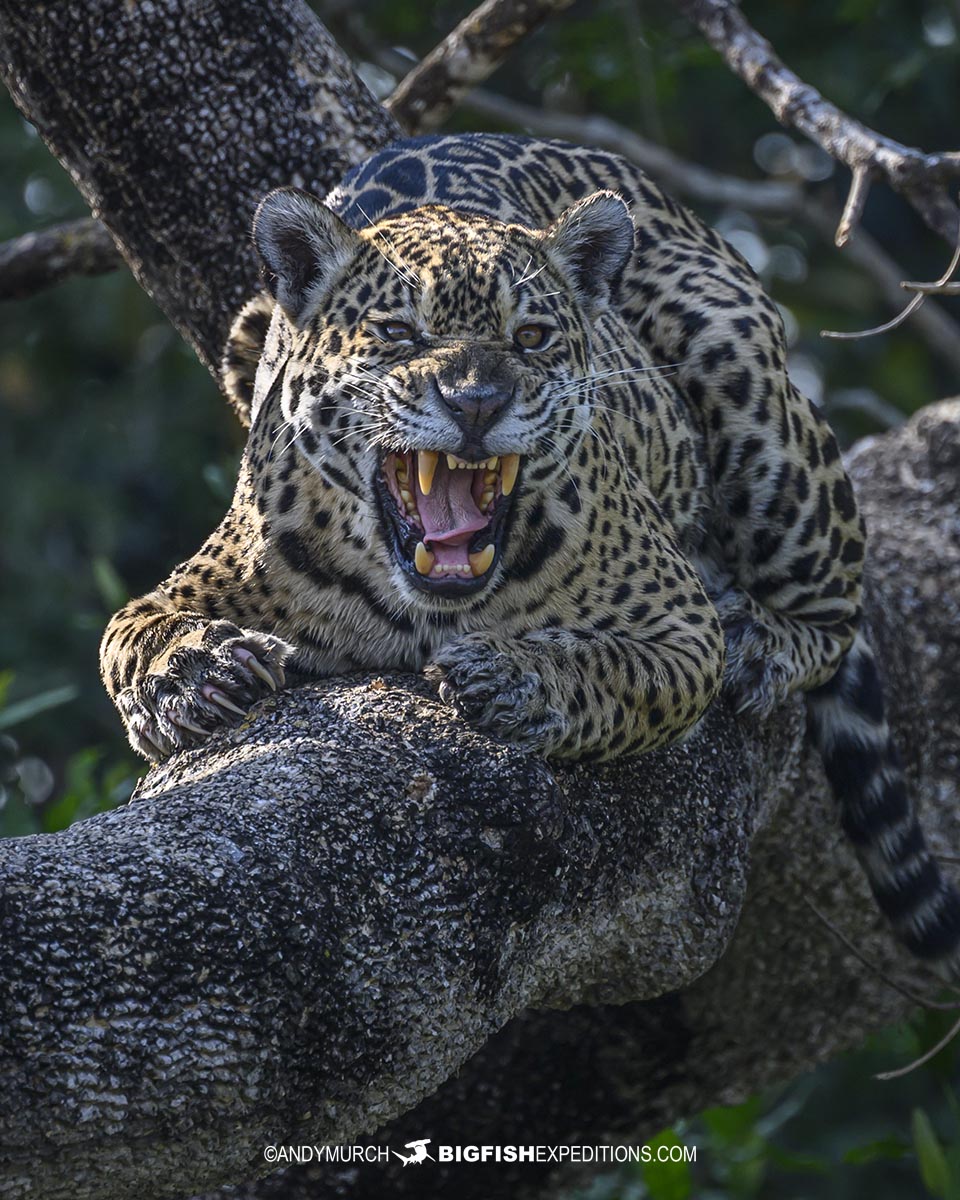
Not long after, we spotted Madrosa hunting in the black channel. For a long time she sat on a wide branch which gave us some great portraits, especially when she snarled!
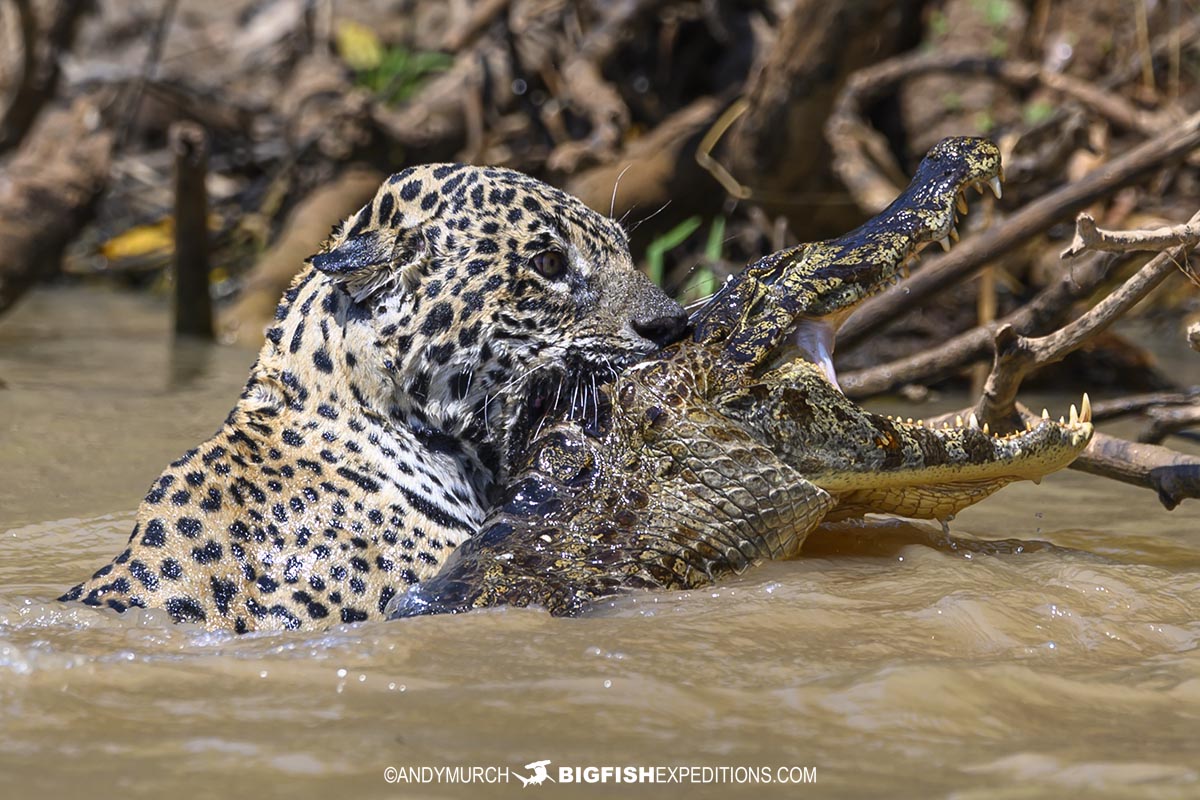
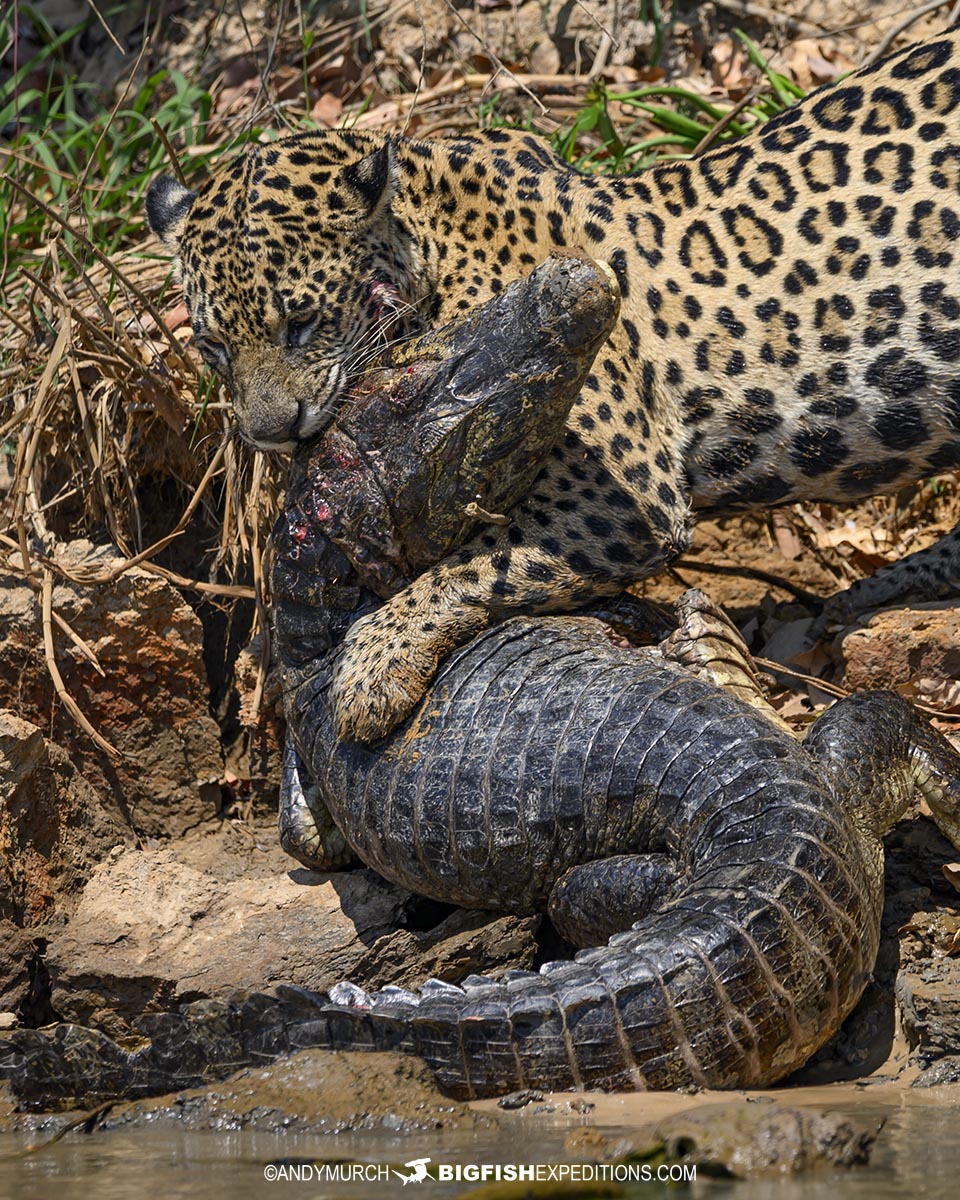
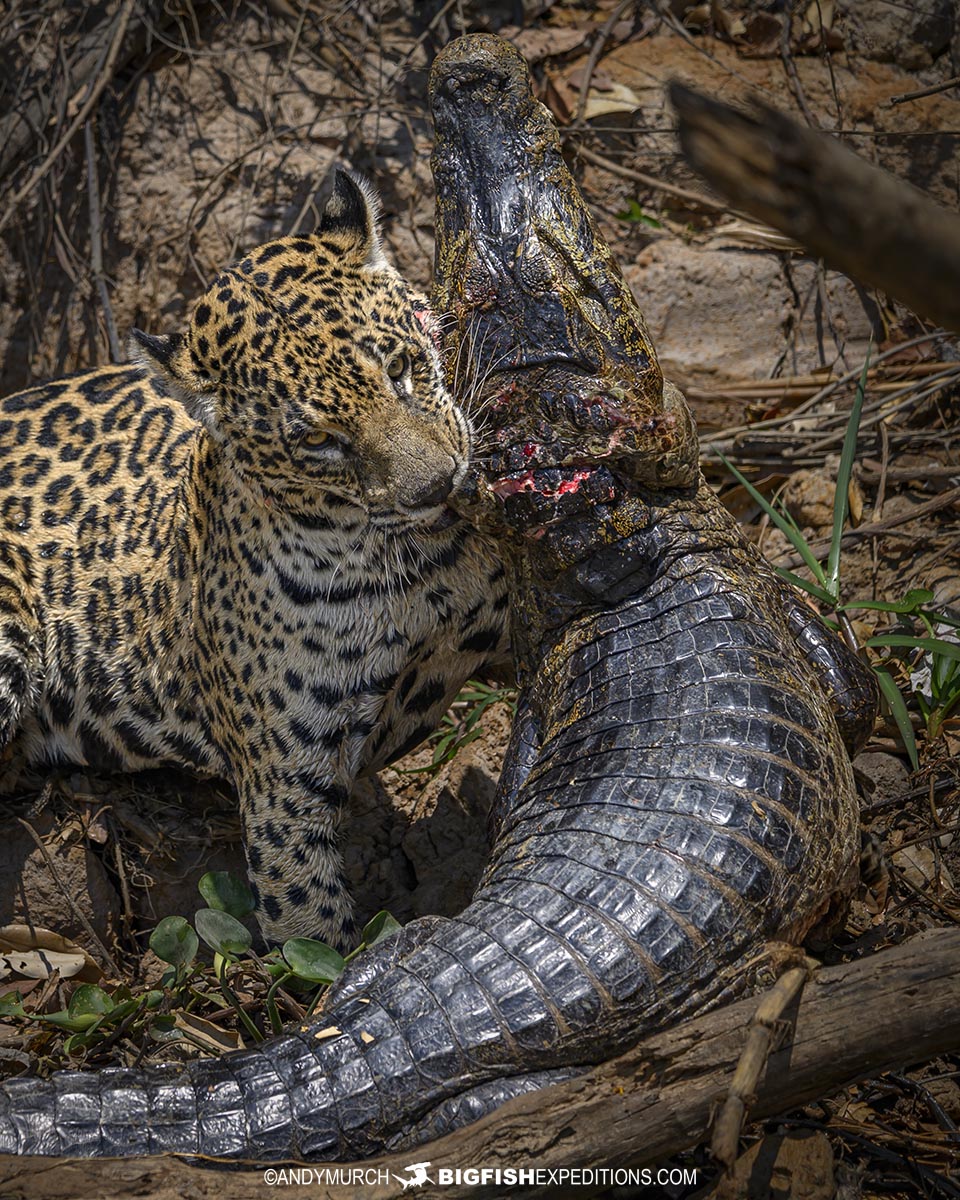
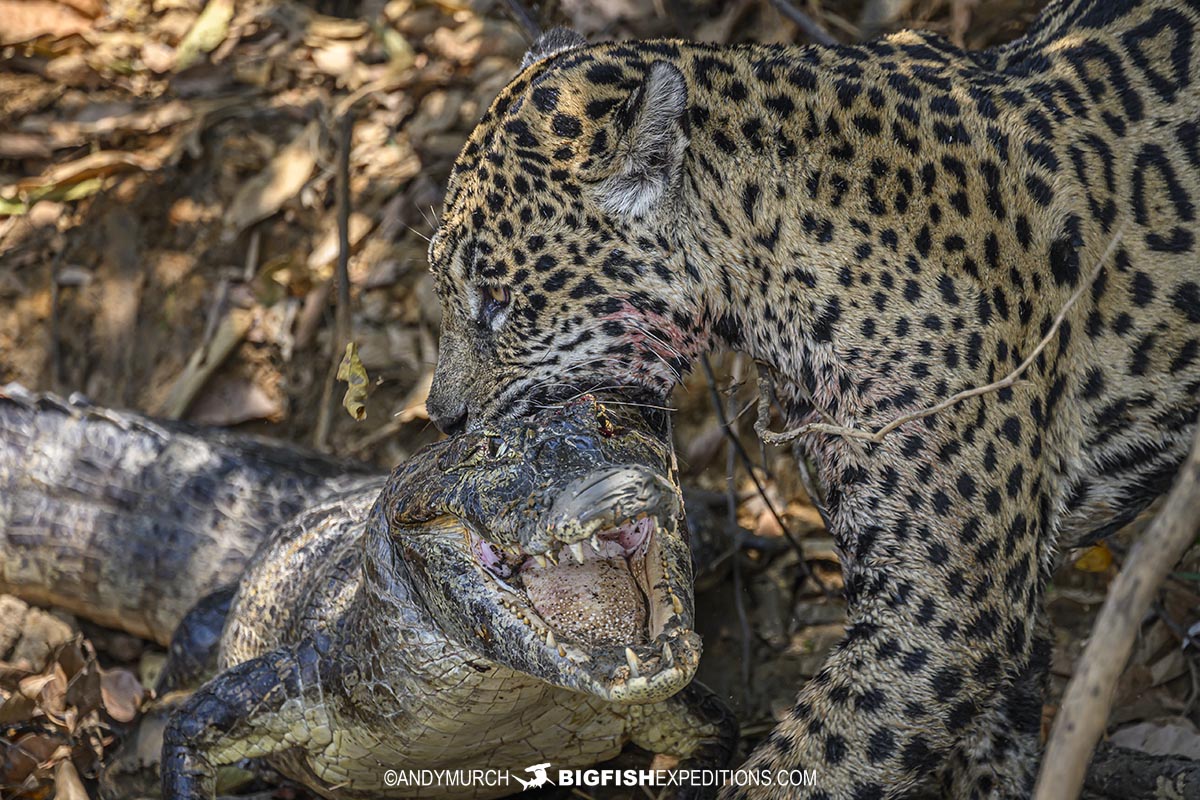
Jaguar #13: Jaju aka Ginger. We were heading up the Three Brothers Channel pretty happy with the sightings so far. As we rounded a corner we saw a couple of boats following a lone jaguar when the ultimate encounter happened. Jaju suddenly leaped from the bank onto an enormous caiman. They both briefly went under then Jaju surfaced with the caiman’s neck firmly in her jaws. Thrashing and struggling, she dragged her prey to the bank, maintaining her death grip until the caiman was halfway up the bank.
She then attempted to drag its dead weight up a root covered almost vertical bank, but its sheer bulk was to much for her to drag up such a steep incline so after repositioning it, she walked off to look for a better exit ramp. At this point the mortality wounded caiman sprang back to life, but Jaju was too quick for it, leaping back on top for a final decisive crunch. Finally she managed to drag its 2m carcass up into the forest and the encounter was over. Incredible!
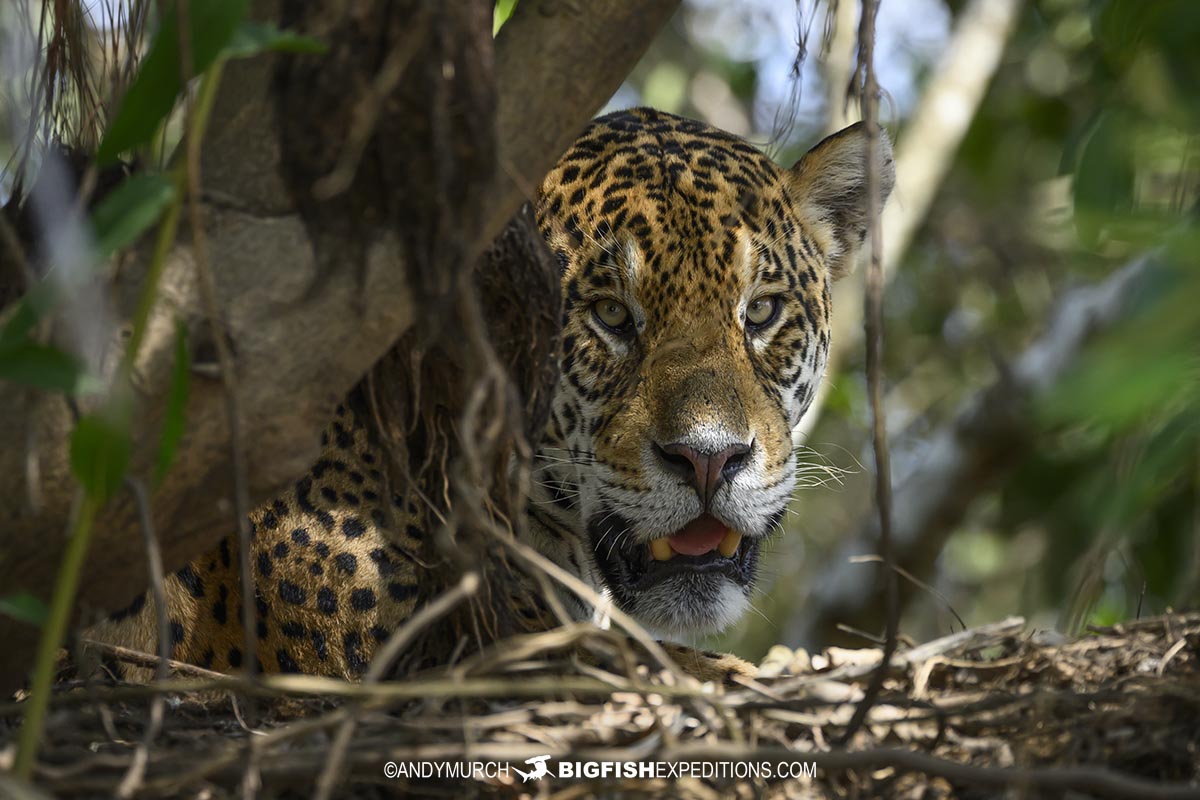
Jaguar #14: Later we spotted Rafa laying in the undergrowth. He looked pretty comfortable so we moved on.
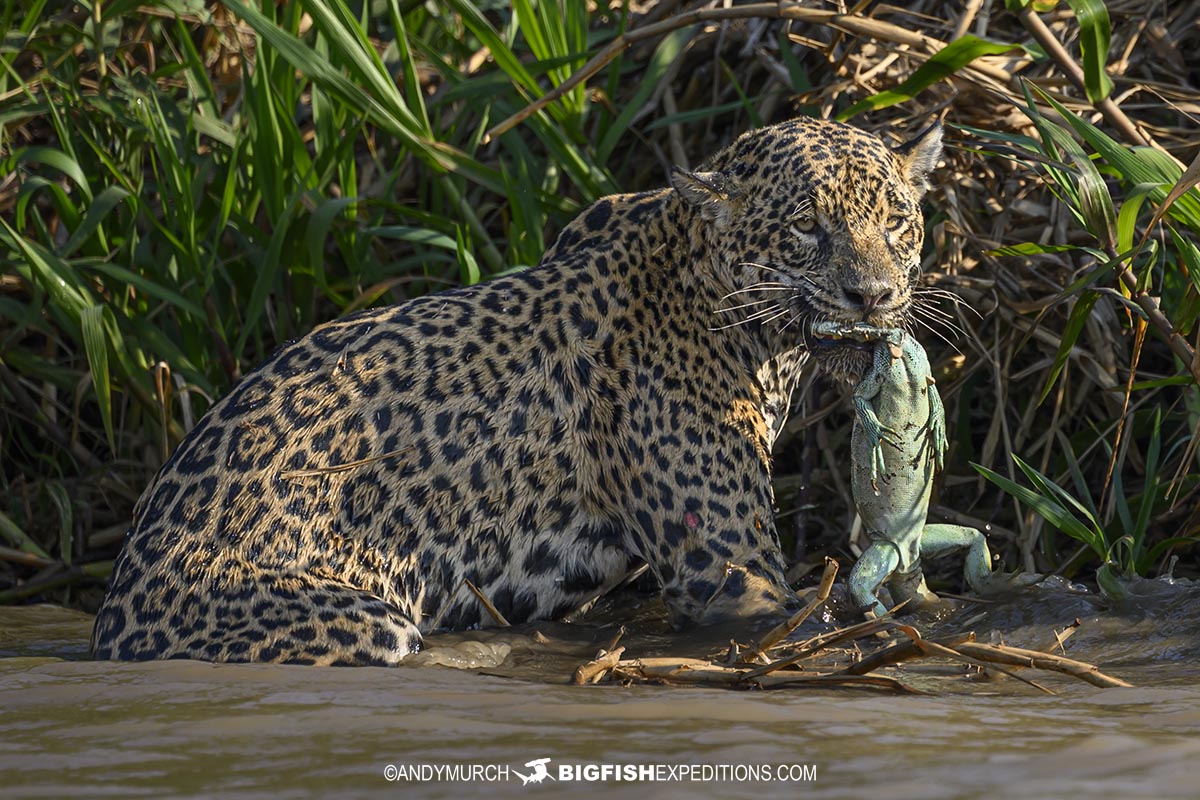
Jaguar #15: Around 4pm, Saseka came tearing out of the bush and nailed a green iguana that was hidden in the grass by the shore. Predator and prey slammed into the water and a few seconds later, Saseka resurfaced with the iguana’s limp form hanging from her mouth by its head.
Saseka has a cub to feed, but this was barely a snack so she devoured the iguana on the spot. The snack would give her a nice injection of energy to continue hunting for a more substantial meal for her family.
She must have heard movement in the undergrowth because after her appetizer, she started digging. A minute later she held up a Guinea Pig in her jaws and trotted off into the bush to deliver lunch to her cub, which must have been hiding near by.
Shortly afterwards, Saseka rematerialized and continued hunting along the shore.
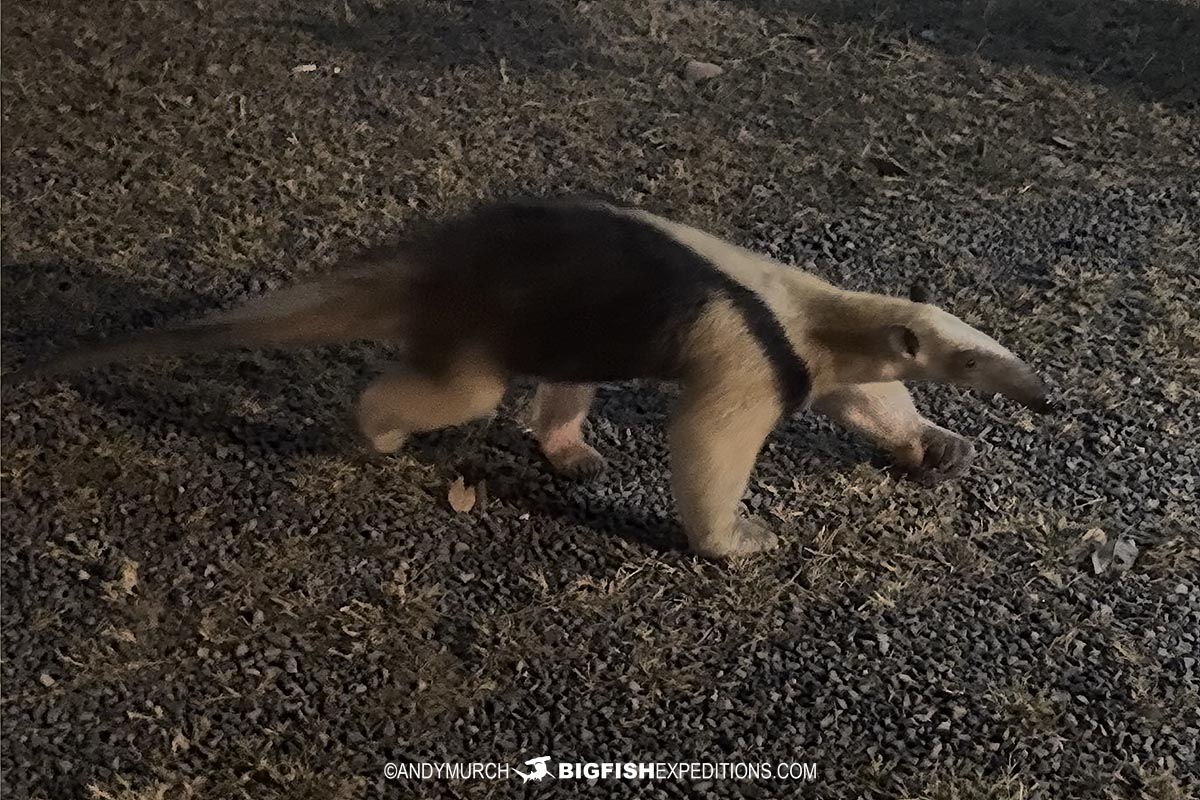
To see three successful predations in a single day is unheard of. An unbelievable finish to an already incredible trip, but the surprises were not over. On our final night in the Pantanal, an anteater wandered through the grounds of our lodge to the delight of our group. Jaguars may be around every corner, but anteaters are not commonly seen in Porto Jofre so this was a really nice cherry on top of an already incredible trip 🙂
Day 7: Return to Cuiaba
It was time to leave Porto Jofre and return to Cuiaba. We stopped at the birding lodge again on route for a few last shots of the Pantanal’s fabulous parakeets and other exotic birds, but inevitably we found ourselves back at the airport too soon.
We will be back in the Pantanal in 2027 and again in 2028. Our future trips will be even better because starting in 2027, we’re including Maned Wolves in our Jaguar trip itinerary!
Join us there: https://www.bigfishexpeditions.com/trips/terrestrial/jaguars-pantanal/