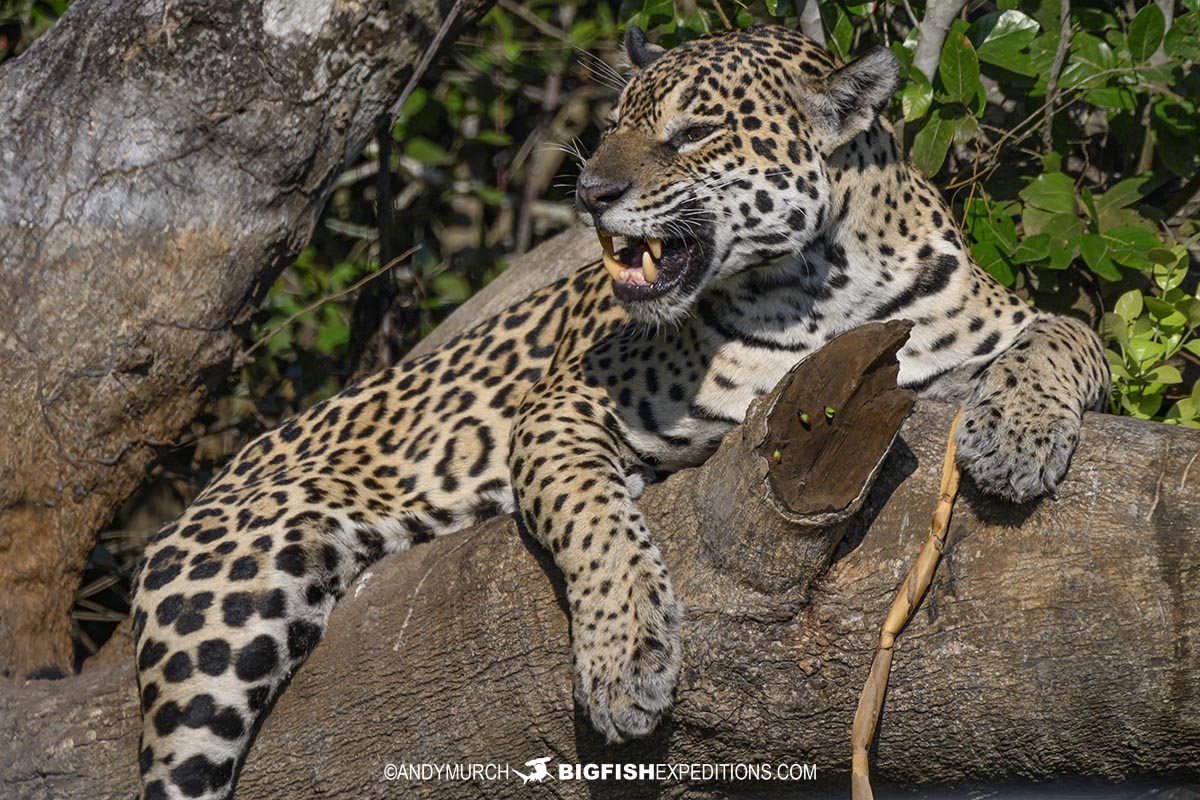
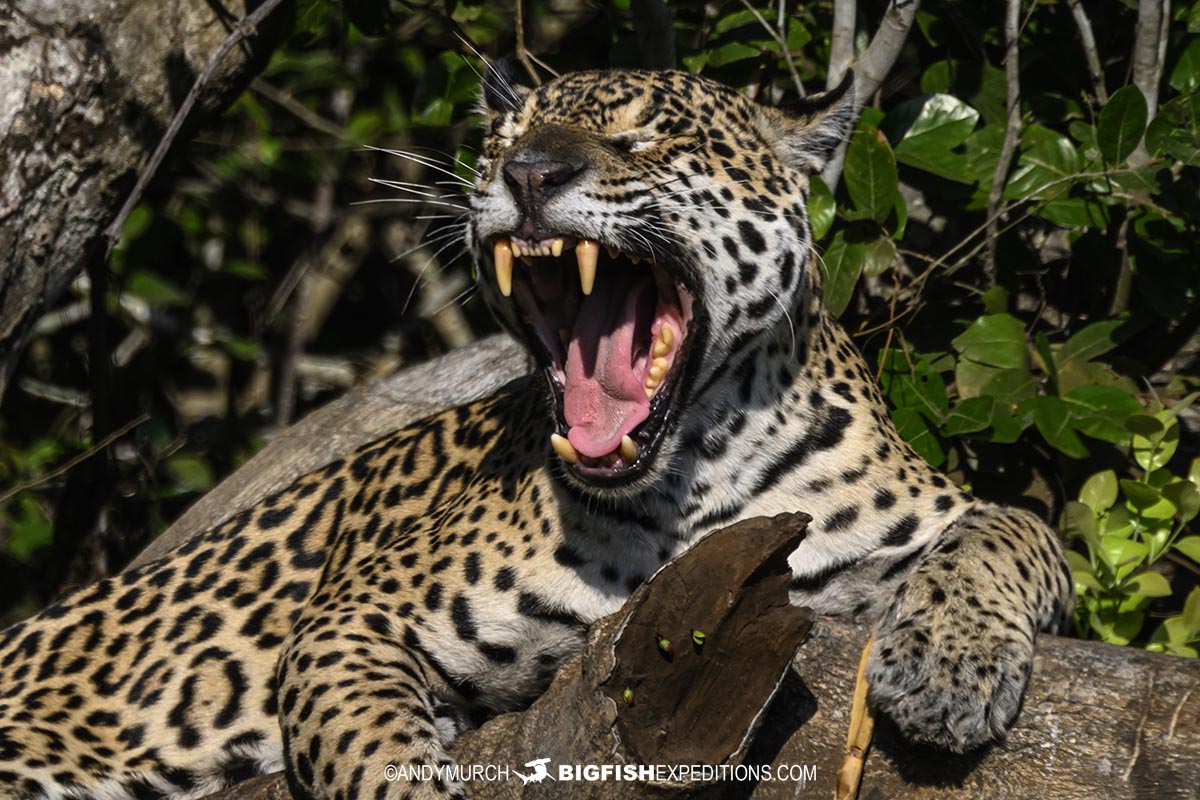
An Incredible Adventure in the heart of Jaguar Country
Jaguars range from Mexico to Argentina. There are even a handful in the southern USA, but seeing one would take months of patient wildlife observation, not to mention an extraordinary amount of luck. The Brazilian Pantanal is the exact opposite. Jaguars abound and they are extremely easy to encounter. Plus, many of the jaguars that hunt along the infamous black channel are quite used to boats, so you can watch them hunting for hours at a time.
During the tour we saw fourteen different jaguars and spent many exciting hours watching them hunt.
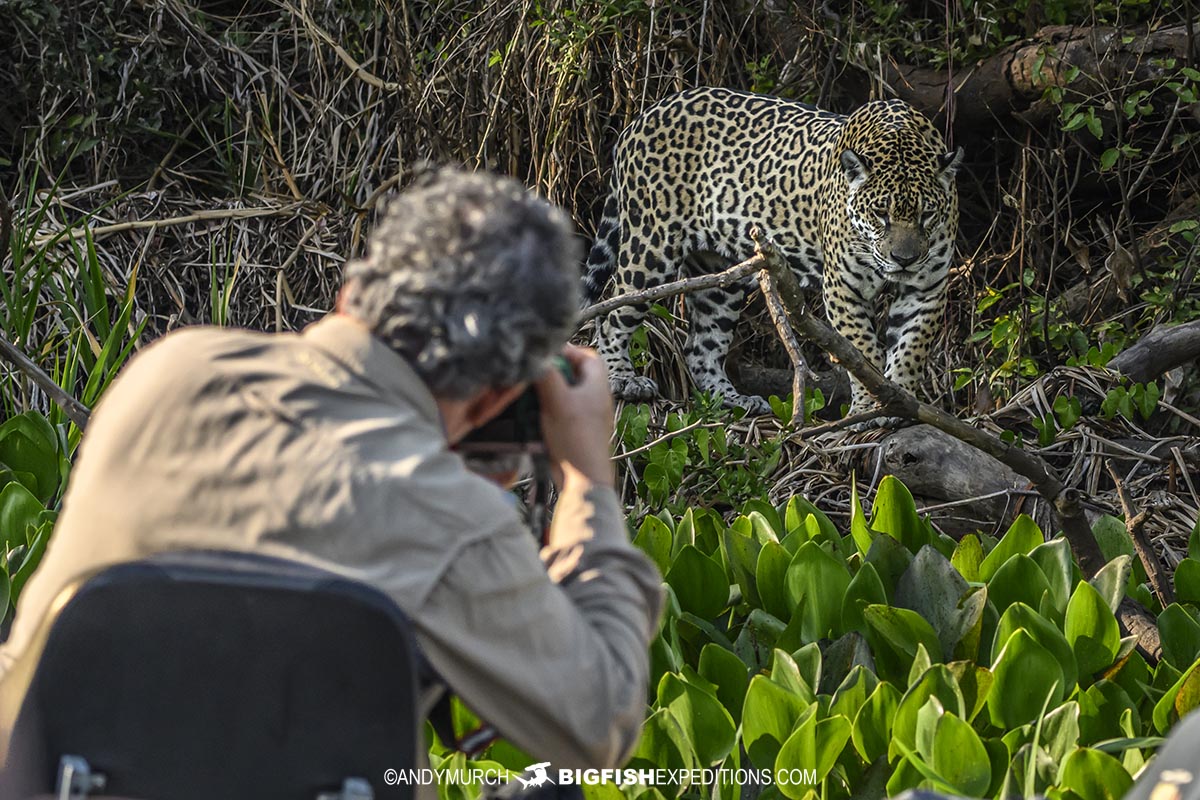
Day 1: Cuiaba to Porto Jofre along the fabled Transpantanera
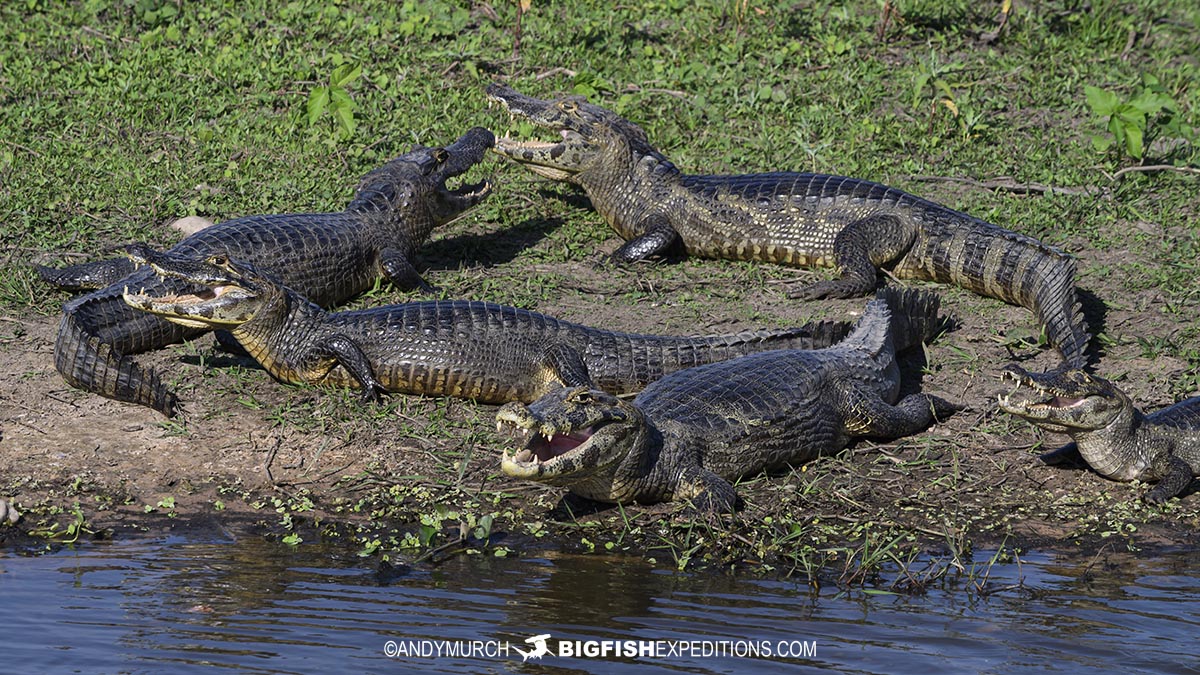
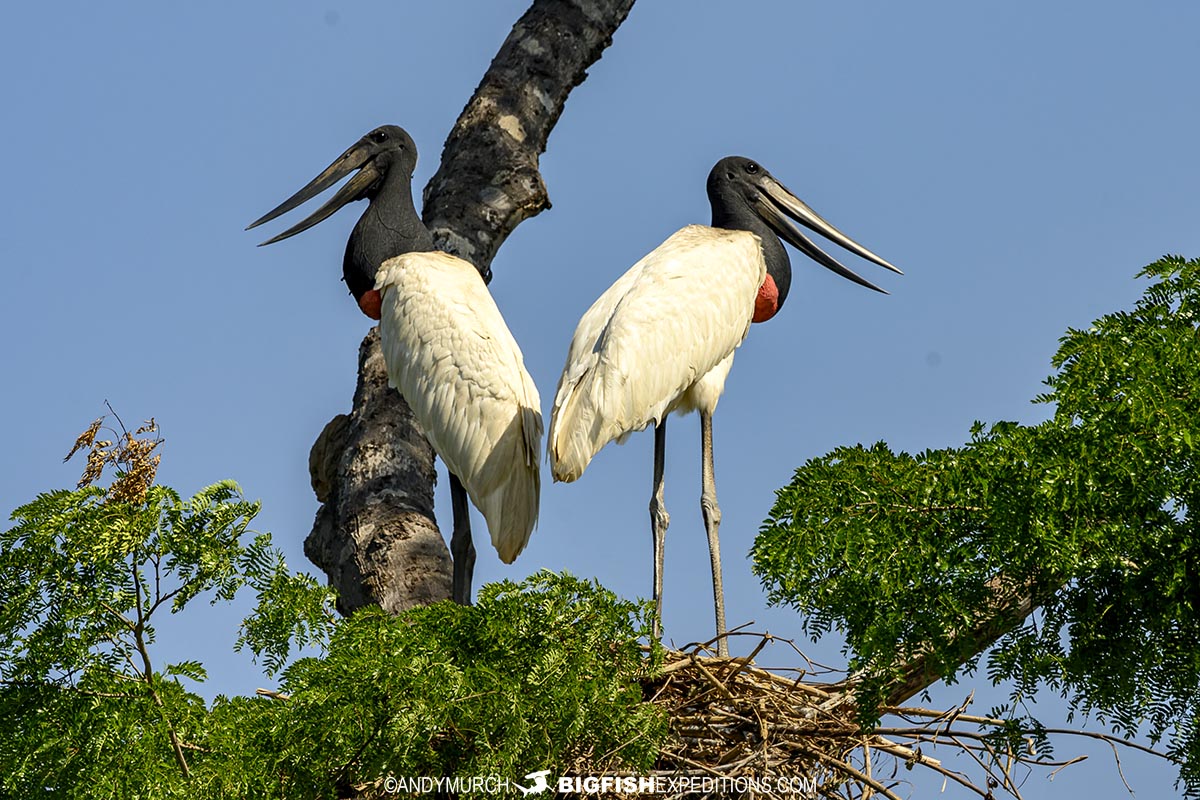
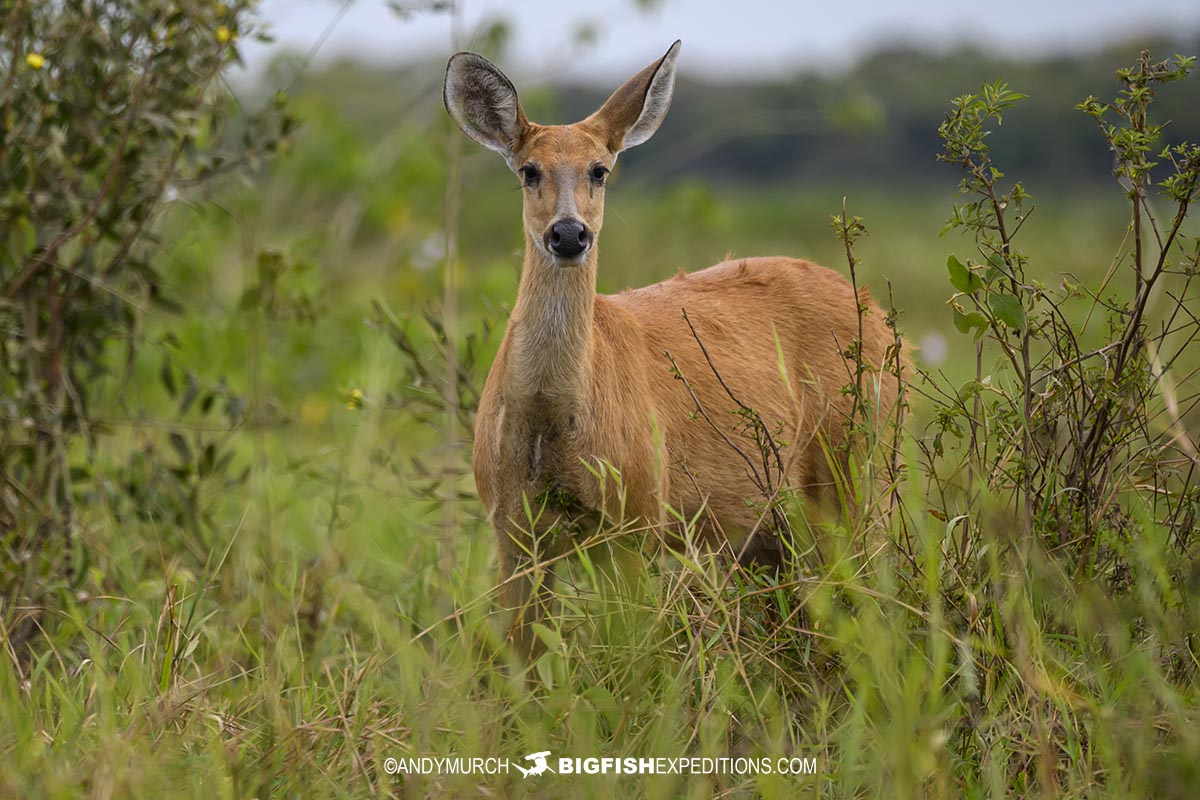
As always, we met our small group (we only take six guests) in Cuiaba and immediately headed onto the TransPantanera; the only road that ventures deep into the Pantanal Wetland Reserve. On route we stopped many times to photograph birds, caimans, brocket and marsh deer before arriving at Santa Rosa Lodge; one of the best accommodation options in the heart of Jaguar country.
Day 2: Eight Jaguar Encounters!
Breakfast at dawn at Santa Rosa Lodge, then we immediately headed upriver to look for jaguars.
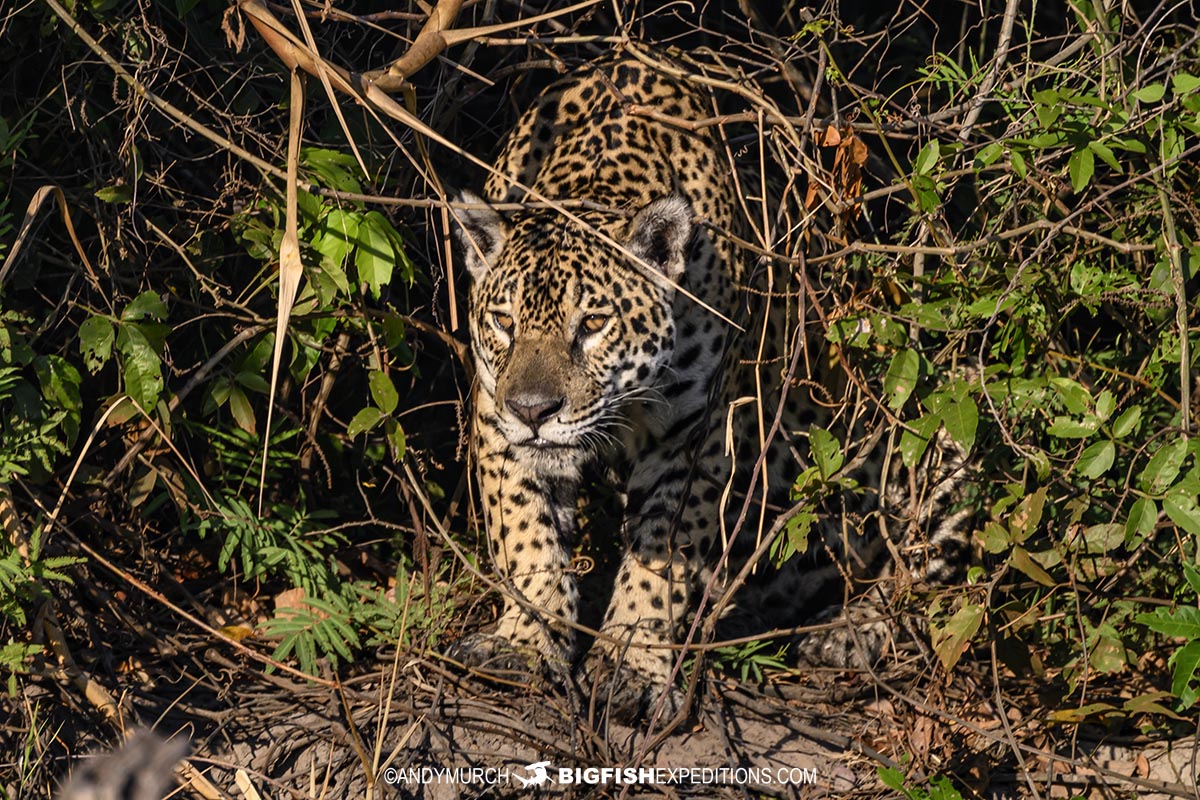
Jaguar #1 We headed for the black channel where we found Madrosa slowly hunting for caiman to feed her young cubs.
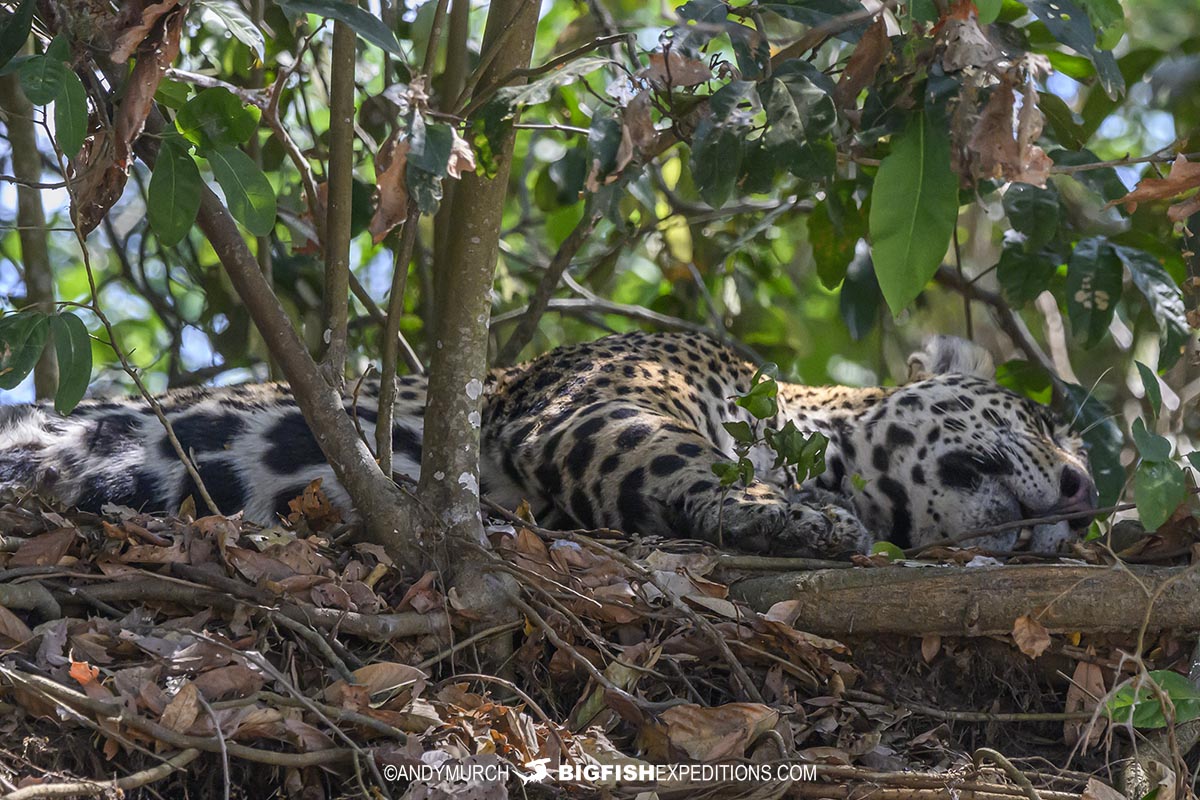
Jaguar #2 Second jaguar sighted was Apeiara. She was sleeping in the undergrowth high on the bank so we quickly moved on.
Jaguars #3, 4 & 5 Cangacu with two almost fully grown cubs. Eros and Ruda. 8 months old. The cubs were huge but still shy, disappearing quickly into the forest. I only manged to film two of the three, but it was still nice to see a family group.
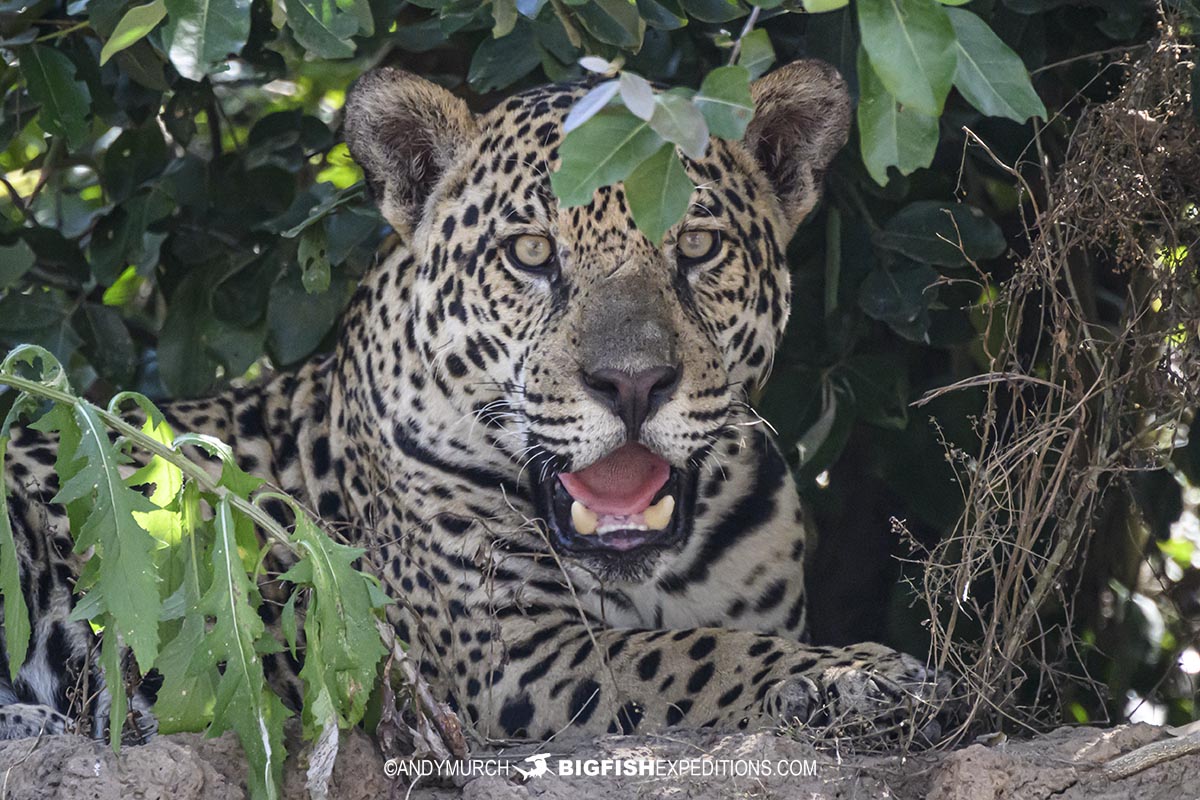
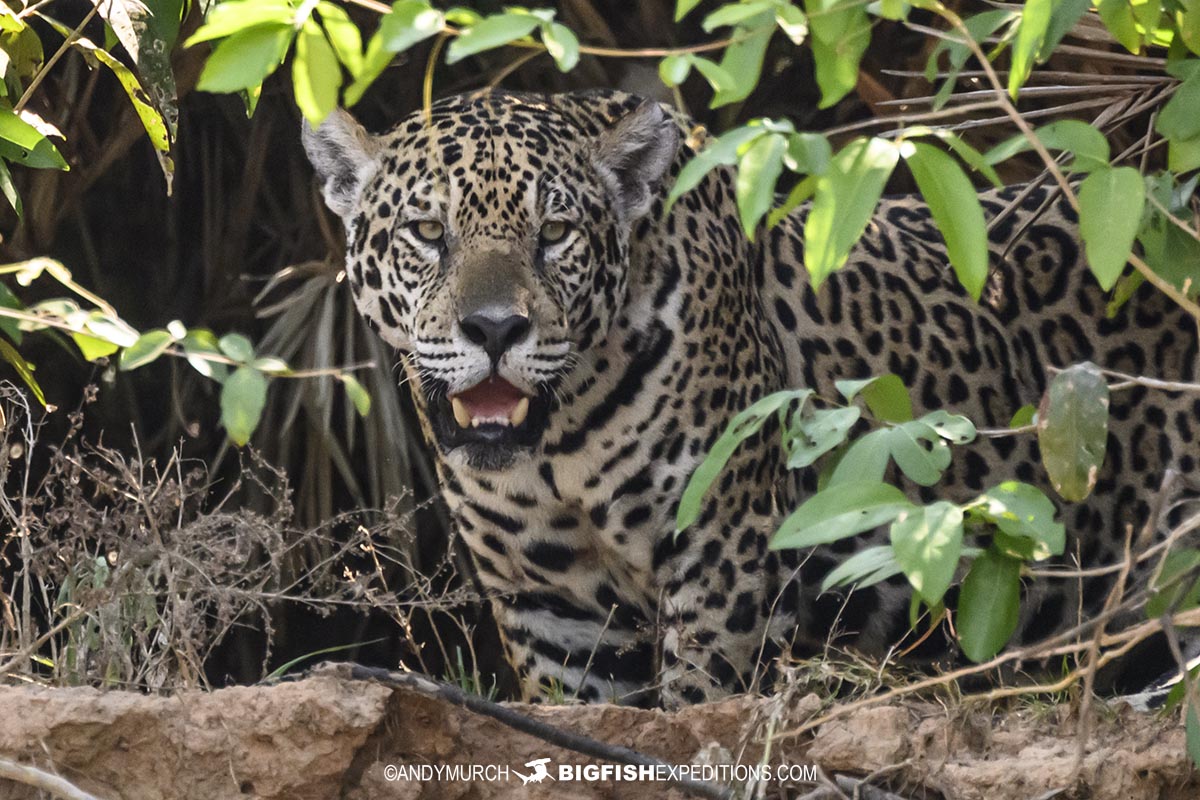
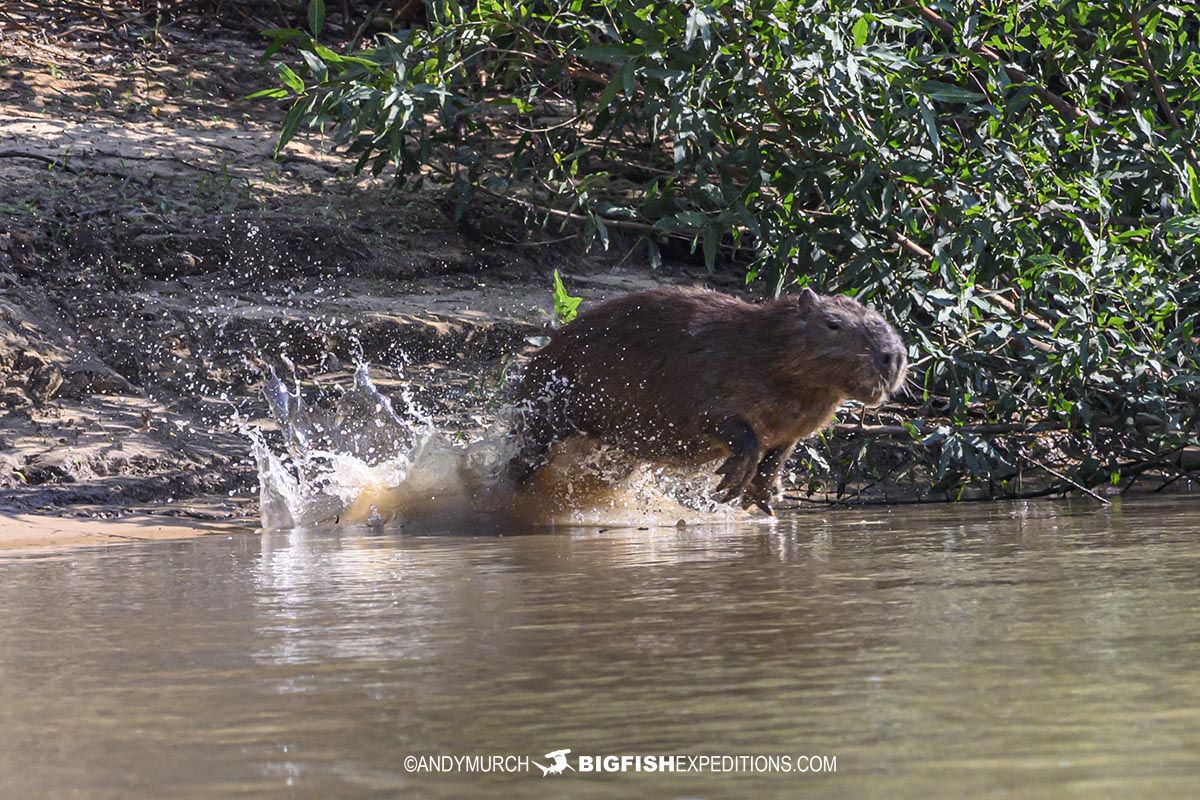
Jaguar #6 Saseka. (Shengen for beautiful). Scared a capybara into the water as she walked along a densely covered bank. Later she swam across the channel right in front of our boat.
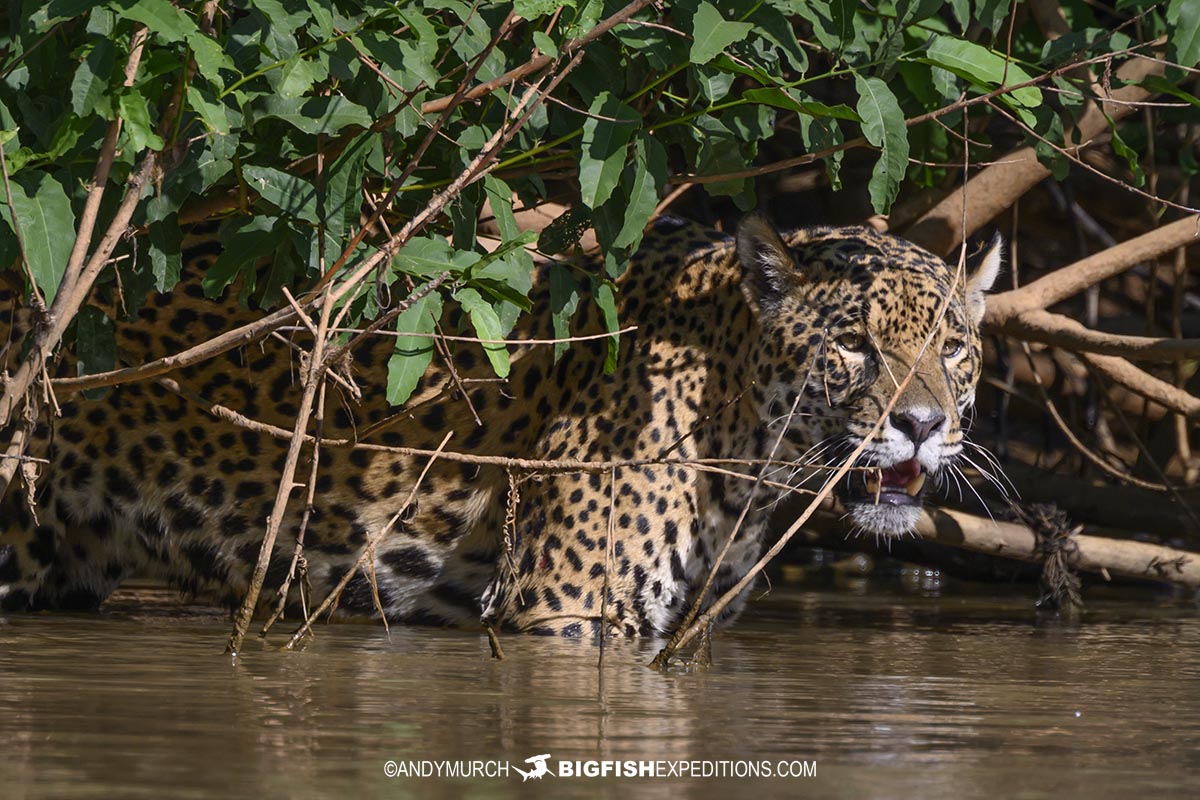
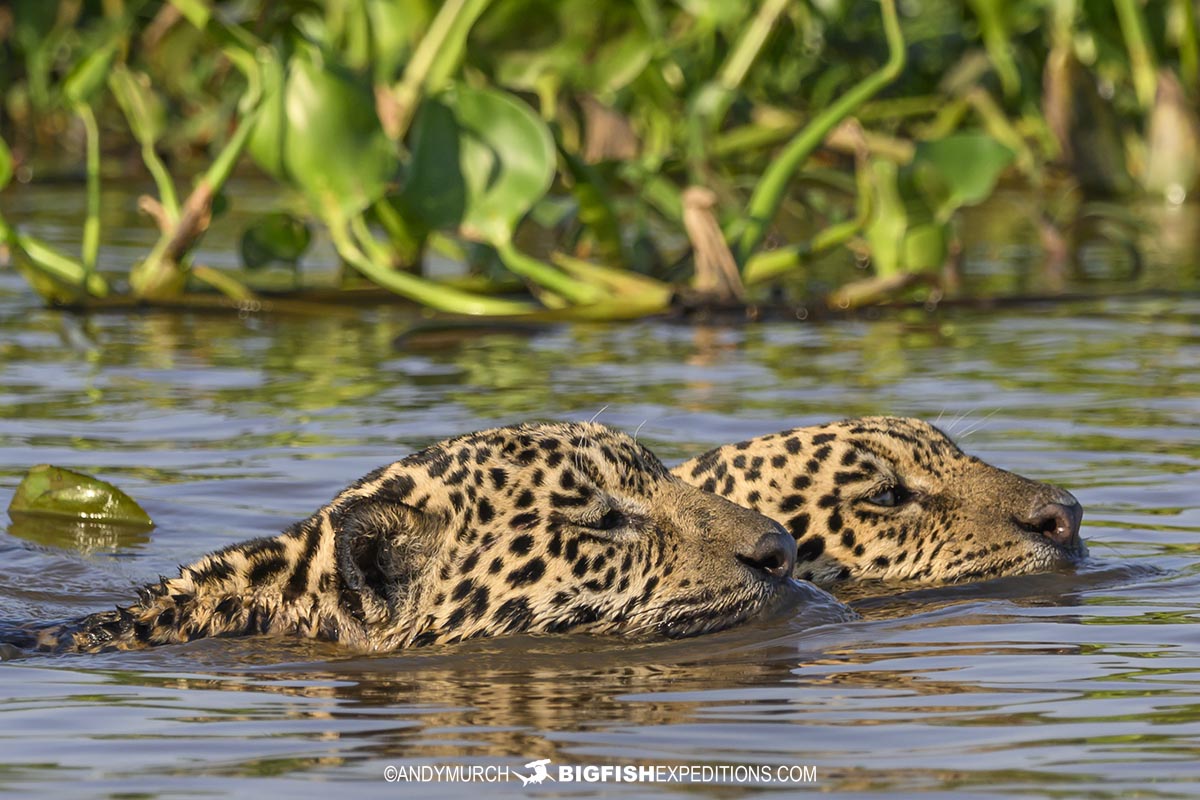
Jaguars #7 & 8. Amazing late afternoon encounter with an uncle and nephew jaguars. Makala son of Patricia and Pantanero son of Madrosa. They are both around 2.5yrs and have formed an alliance hunting together and protecting each other. We found them swimming together in the Black Channel.
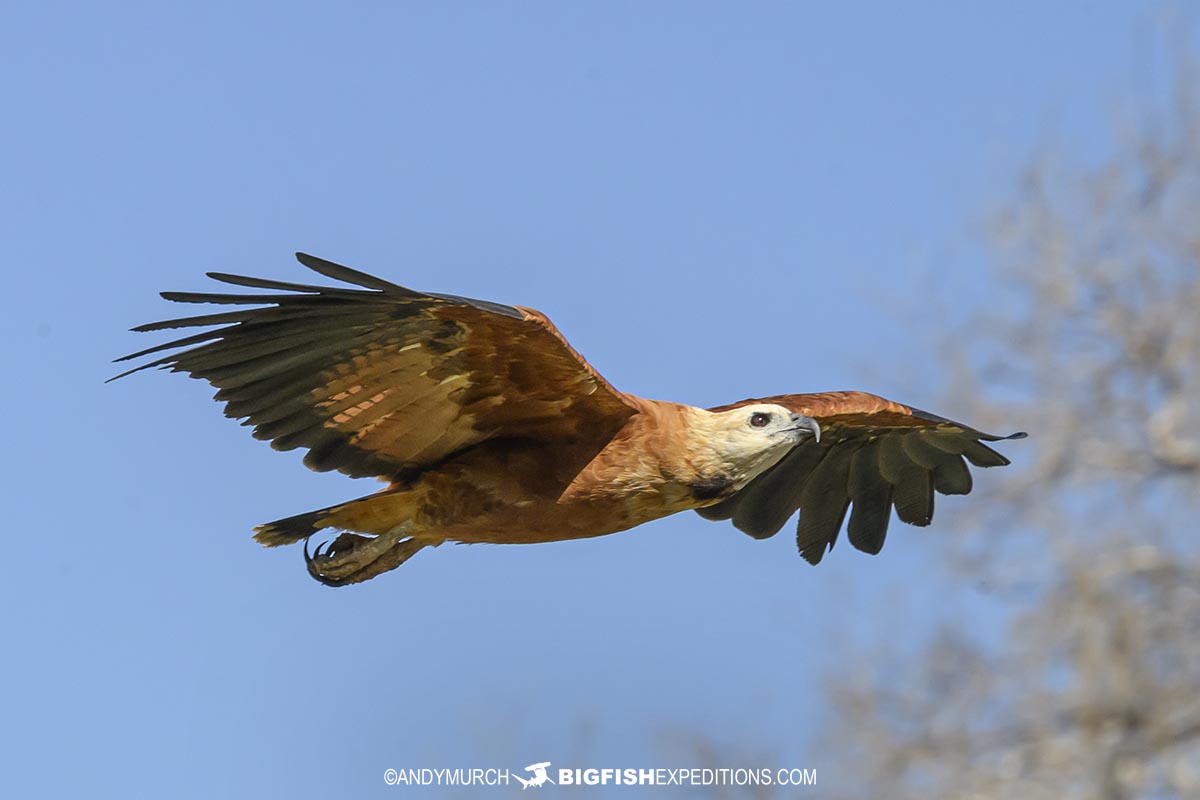
Black collared Hawk souring over the Pantanal.
Day 3: More Jaguars including Patricia!
Jaguar #9 Patricia. The day started with Patricia; the famous matriarch that has raised nine cubs including Madrosa and Makala that we saw yesterday.
Patricia is looking a little weary this year. She is now twelve and moving slower than she was last season. Jaguars live till ~14yrs in the wild so we may not see her hunting in the Black Channel much longer.
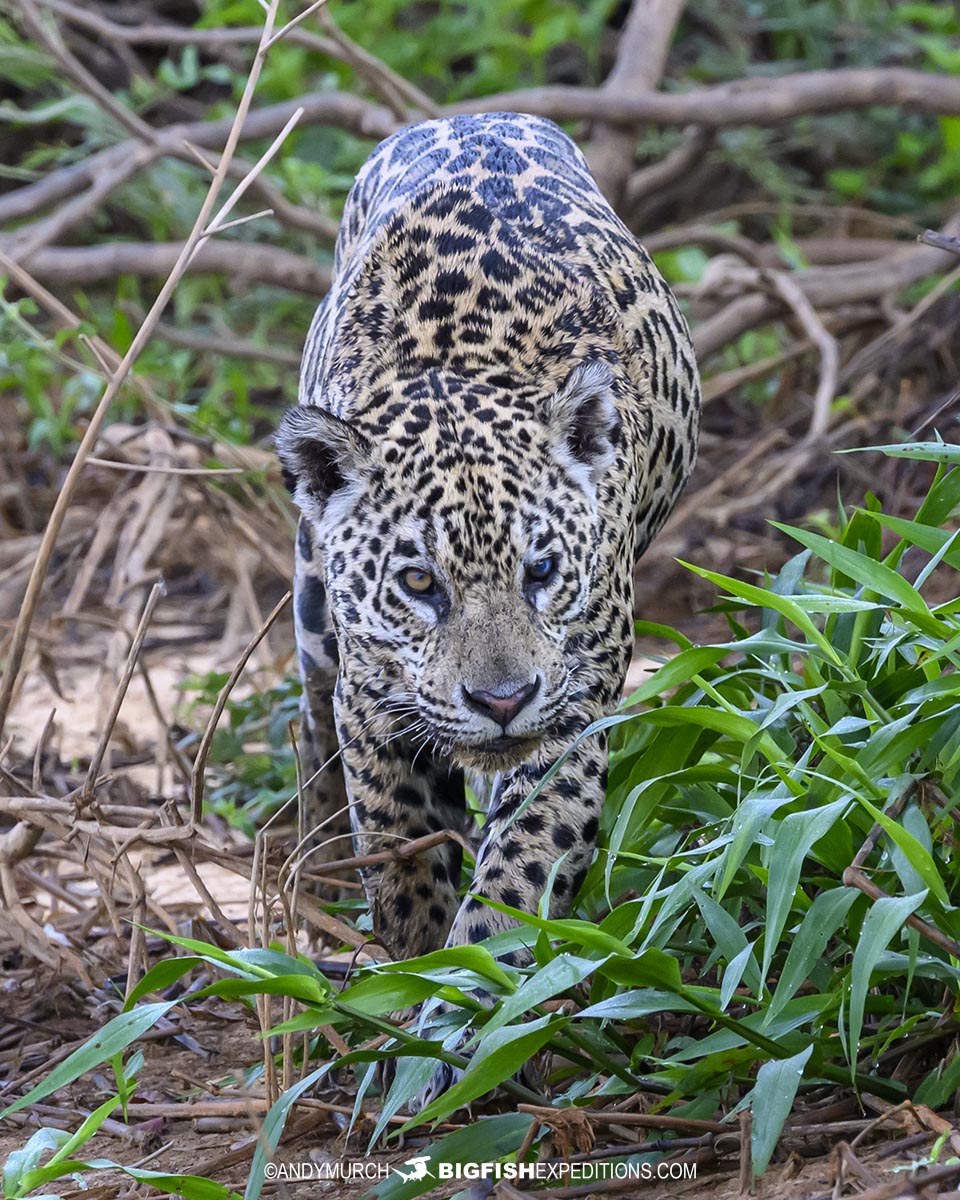
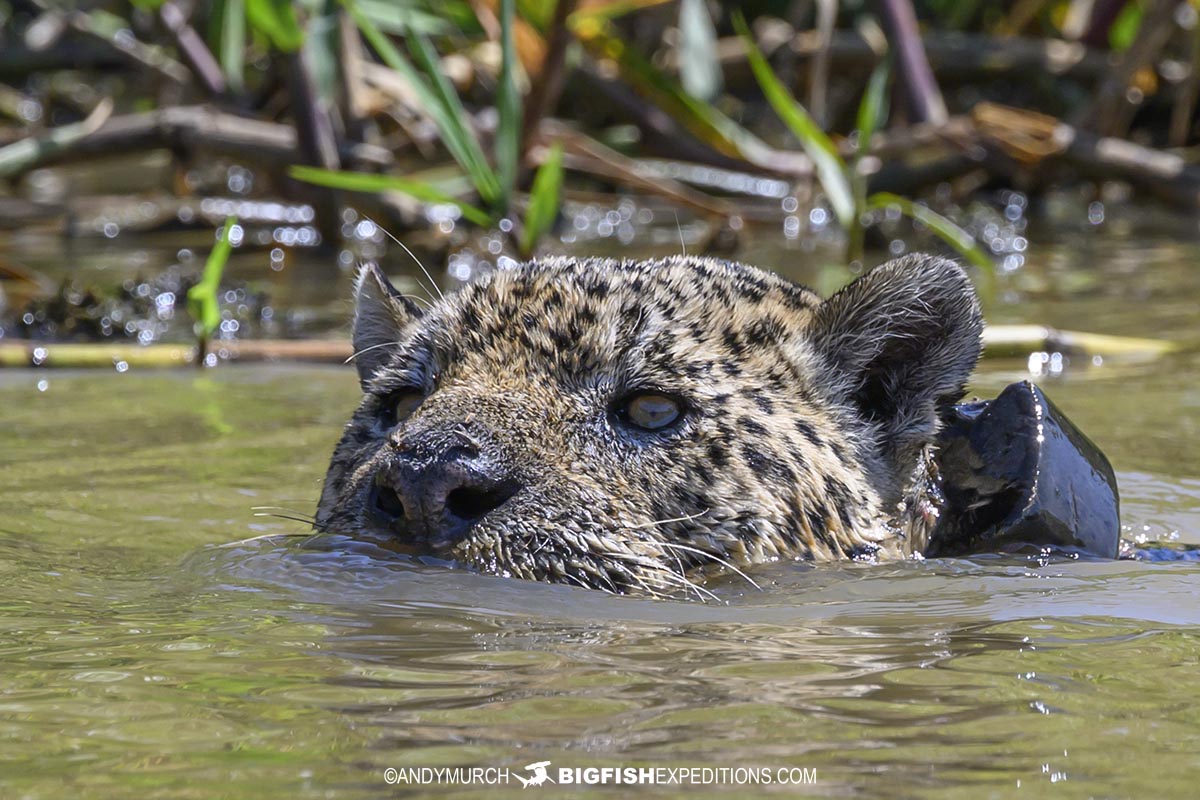
Jaguar #10 Ousado; a ten year old veteran that was badly burned in a wildfire in 2020. He sustained burns over 30% of his body, but he is a survivor. Park rangers managed to capture and rehabilitate him. After two months he was released and has since mated with many females including Patricia and Madrosa.
Interestingly, they call Ousado the submarine jaguar because he has the unique strategy of diving under water and attacking caiman from below.
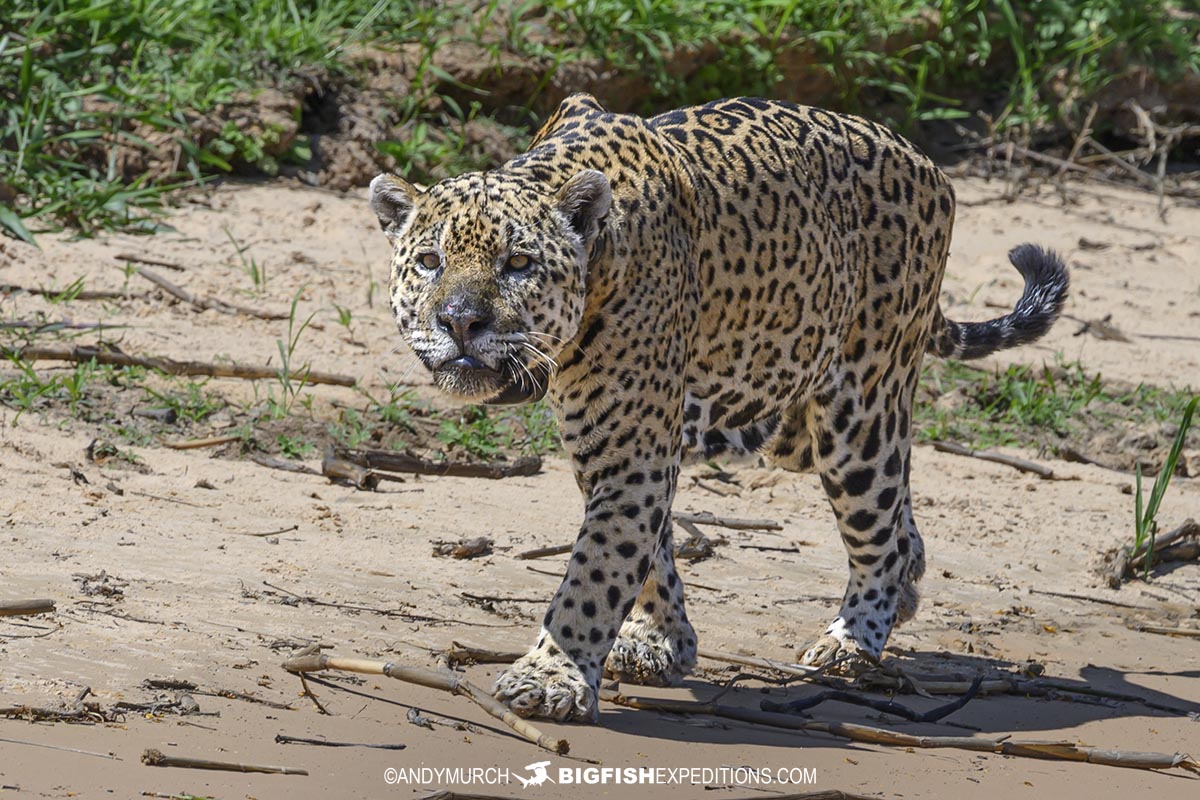
Jaguar #11 Jaju. Another daughter of Patricia. A beautiful jaguar but she was obscured under a tree so we left her in peace and moved on.
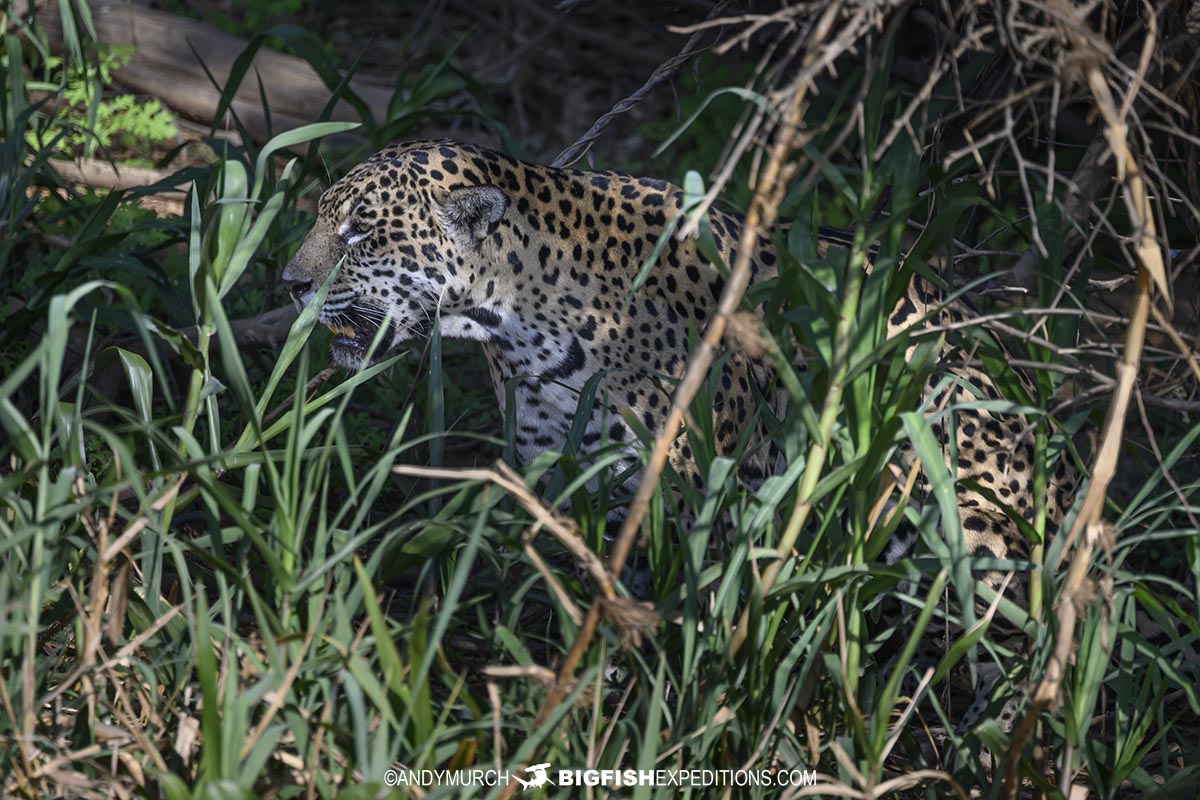
Jaguar #12 Marcela. We got word Marcela was hunting in the Piquiri River. It was a long run but worth it to see her. She has relatively pale fur and very bright eyes.
Normally she hunts in the jaguar dense Three Brothers River, but she has small cubs right now so she is keeping her distance from the rest of the Three Brothers clan.
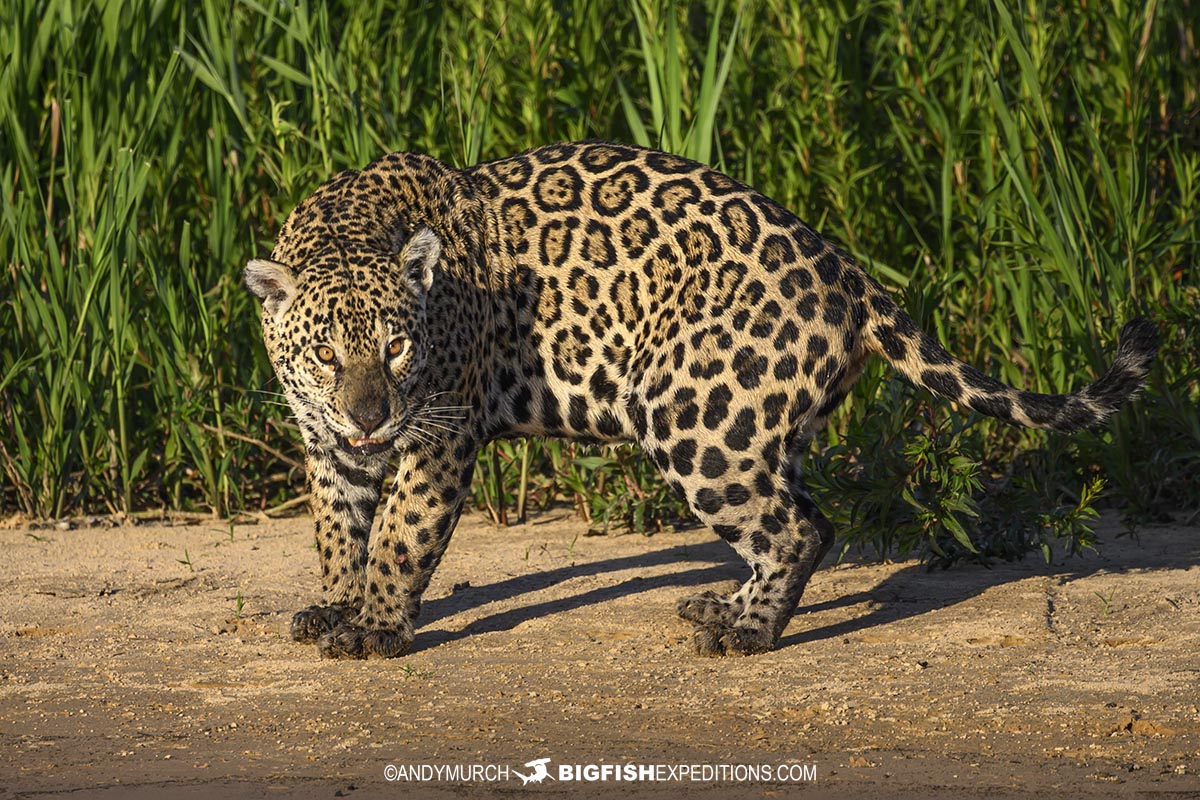
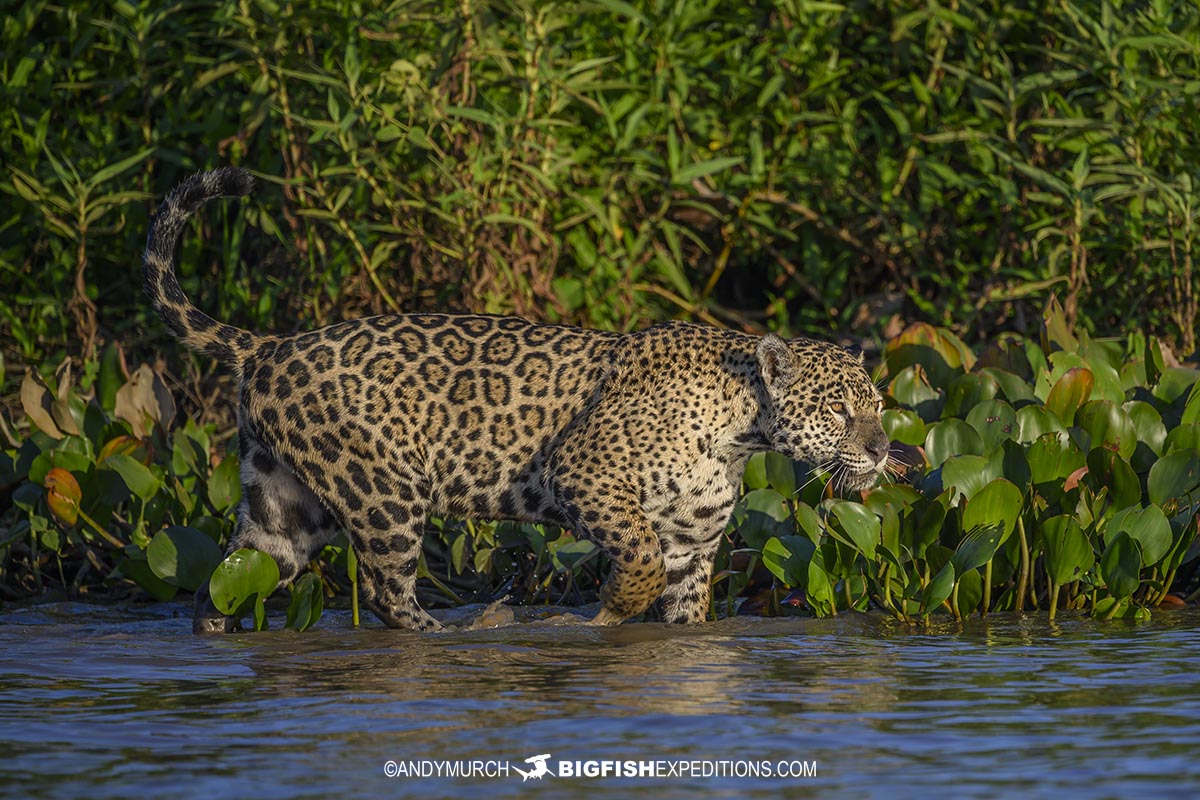
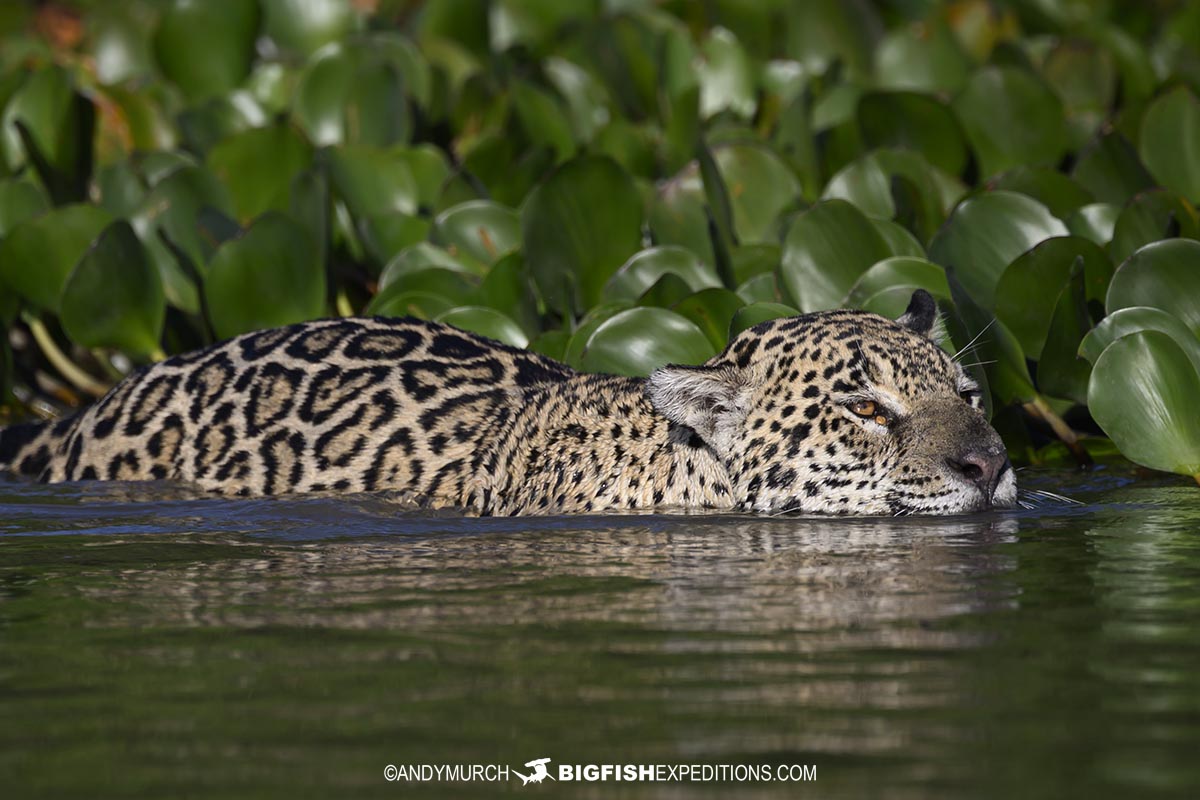
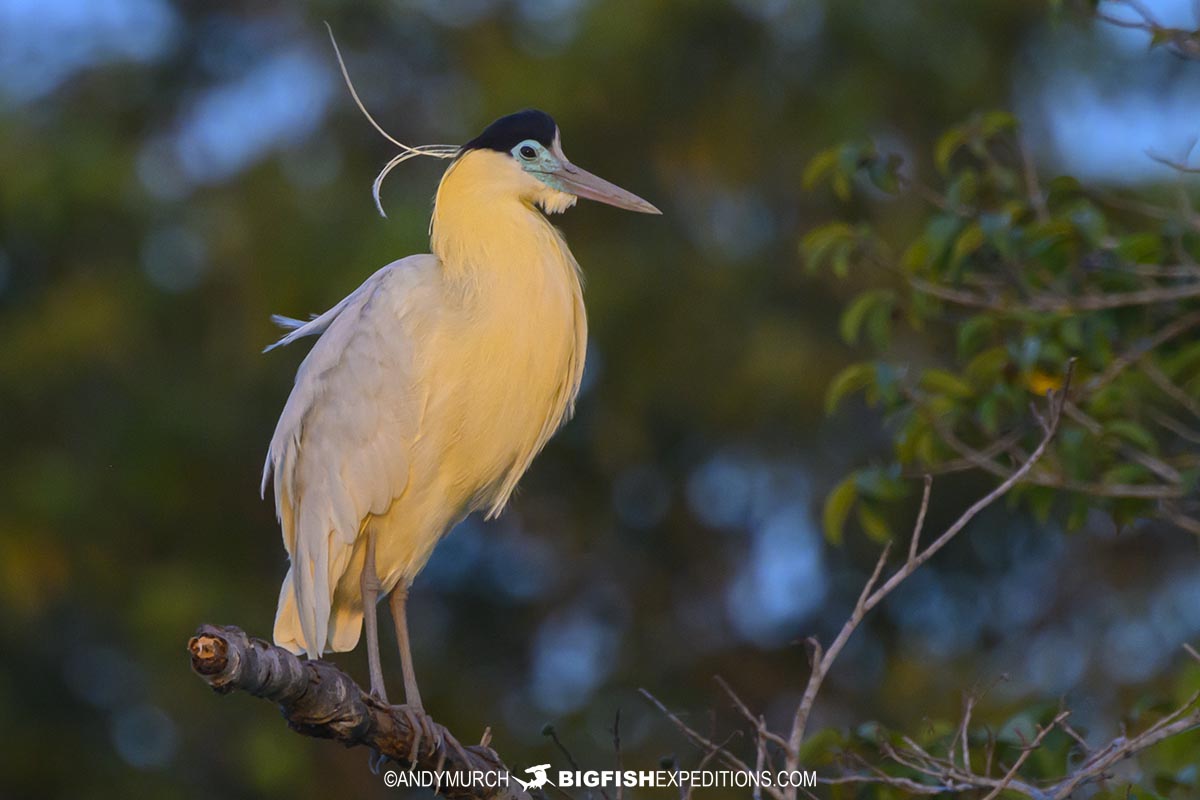
The Pantanal is filled with Herons, Egrets, and many other wading birds. One of the prettiest is the Capped Heron.
Day 4: Giant River Otters, more great Jaguar Encounters and endless river birds.
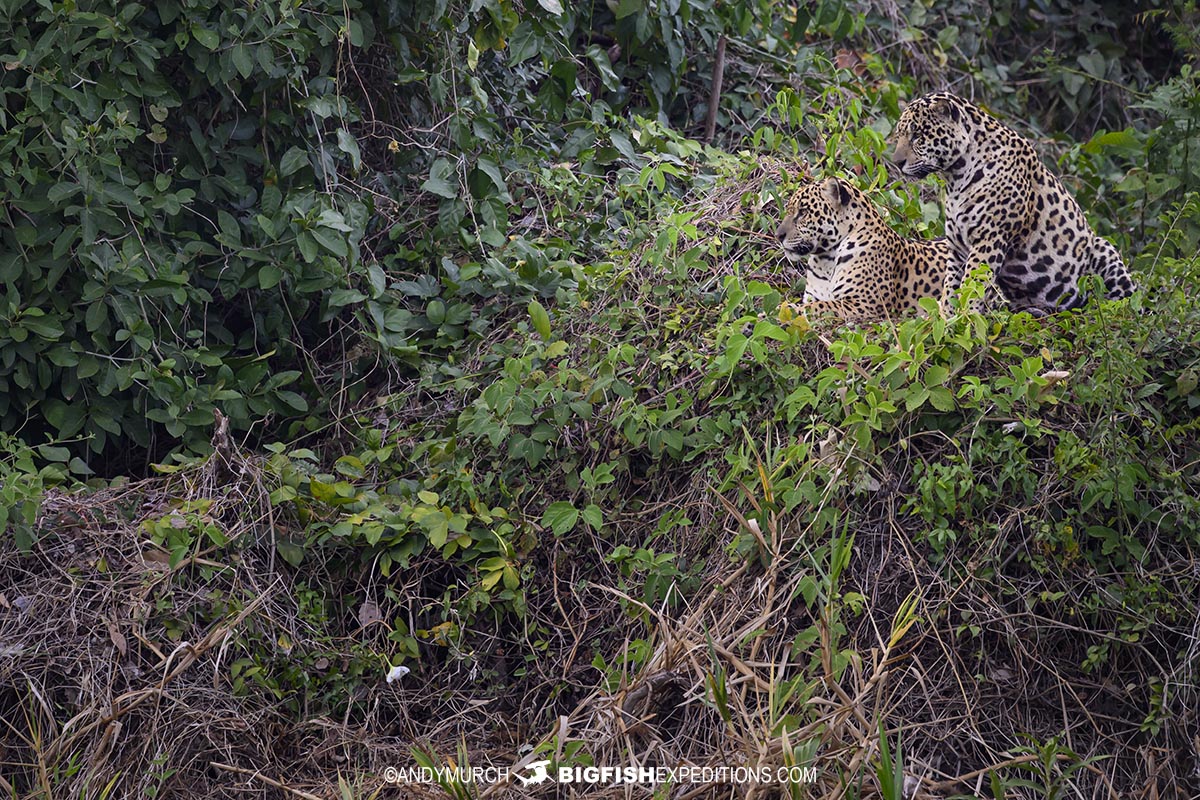
We found Pantanero perched on a rise overlooking a large expanse of water hyacinths.
Before long, his uncle Makala walked out of the forest and sat next to him. A lovely scene watching the two of them surveying the terrain from on high.
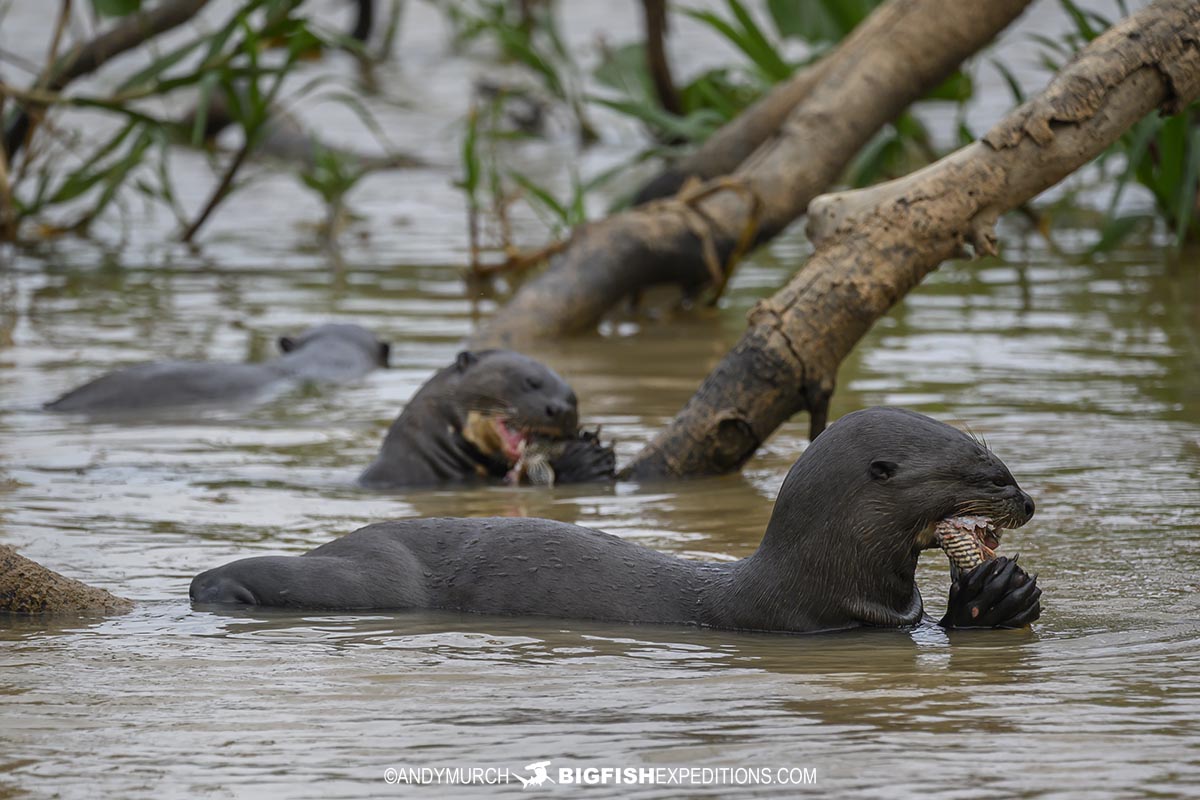
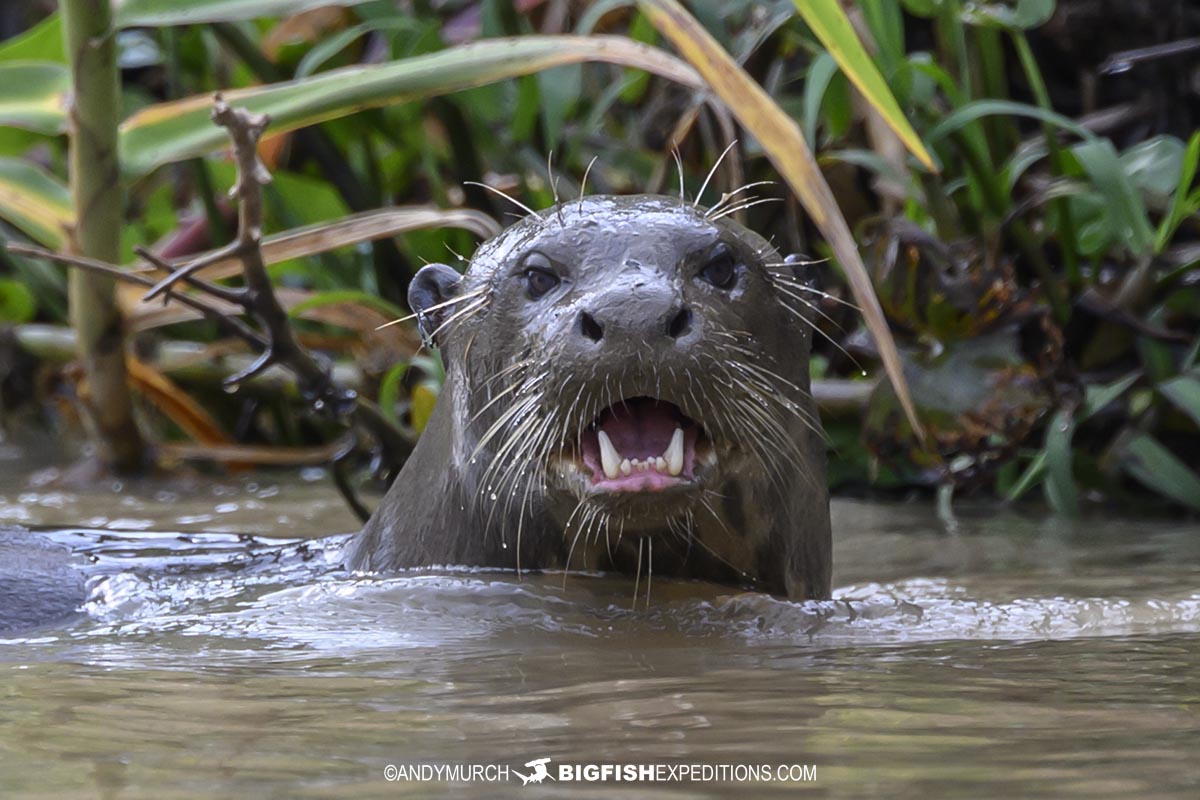
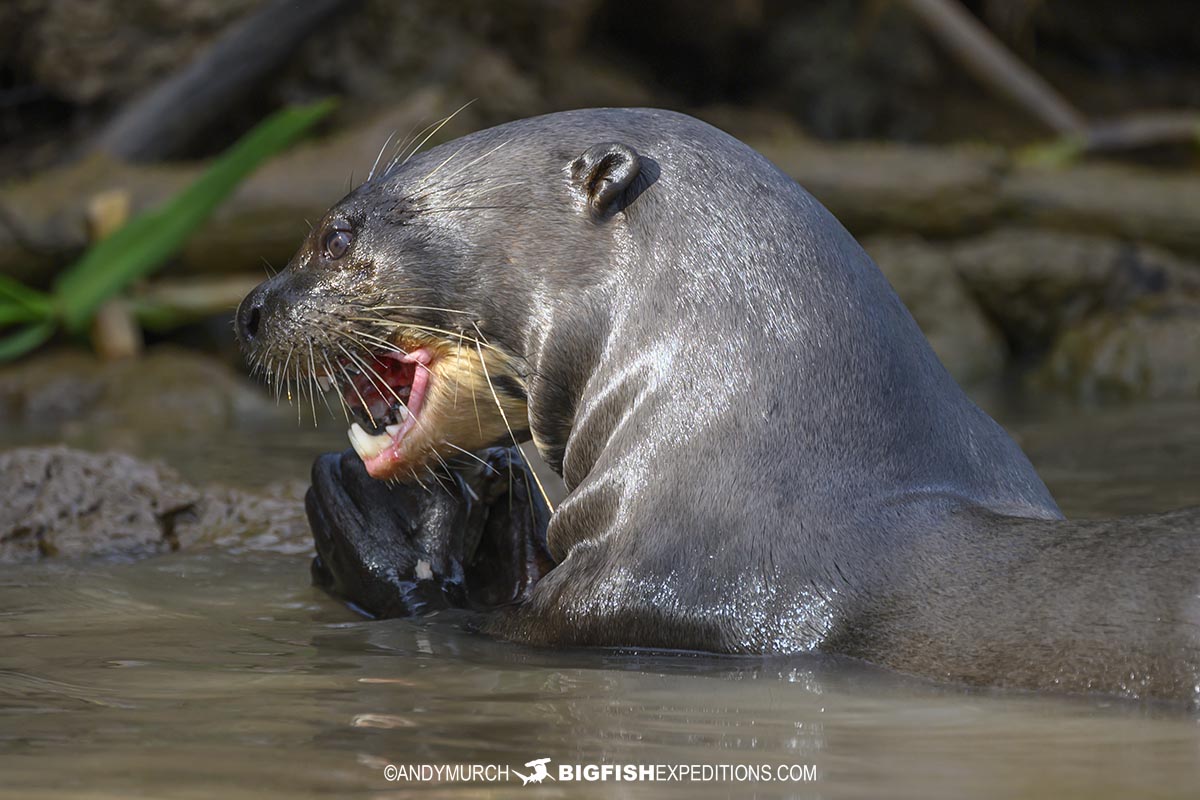
Next we came across Jaju again, still sleeping under the same tree. As we were closing in for a better view, we spotted the Three Brothers Giant River Otter family. Giant otters often have large families of a dozen or more, but this family lives in an area with a rival family and the two families often fight over territory, leading to deaths on both sides.
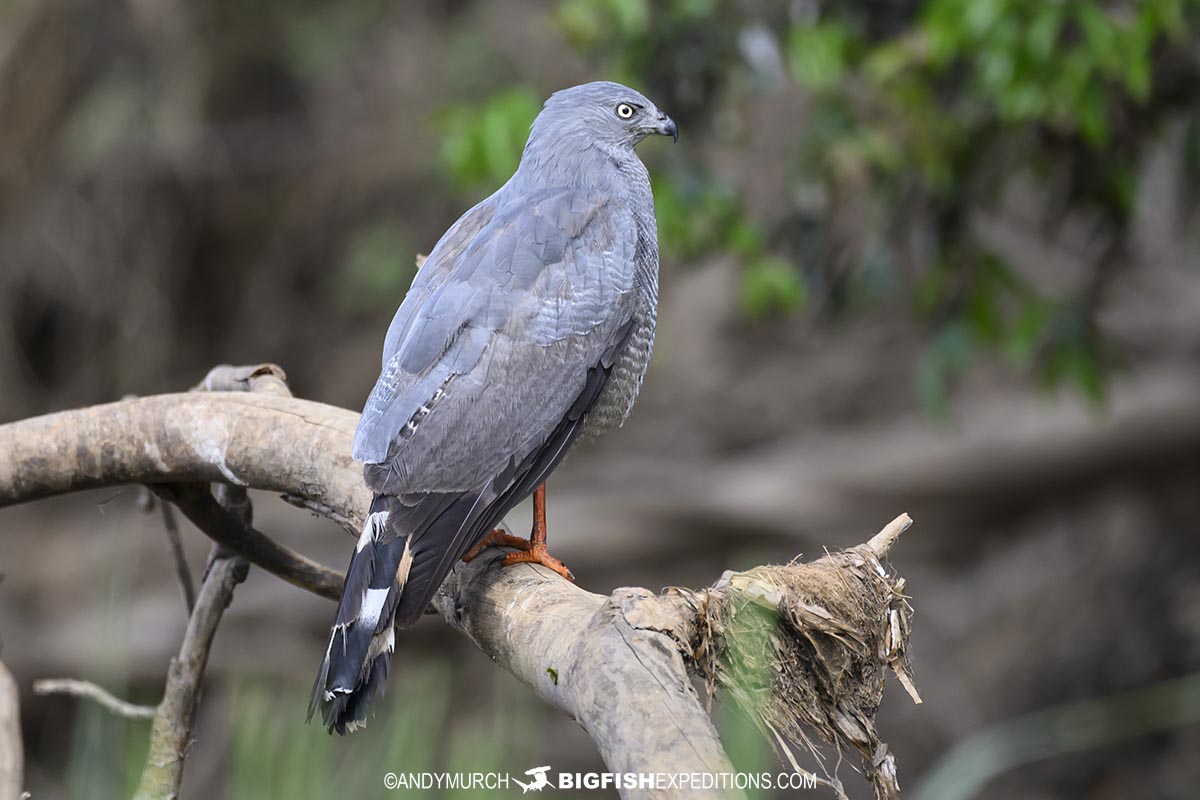
Crane hawk hunting for frogs. Widespread across South America but not one of the most common raptors we see in the Pantanal.
Next we found Ousado again. Still swimming slowly along the edge of a channel. Jaguars don’t eat every day so he obviously failed to kill anything yesterday even after many hours of hunting. Ousado was collared with a tracking device after the fire and his rehabilitation. The collar was supposed to fall off after a few months but the mechanism malfuctioned. The collar is not tight so the researchers felt it was better to leave it in place rather than to tranquilize him again, because there is always a risk that a jaguar will disappear into the bush before the sedation can take effect and then be left vulnerable to other jaguars.
Jaguar #13. Our 13th jaguar of the trip was very shy. We found her as she came out of the water after crossing the Three Brothers River. She immediately bounded up the slope and disappeared into the forest. As bold as many jaguars are, just as many are shy, which makes me wonder how many hidden in the undergrowth see us that we never notice!
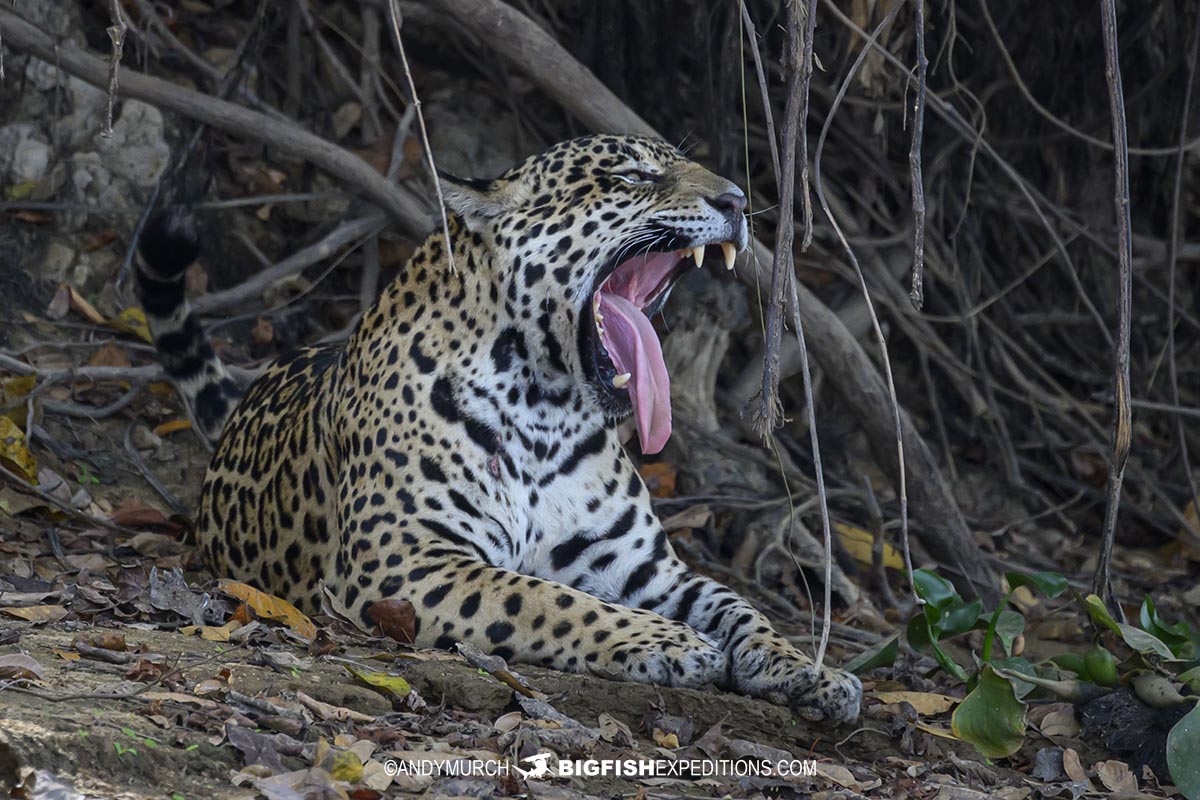
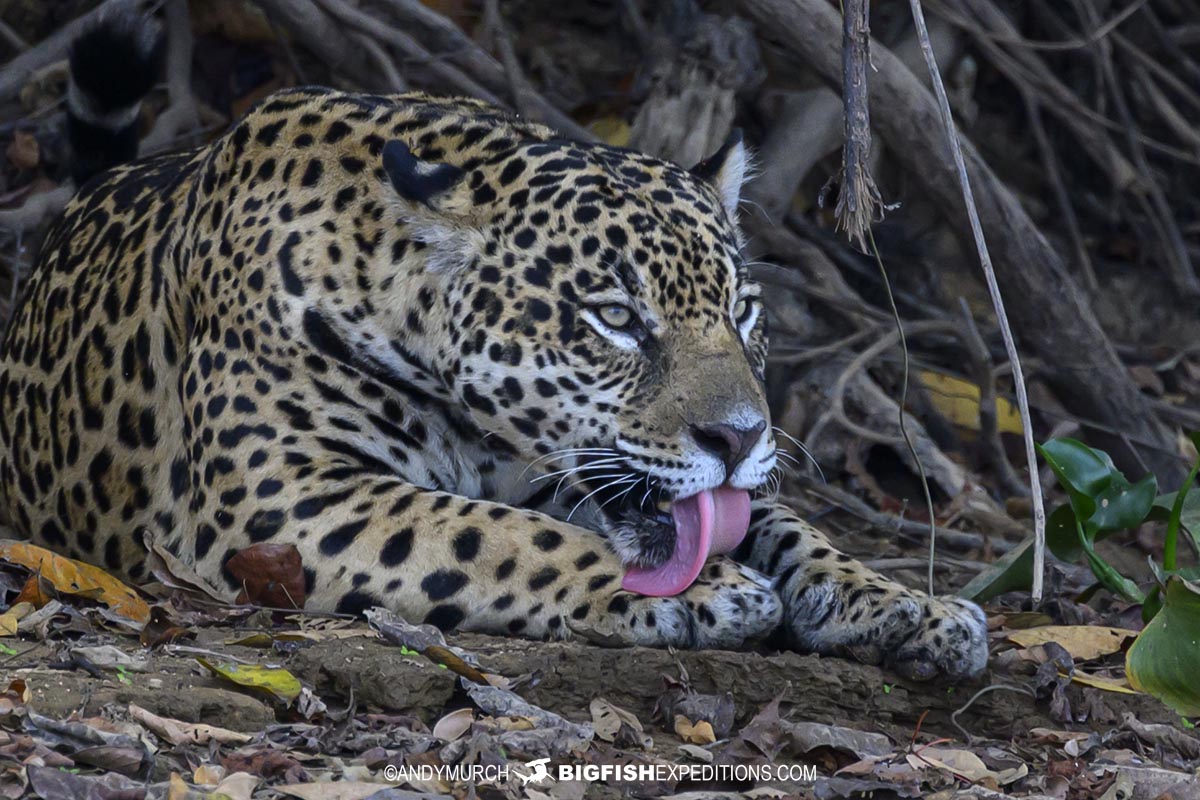
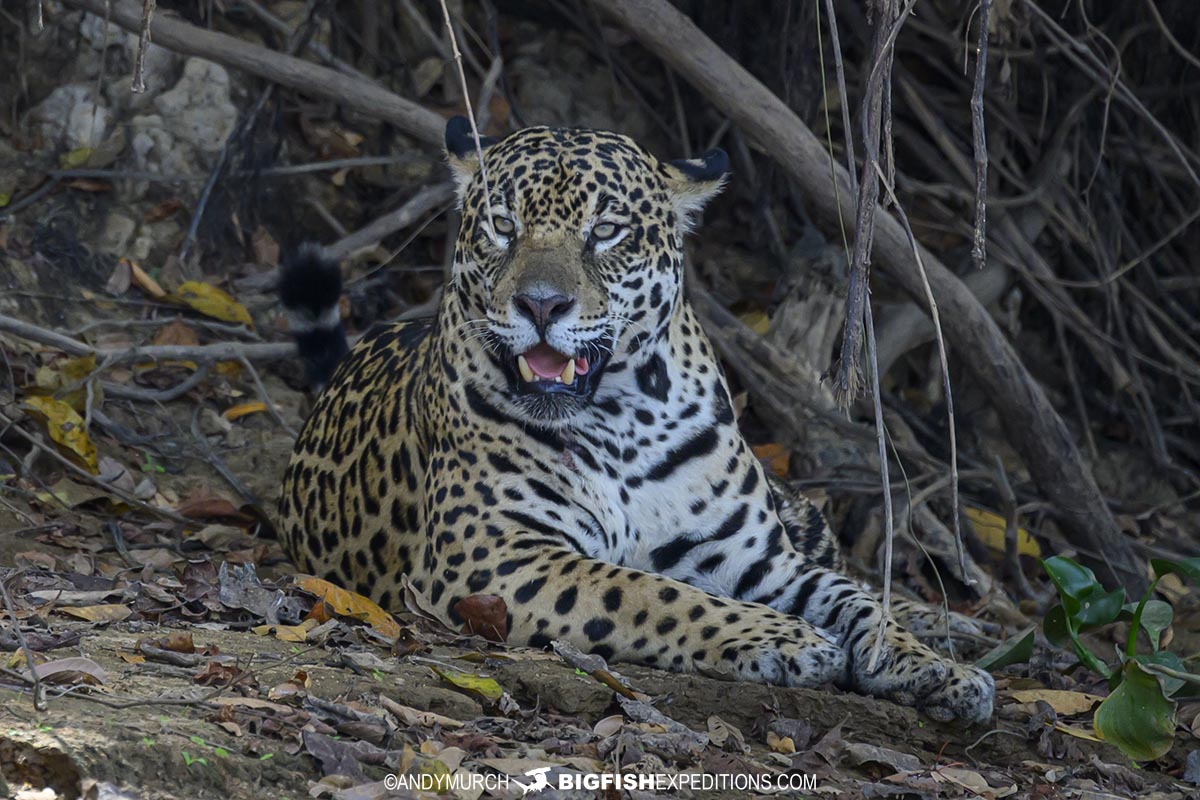
Jaguar #14. Later we came across Guaraci lying on the bank under a web of vines. Born in 2021, she is the daughter of Ti who is not related to any of the jaguars we had seen so far. Ti and Guaraci hunt further up the Cuiaba River and belong to a different clan. Females tend to be very territorial, but the males venture far and wide so there is almost certainly crossover between the clans.
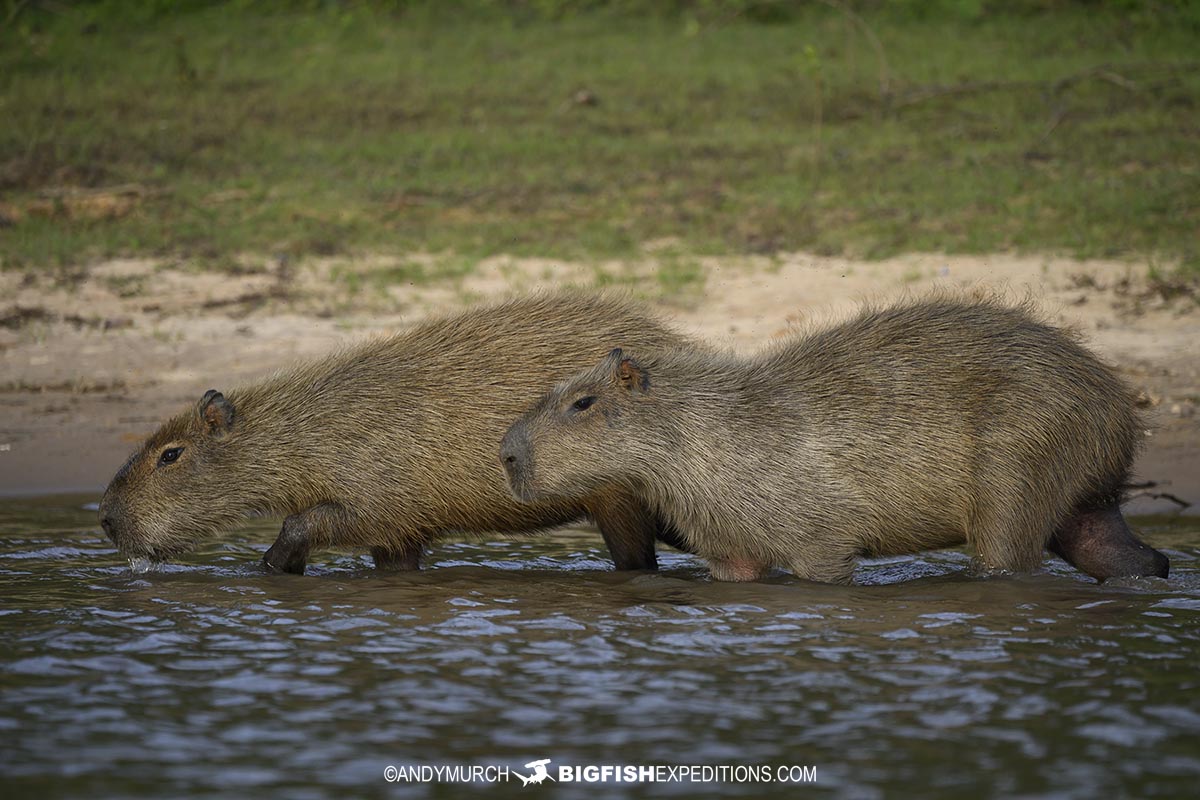
Capybaras nervously grazing at the river’s edge.
Day Five: Onward to Ocelots
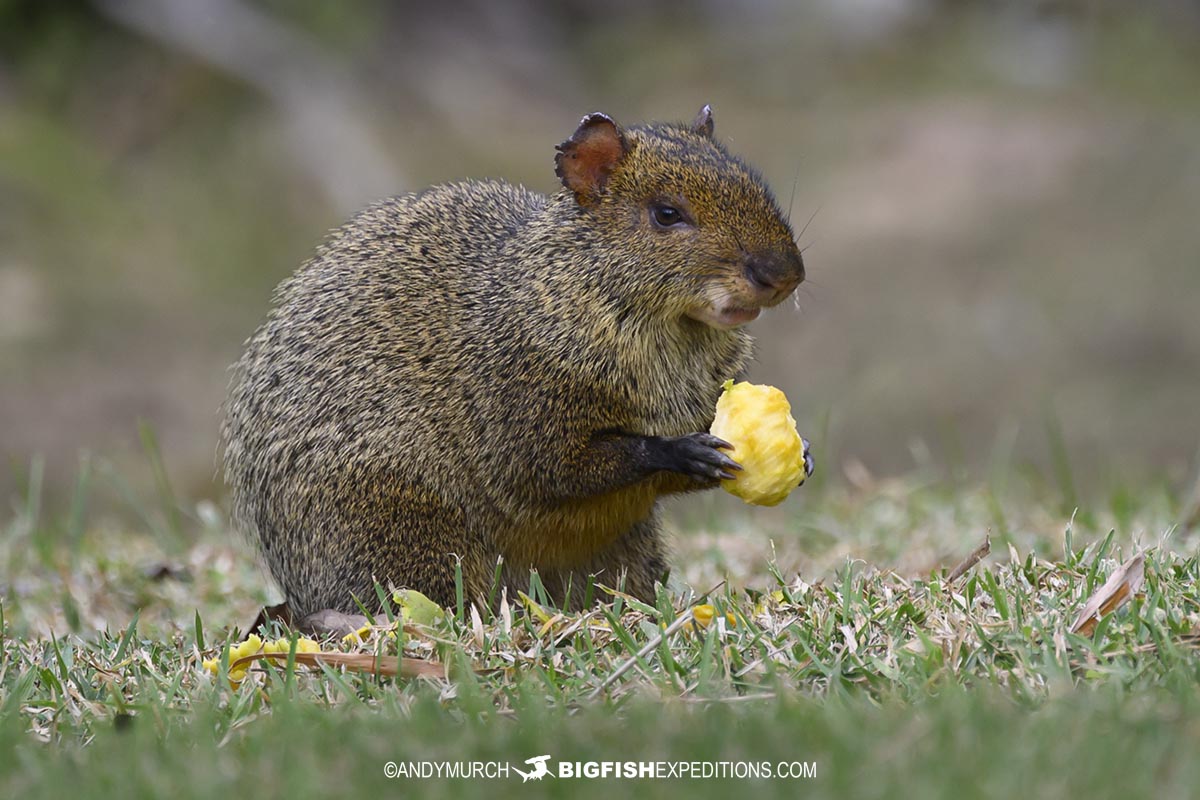
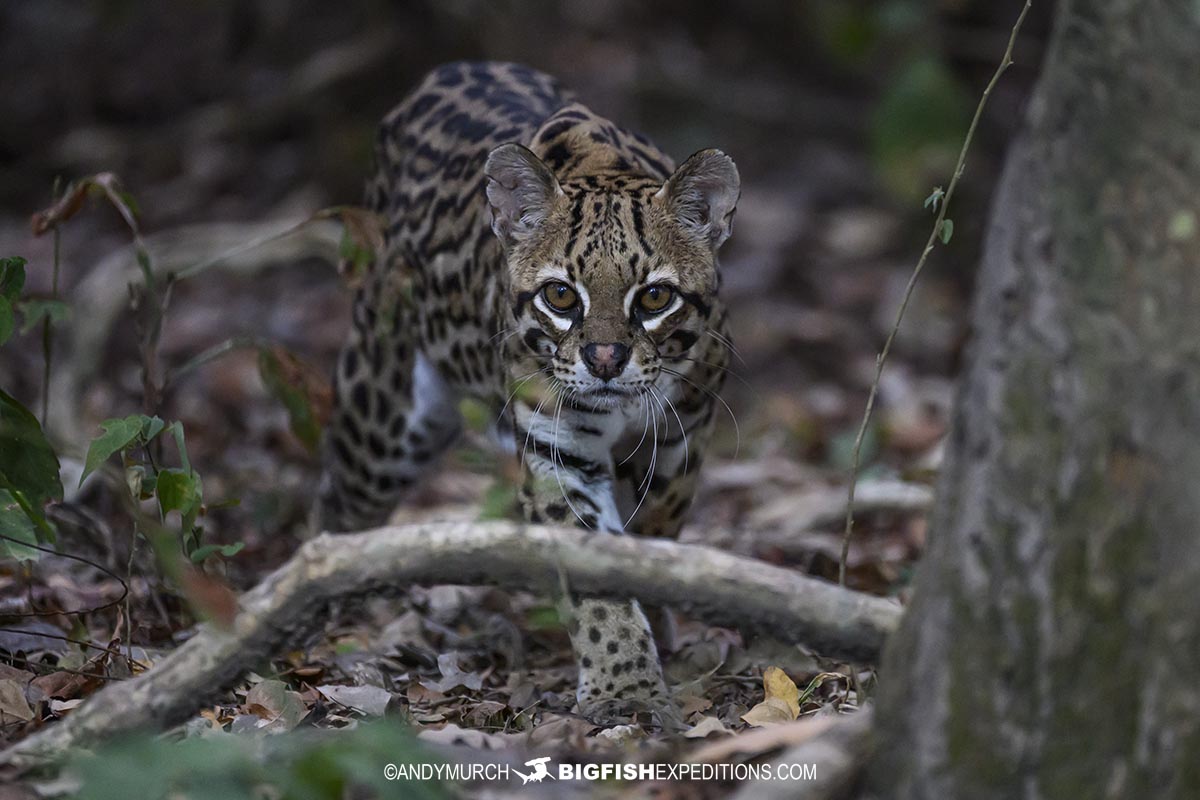
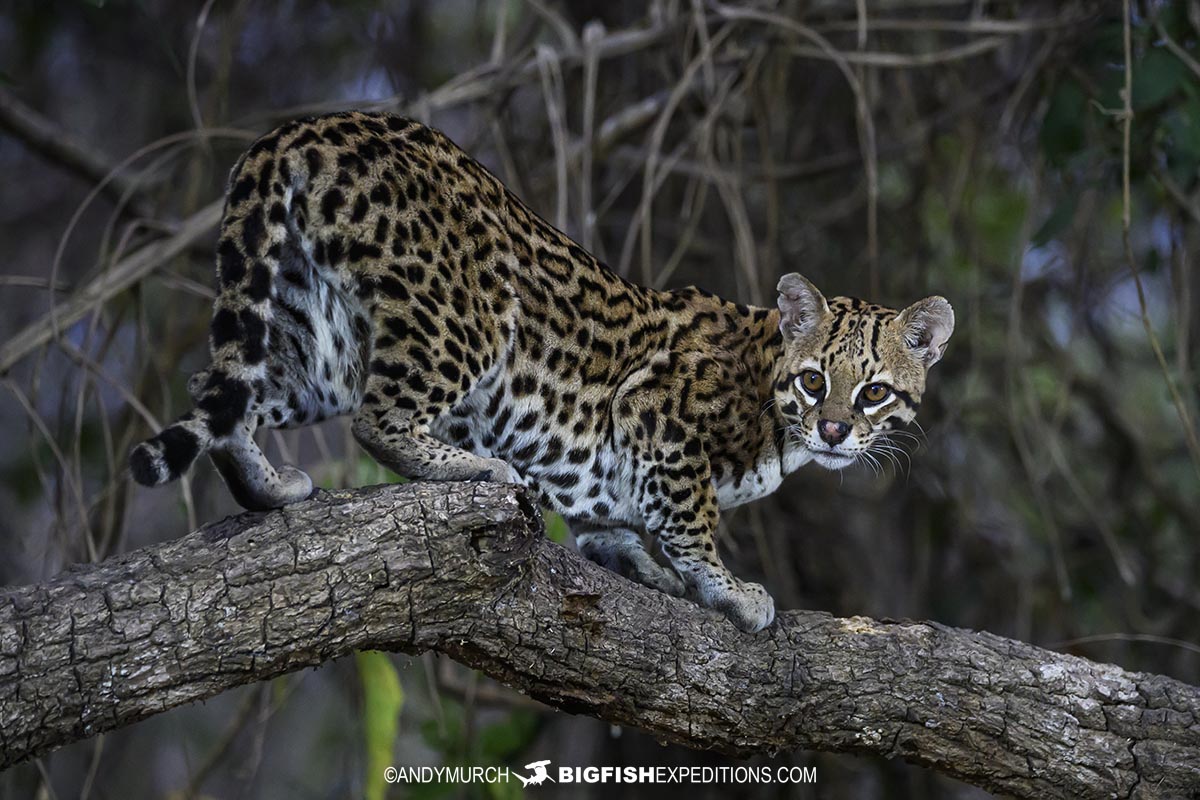
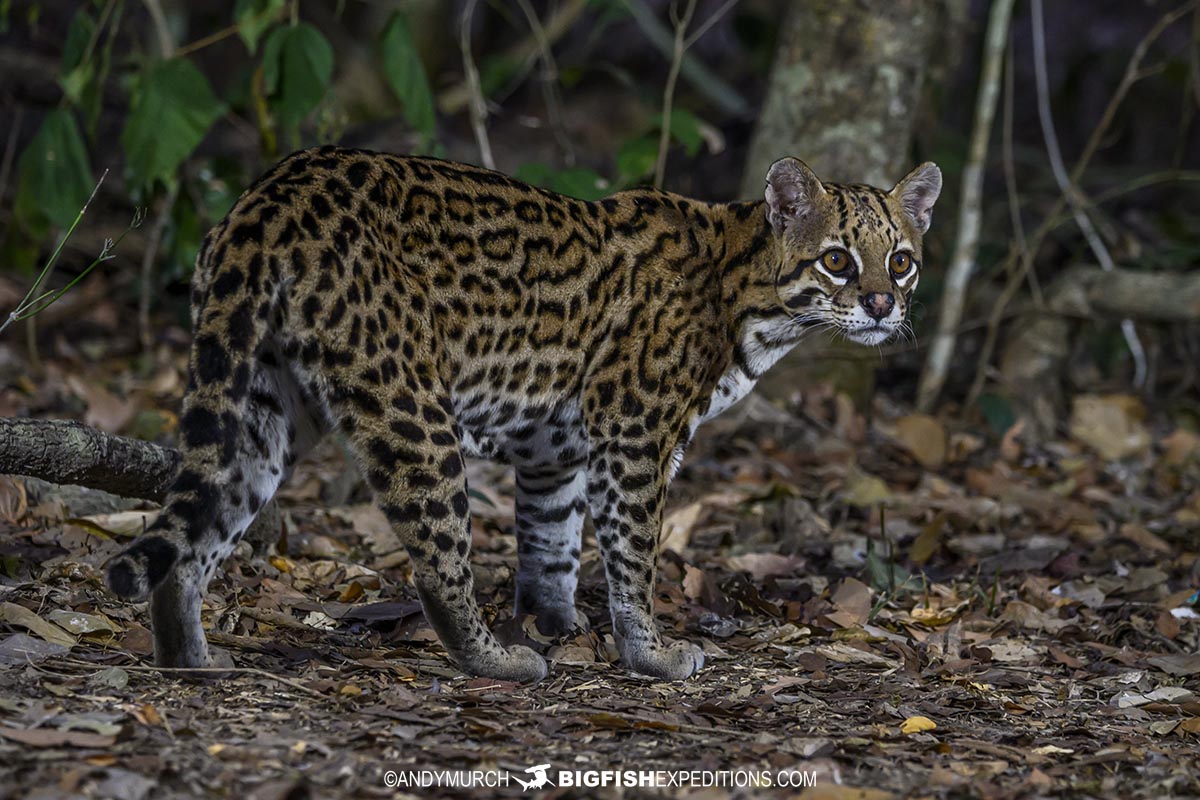
The next morning after a quick photoshoot with birds, monkeys, and agoutis around the lodge, we left Santa Rosa and made our way to Fazenda Santa Tereza; a ranch surrounded by dry forest where we hoped to see an ocelot; the Pantanal’s nocturnal wild cat, that is far more elusive than the jaguar.
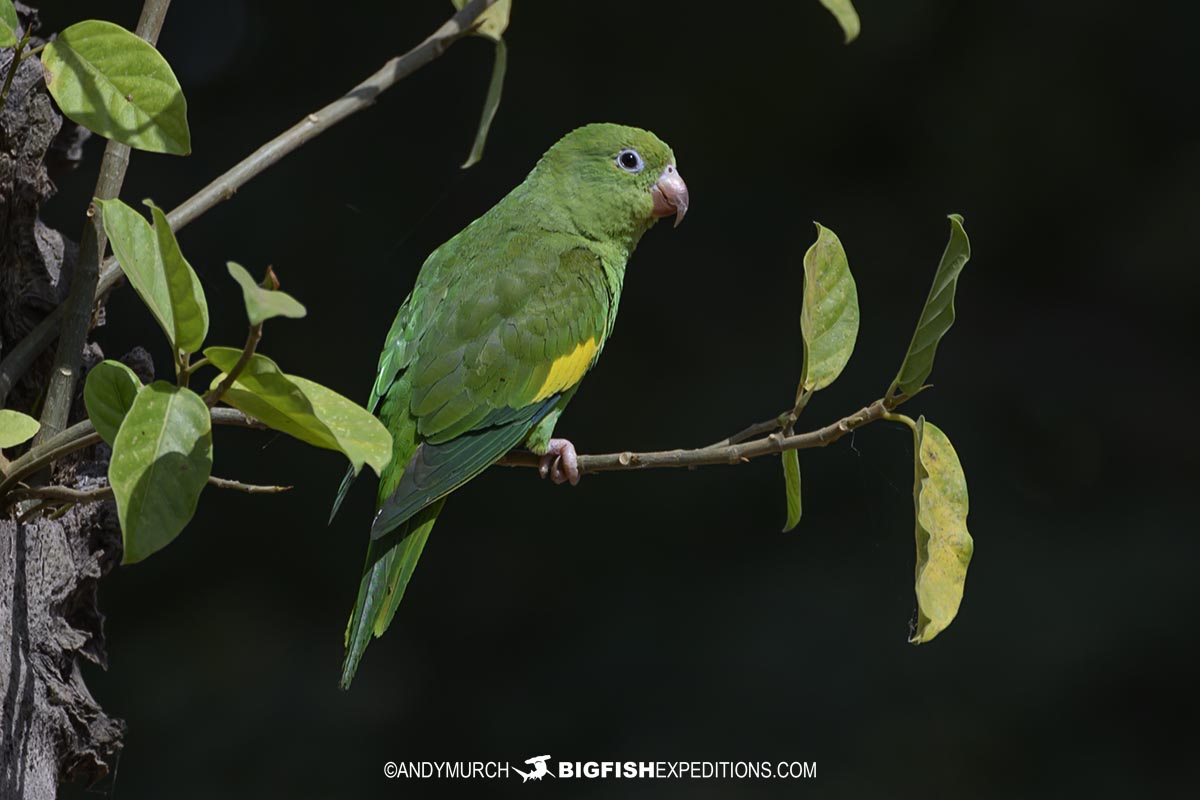
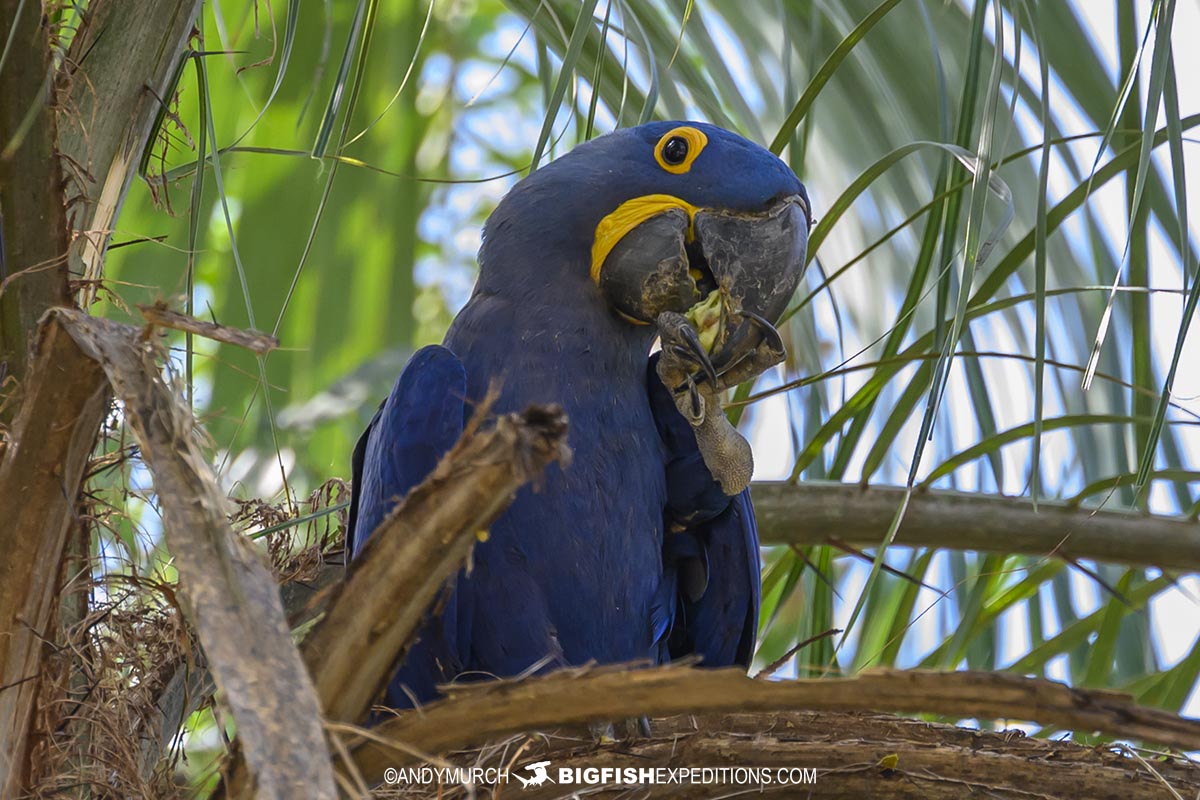
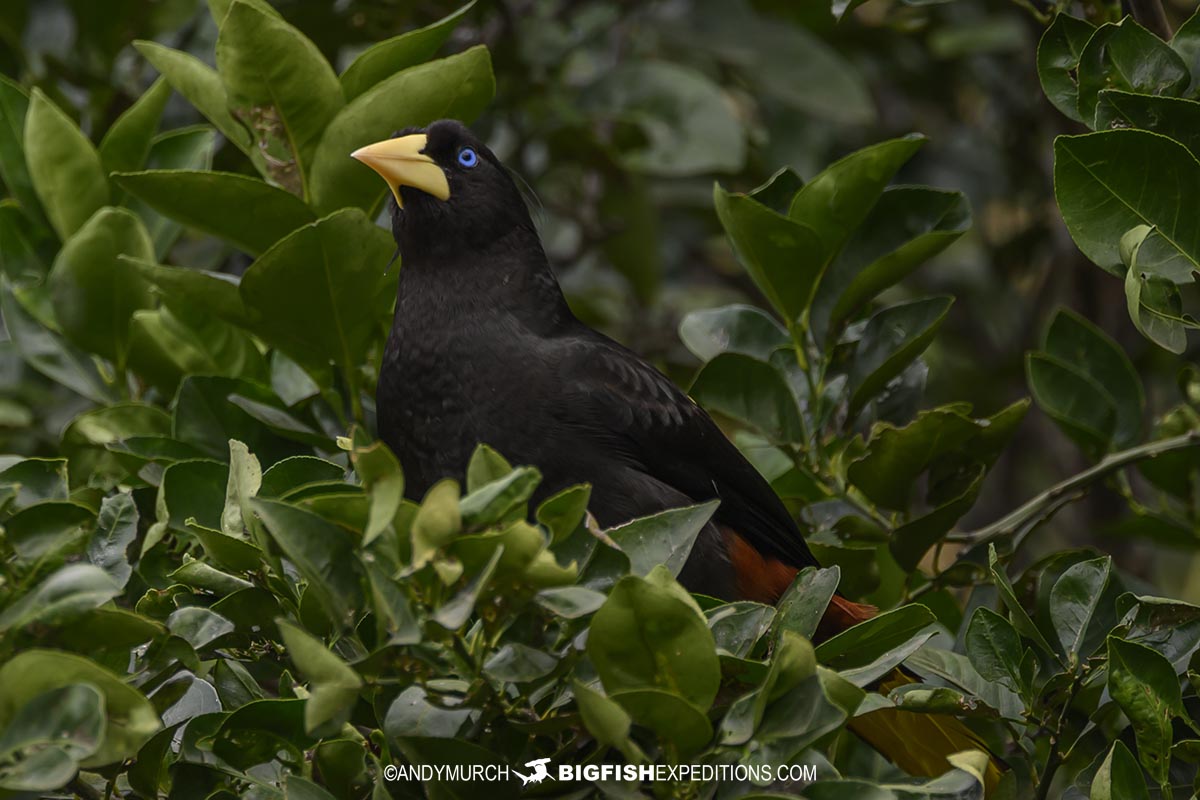
On route we stopped at an excellent birding lodge where we saw an incredible diversity of colourful birds.
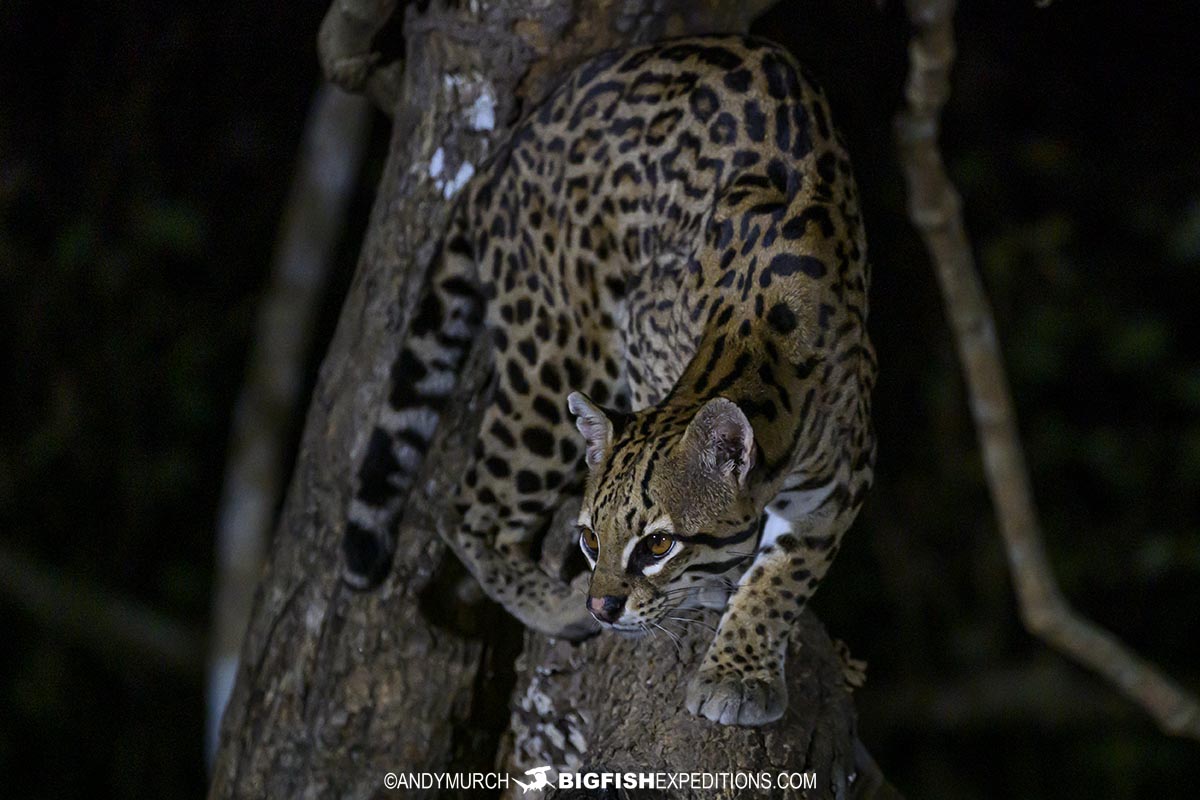
As the sun was setting, we made our way to the ocelot hide and were treated to the surreal experience of watching a gorgeous ocelot materializing out of the dark forest to snack on morsels hidden in the trees by the lodge staff.
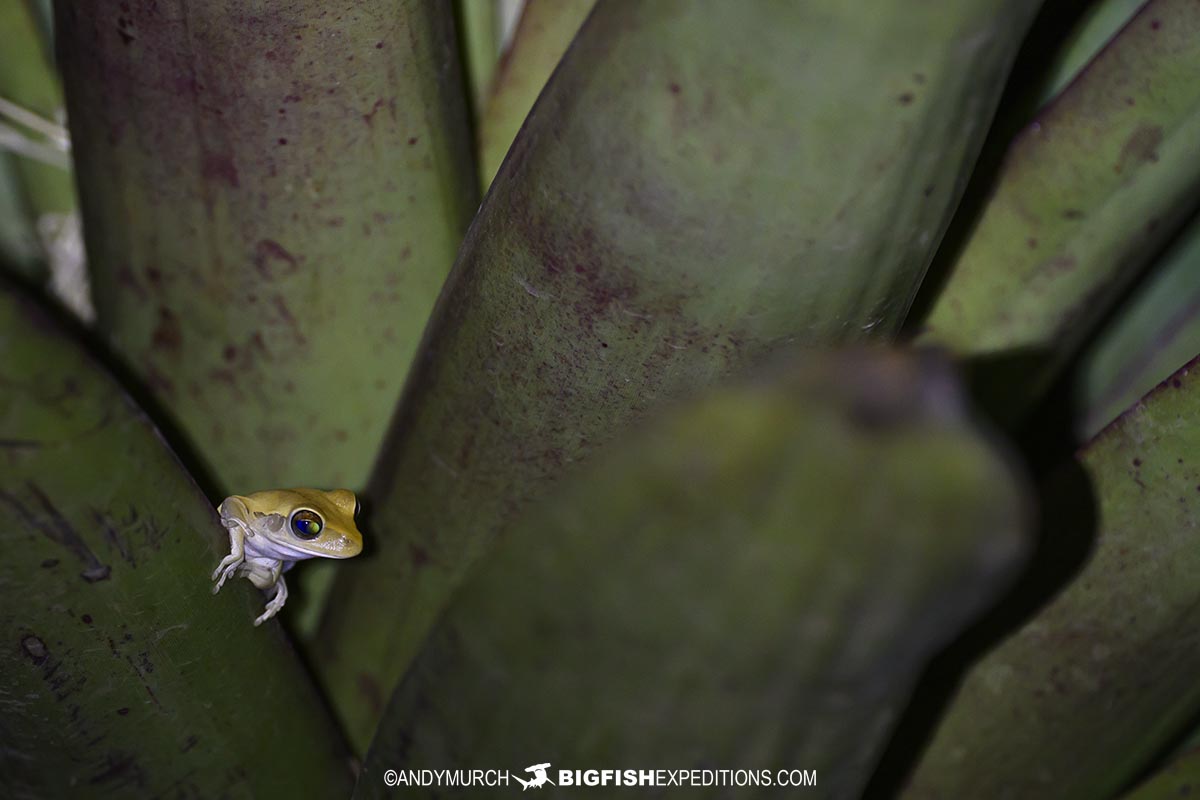
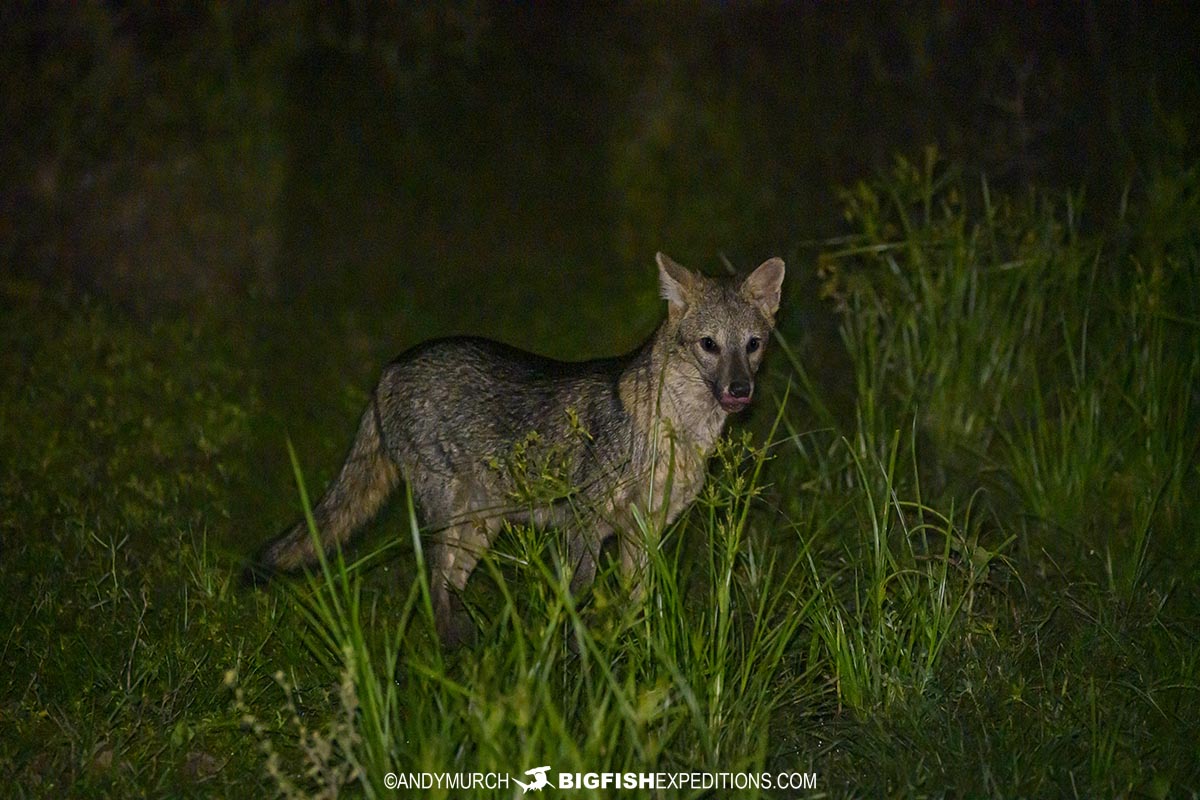
After dinner we went in search of frogs, tarantulas, owls, and crab eating foxes.
Day 6: Hooded Capuchins, Howler Monkeys, and more Ocelot action
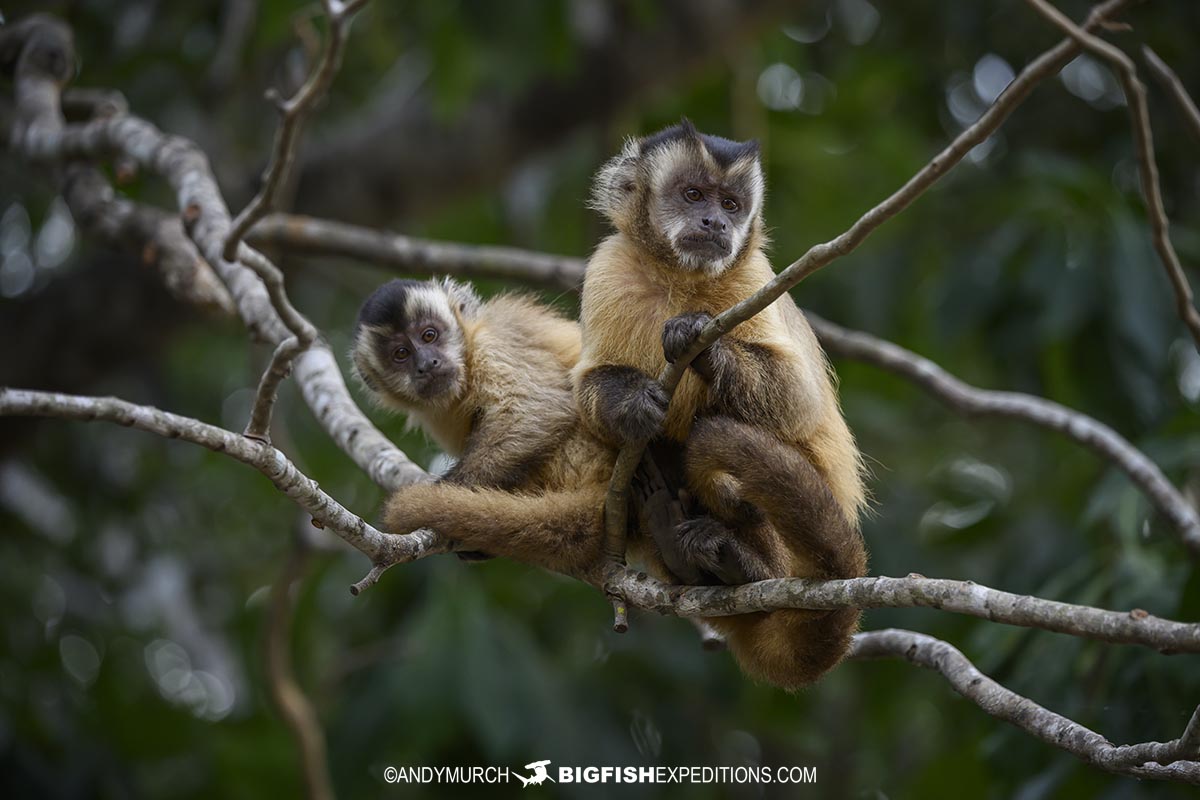
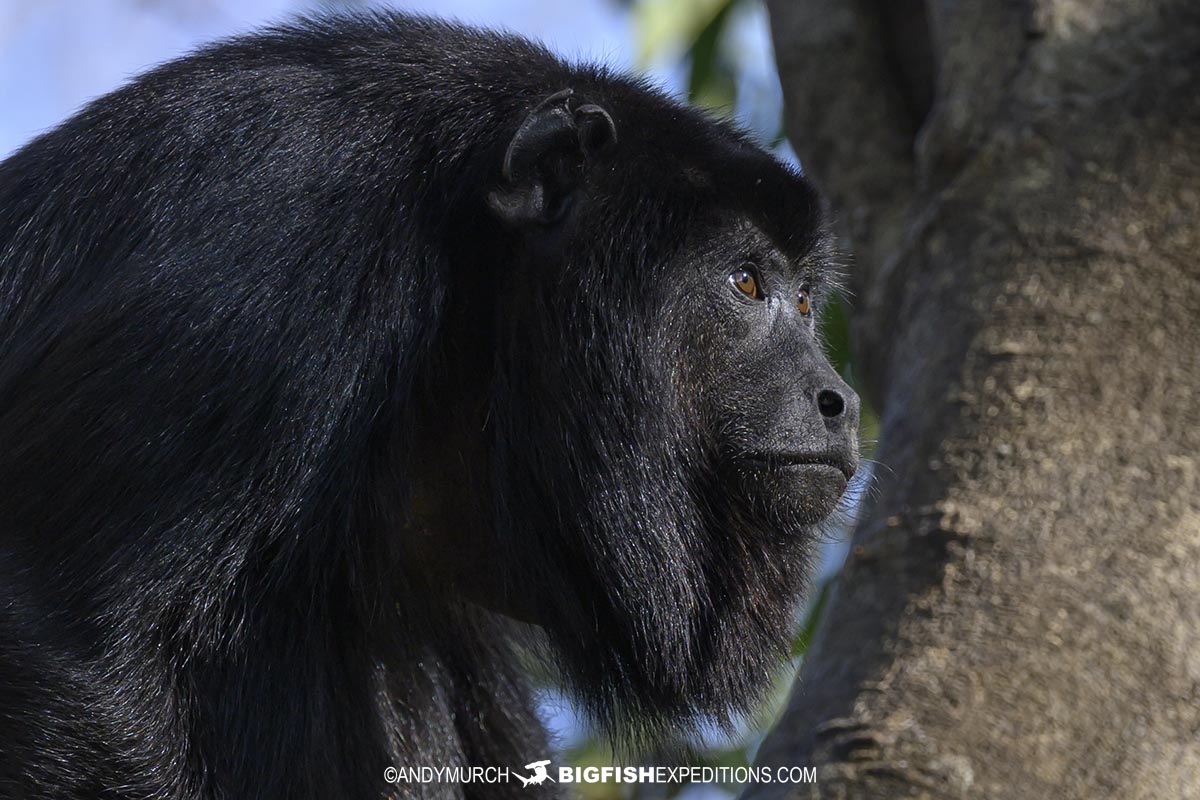
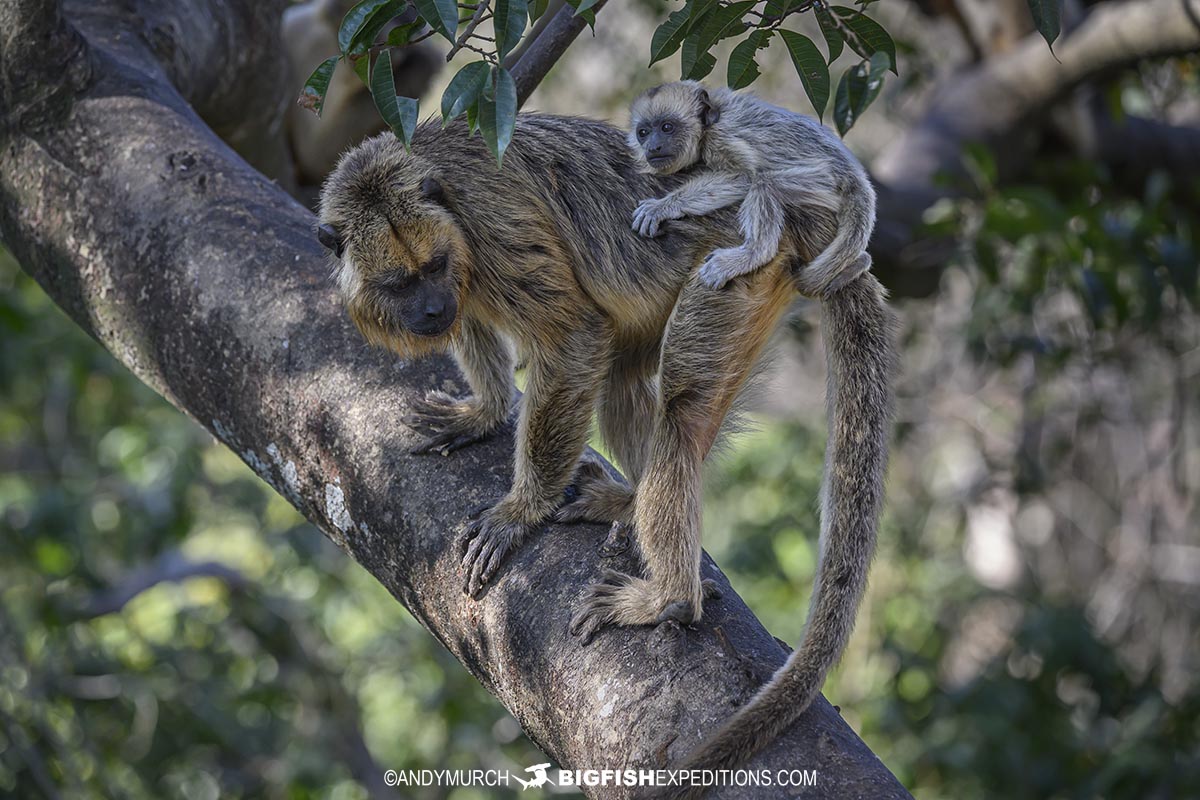
The next morning we climbed up to a platform in the forest where the lodge staff put out fruit to attract Capuchins and Black and Gold Howler monkeys. Howlers are generally quite difficult to get close to, so it was a nice treat to see them at close quarters up in the trips. One of the females had a tiny baby clinging onto her back. The newborn moved around a little but kept its tail firmly wrapped around it’s mothers tail. So cute!
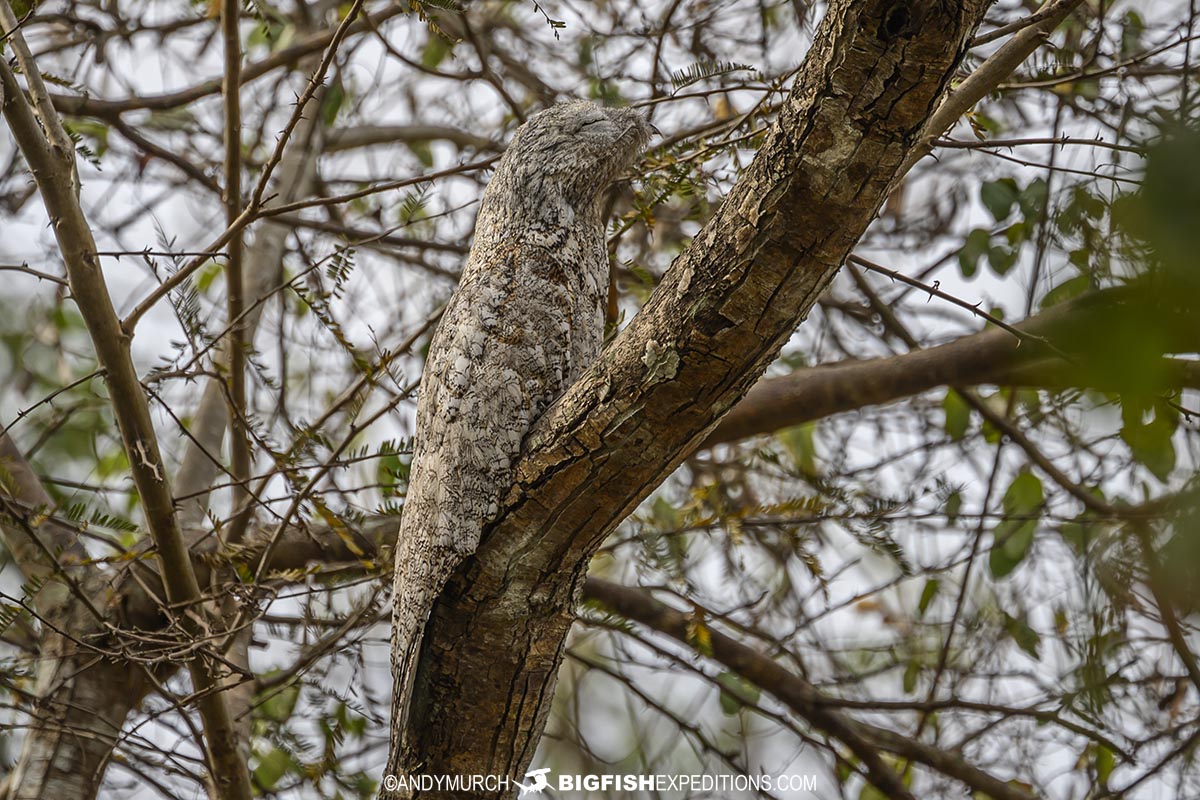
After a long session with the monkeys we went in search of a potou that had been spotted in the surrounding forest. After a short walk we found this incredibly well camouflaged bird, pretending to be a broken branch on a tall tree.
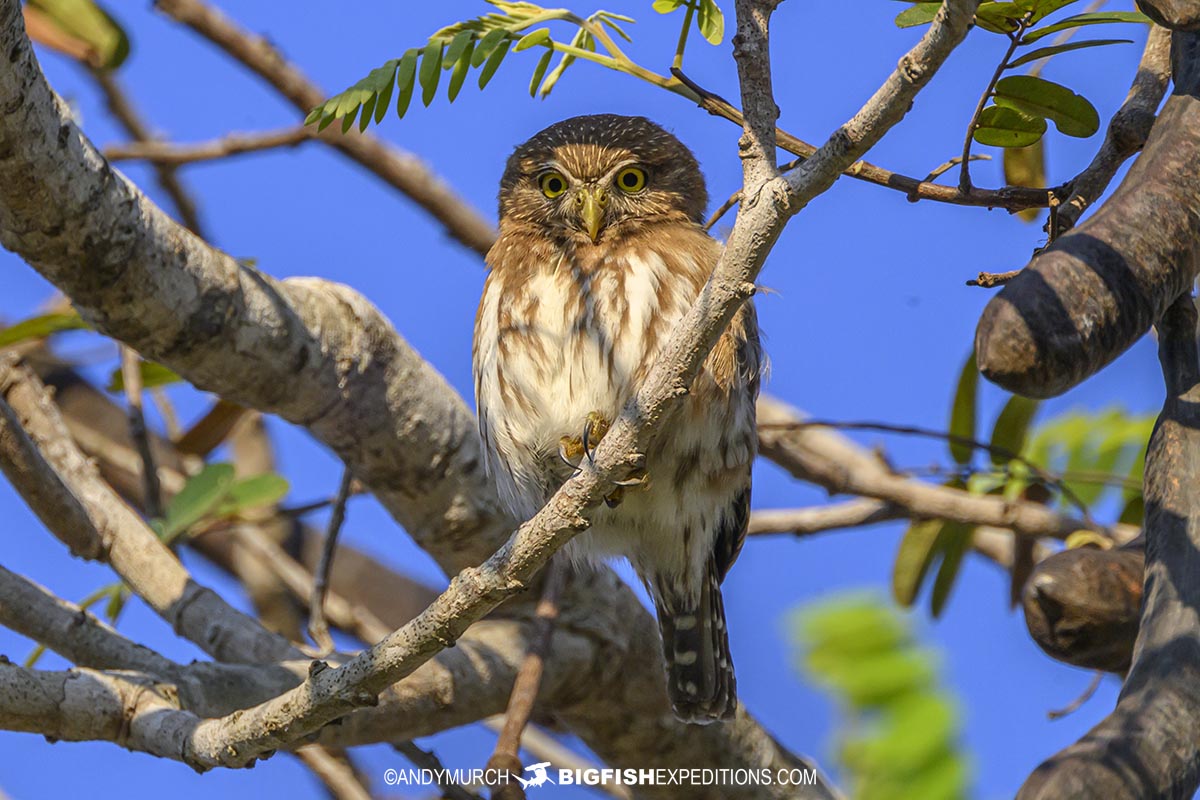
When we returned to the lodge for lunch, there was a pygmy owl roosting in a tree right outside compound. Great to see this tiny and usually elusive species!
In the afternoon we took to the river again for a spot of birding, then we returned to the forest hide for our second session with the ocelot.
Day 7: Back to Cuiaba
The next morning after a final delicious breakfast at Santa Tereza we made our way back to Cuiaba, stopping here and there when the birding was too good to ignore.
It was a great week filled with epic encounters with jaguars, ocelots, caimans, countless birds, otters, tapirs, agoutis, and so much more and with such a fantastic group of adventurous guests/friends.
After fond farewells in Cuiaba, the next day I returned to the Pantanal for another incredible week of Jaguars! Follow this link for all the great images from Week Two of our Jaguar and Ocelot Safari in the Pantanal
If you missed the adventure this year, please join me in September 2027 for another fabulous Jaguar and Ocelot Tour in the incredible Brazilian Pantanal. Next year will be extra special because we’re adding an extra night to photograph Maned Wolves!!!